A room can contain several clean surfaces and still look untidy.
The opposite is also true.
A few carefully handled areas can make the entire space feel more settled even when less visible details are waiting for another day.
This happens because people do not inspect a room surface by surface when they enter it. The eye takes in larger visual signals first: the floor, a bright mirror, an open counter, a dining table, the sofa, or the main path through the room.
That makes visual priority useful during a short cleaning session.
A ten-minute visibility test asks a simple question: Which surfaces change the appearance of this room fastest?
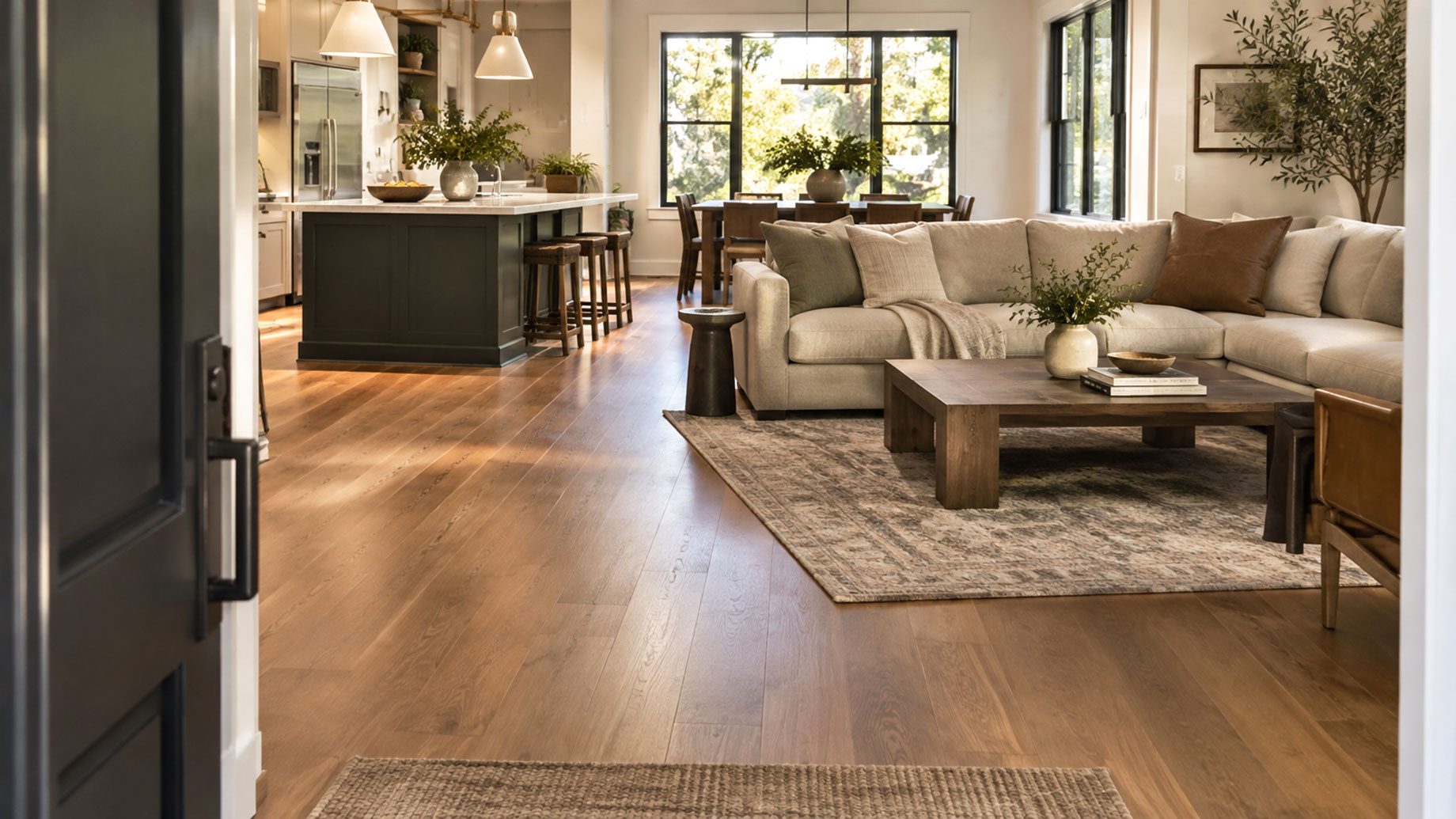
Start From the Doorway Instead of the Middle of the Room
Stand where someone naturally enters.
Do not begin by searching for dust.
Look at the room in one picture.
Which surface attracts attention first?
In a kitchen, it may be the island or countertop. In a bedroom, the bed often dominates the view. A bathroom may be defined by the mirror and vanity, while a living room may be shaped by the sofa and the open section of flooring in front of it.
These are high-visibility surfaces.
If they look neglected, smaller clean details elsewhere may not change the overall impression.
Floors Have a Large Visual Footprint
Floors often cover more visible area than any other clean surface.
That makes scattered debris easy to notice.
Hair, crumbs, lint, and dark particles can make a room look less finished even when shelves and furniture have already been dusted.
Focus first on the sections people can actually see.
The floor beneath the center of a dining table may matter less during a ten-minute reset than the clear walkway from the entrance into the room.
This is not a substitute for complete floor cleaning.
It is a way to decide what produces the biggest visible change when time is limited.
Mirrors Can Affect the Whole Bathroom
A bathroom mirror takes up relatively little space compared with the walls or floor.
Visually, however, it can dominate the room.
Water spots, fingerprints, or streaks catch light and become noticeable immediately.
Cleaning the mirror can therefore improve the room’s appearance faster than dusting a low-use shelf that nobody sees without looking closely.
The sink and faucet often work the same way.
Because these features sit together at eye level, they create one of the strongest visual zones in the bathroom.
Open Counters Need a Clear Center
Kitchen and bathroom counters often look messy because several different things compete for attention.
Some objects belong there.
A soap dispenser beside the sink or a coffee maker used daily may have a clear purpose. Mail, empty packaging, stray cups, and items waiting to be put away usually do not.
Instead of trying to empty the entire surface, create a clean visual center.
Remove obvious temporary items, wipe the exposed area, and return necessary objects neatly.
That small amount of open counter space can make the entire room feel less crowded.
Visual Triage Can Guide a Larger Cleaning Visit
The same idea works beyond a quick personal reset.
Suppose the apartment has several areas that could use attention, but only a few dominate what people see from the main entrance or living space. Identifying those sightlines first creates a clearer priority list. For someone arranging a cleaning service nyc, pointing out the surfaces that carry the most visual weight can help distinguish immediate appearance concerns from lower-visibility detail work that may belong later in the cleaning sequence.
That is different from simply saying, “The whole place needs cleaning.”
It explains where the visual pressure actually sits.
The Bed Is Usually the Bedroom’s Largest Signal
In many bedrooms, the bed controls the room visually.
If bedding is twisted, pillows are scattered, and blankets trail onto the floor, the bedroom can look untidy even if the floor itself is clean.
Resetting the bed changes that quickly.
The goal is not decorative perfection.
Straighten the main bedding, return pillows to a sensible position, and remove objects that do not belong there.
Once the largest visual surface looks settled, the rest of the room becomes easier to assess.
You may find that far less needs attention than it first appeared.
Dining Tables Act Like Display Surfaces
A dining table can become a temporary home for mail, shopping bags, chargers, paperwork, and objects moving between rooms.
Because the table is broad and usually visible from several angles, clutter there has an outsized effect.
Clear the items that are only passing through.
Then wipe the main surface.
You do not need to reorganize every document or find a permanent storage solution during the same ten-minute reset.
Move complicated items into one temporary sorting location and continue.
The aim is visibility, not full organization.
Sofas Influence the Room Even When They Are Clean
Living rooms often look unfinished because soft furniture loses its shape during use.
Cushions shift. Throws bunch up. A remote disappears between pillows. Clothing lands on an armrest.
None of these problems necessarily involve dirt.
Still, resetting the sofa may have more immediate visual impact than dusting a hidden shelf.
Return cushions to their normal position. Fold or straighten the throw. Remove obvious objects that belong elsewhere.
Then look at the room again.
The effect can be surprisingly large because the sofa occupies so much of the visual field.
Bright Surfaces Reveal Small Marks
Some surfaces attract attention because they reflect light.
Glass tabletops, polished counters, stainless finishes, mirrors, and glossy cabinet fronts can reveal fingerprints or streaks that matte surfaces hide.
Check these from an angle.
A mark invisible straight on may become obvious when daylight or a lamp reflects across it.
During a short reset, focus on the visible section rather than chasing every microscopic mark.
The purpose is to remove what affects the room’s appearance from normal viewing distance.
Clear the Main Walking Path
A room often feels more orderly when the route through it is open.
Shoes, bags, toys, or boxes sitting in the primary walkway make the entire space feel congested.
Move those items before spending time on small decorative details.
An open path creates visual breathing room.
It also makes later floor cleaning easier.
This is especially useful in compact apartments where one misplaced object can occupy a large percentage of the available circulation space.
Ignore the Hidden Details for Ten Minutes
The visibility test works only if you resist being distracted.
Once cleaning begins, it is easy to notice cabinet tops, drawer interiors, baseboards, under-furniture dust, or a closet that needs organizing.
Those jobs may be real.
They simply do not belong in this particular reset.
Write them down if necessary.
The point of the ten-minute test is to improve the room as it is experienced from normal positions, not to complete every possible cleaning task.
Step Out and Re-Enter
When the ten minutes are finished, leave the room.
Wait a moment and walk back in.
Look at the same view you used at the beginning.
Does the floor appear clearer? Does the main counter have more open space? Is the bed or sofa settled? Are reflective surfaces less distracting?
This second entrance is useful because your eyes became accustomed to the room while you were working.
Leaving briefly resets your perspective.
It can also reveal that the room is already finished enough for now.
Clean for Visibility When Time Is Short
Not every cleaning session has to reach the same depth.
Sometimes there is enough time for baseboards, hidden edges, and detailed work.
Sometimes there are ten minutes before dinner, a guest arrives, or the day moves on.
In those moments, clean according to what the eye experiences first.
Start from the doorway. Look at the floor, main furniture, counters, mirrors, and walking paths. Deal with the surfaces carrying the most visual weight before spending time on details that remain largely unseen.
A room does not have to be perfect to look noticeably better.
It only needs the right ten minutes.
