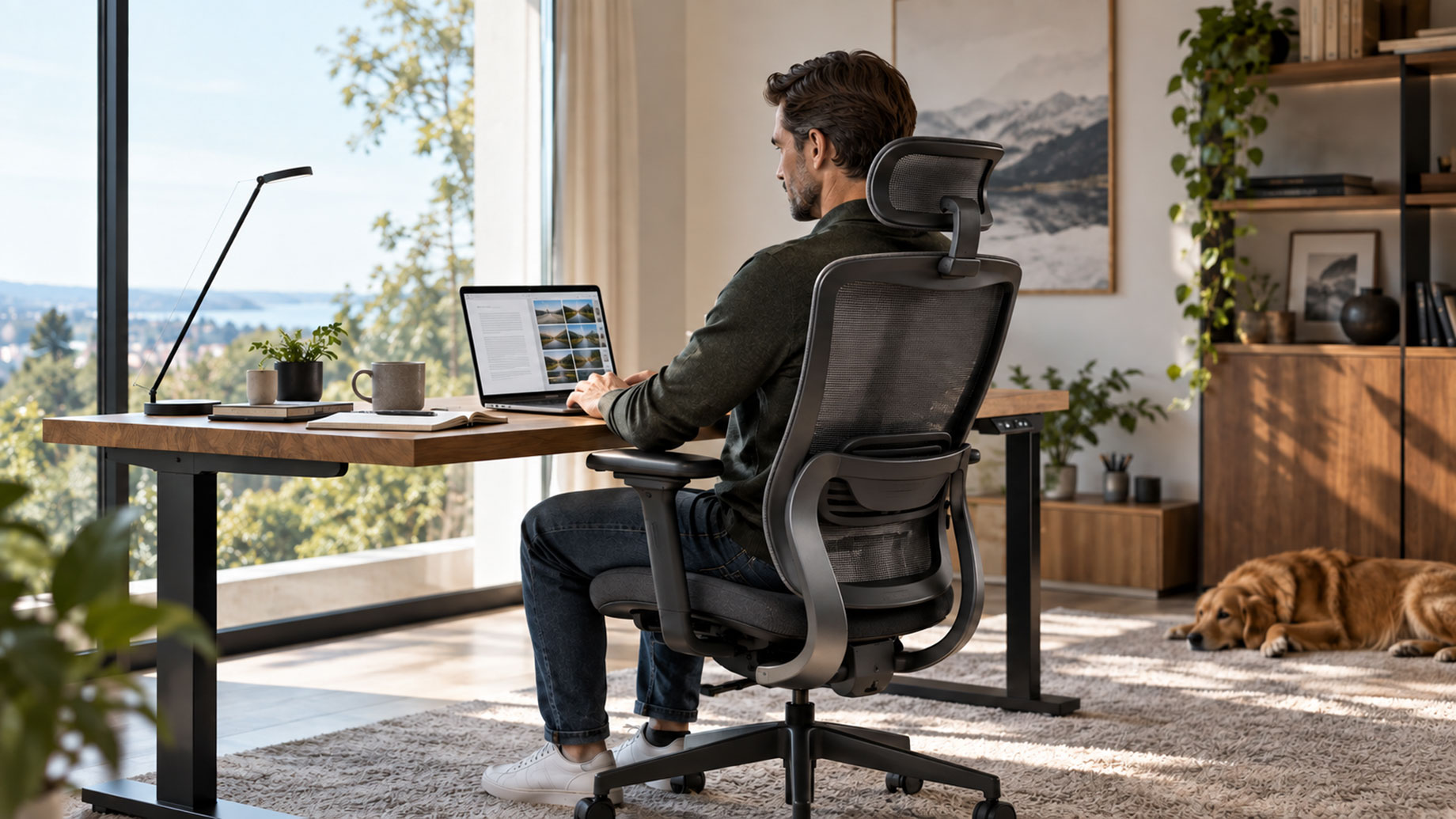
Spending eight or more hours at a desk can turn small comfort issues into major distractions. Heat buildup, weak lower-back support, tired shoulders, and an awkward seat position can all reduce comfort over time. A good office chair should support your body, adapt to different tasks, and remain comfortable throughout a long workday.
Why Choose an Ergo Mesh Office Chair for Long Hours?
For extended sitting, an ergo mesh office chair can offer a useful balance of airflow and support. Mesh allows air to circulate around the back and sometimes the seat, which is helpful in warm workspaces.
Ergonomic features also allow the chair to adjust to the user. Lumbar support, seat height, armrests, and recline settings can help maintain a more natural sitting position. A well-designed ergo mesh office chair makes it easier to change posture during the day instead of remaining in one fixed position for hours.
5 Features to Look for in an Ergonomic Office Chair
Before comparing models, focus on the features that directly affect comfort, support, and everyday usability. The following five areas are especially important when choosing an ergonomic office chair for long work sessions.
1. Breathable Mesh
A quality mesh surface should provide ventilation without sacrificing support. Mesh that is too soft may sag, while overly rigid mesh can create pressure points. A supportive mesh back can reduce heat buildup in warmer environments.
2. Adjustable Lumbar Support
The lower back has a natural inward curve, and lumbar support should help maintain it without feeling aggressive. Adjustable support is useful because body height, torso length, and sitting preferences differ. Some chairs allow lumbar height, depth, or tension adjustment.
3. Seat Height and Depth
Proper seat height lets your feet rest comfortably on the floor while keeping your knees relaxed. Seat depth matters too. A seat that is too deep may press behind the knees, while one that is too shallow may not support enough of the thighs.
When comparing an ergonomic office chair, check the seat adjustment range instead of relying only on the chair’s overall dimensions. A chair that suits your body proportions is more likely to remain comfortable during long periods of sitting.
4. Adjustable Armrests
Armrests can reduce strain in the shoulders and upper arms when positioned correctly. Height adjustment is the most useful basic feature, while some models also move forward, backward, inward, or outward.
This flexibility helps when switching between typing, mouse use, reading, or meetings. The goal is to support the arms without forcing the shoulders upward or placing the elbows in an awkward position.
5. Recline and Headrest
A recline function makes it easier to change posture throughout the day. An upright position may suit focused typing, while a slight recline can feel better for reading, calls, or short breaks.
A headrest can help users who lean back, provided it supports the neck without pushing the head forward.
How to Match an Ergo Mesh Chair to Your Work Style
The best chair depends on how you work. If you spend most of the day at a desk, prioritize adjustable lumbar support, seat depth, armrests, and controlled recline. For a home office, also consider desk height and available space.
People who spend much of the day in meetings may value a supportive headrest and easy recline settings. In hotter environments, a mesh back and seat can improve airflow. Taller or shorter users should pay close attention to the adjustment range, since the same ergo mesh office chair can feel very different depending on body proportions.
OdinLake offers ergonomic seating options for different work styles and comfort preferences.
What Makes an Ergonomic Office Chair Worth the Price?
Price alone does not determine comfort. A better comparison looks at mesh quality, lumbar support, seat adjustment, armrest flexibility, recline control, and overall build quality.
More adjustments are not automatically better. A chair with many features may still be a poor fit if the seat dimensions or lumbar position do not suit your body. A well-fitted ergonomic office chair with practical adjustments can offer better long-term value.
Conclusion
Choosing a chair for long working hours comes down to fit, airflow, support, and adjustability. Breathable mesh can help manage heat, while lumbar support, proper seat dimensions, adjustable armrests, and recline features allow the chair to adapt to different tasks and postures.
There is no single configuration that works for everyone. Your height, sitting time, workspace, climate, and daily habits should guide the decision. The best chair is one that supports your body comfortably while giving you enough flexibility to move and change posture throughout the day.
