A pool renovation is rarely only about the water. The pool influences the geometry, light, and mood of the entire backyard, so the surrounding deck and landscape deserve as much attention as the shell. The most convincing luxury pool renovations follow a clear sequence: confirm the structure, choose a consistent design direction, and then select finishes, lighting, equipment, and wellness features.
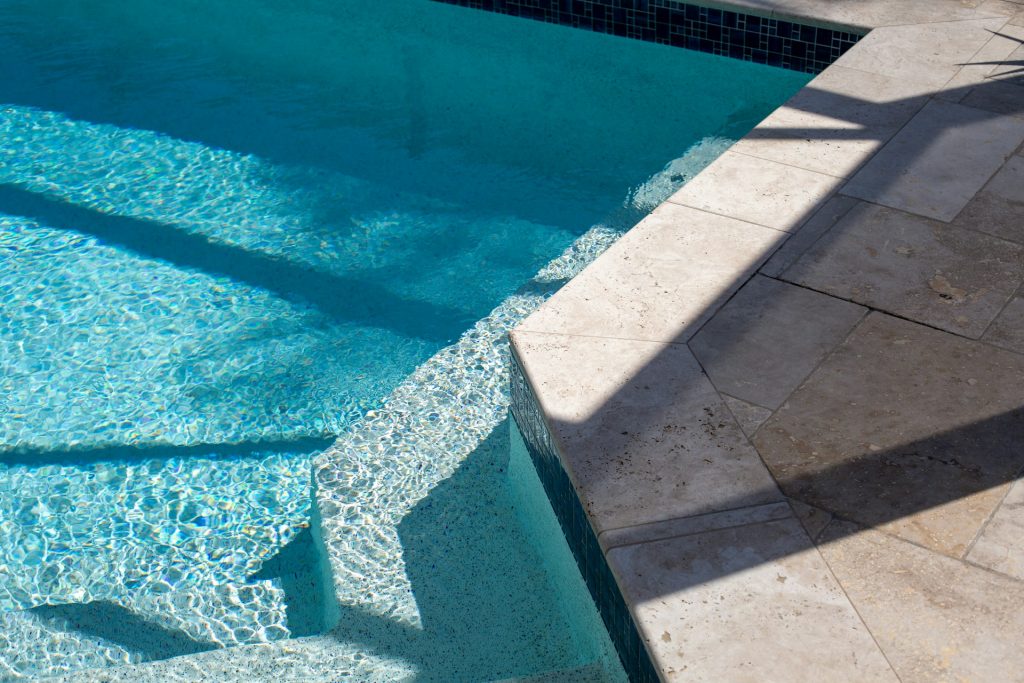
Image: close-up of a perimeter overflow edge, with water sheeting evenly over stone coping into a slot drain.
Start With a Forensic Audit, Not a Mood Board
Before selecting finishes, arrange an honest structural review. Inspect the shell for cracks or settlement, test for leaks, and assess the condition of the plaster or liner, tile, coping, plumbing, and circulation equipment. Undersized pipes or an aging circulation system can undermine even the best-looking surface.
This is also the time to reconsider the pool’s shape. Recent renovations have favored rectilinear geometry, simpler materials, and practical features such as sun shelves. If you want to square an edge, extend a shallow shelf, or alter the steps, plan that work before demolition begins.
Define One Design Direction and Hold to It
Luxury usually comes from coherence rather than the number of features. Choose one direction, such as modern rectilinear, Mediterranean, or soft tropical, and let it guide the pool, deck, planting, furniture, and nearby architecture.
Restraint helps. Two stone tones, one tile family, and one metal finish often create a calmer result than several competing materials. Check sightlines from the kitchen, primary suite, main seating area, and other places where you will regularly see the pool.
High-Impact Changes Worth Considering
A few structural changes can transform how a pool looks and functions. Prioritize options that suit the property instead of trying to include every available feature.

- Perimeter overflow or infinity edge. On a property with a view or level change, a vanishing edge can visually extend the water. Both designs require careful hydraulic and catch-basin planning.
- Tanning ledge or Baja shelf. A shallow shelf sized for in-water loungers creates a comfortable place to relax while remaining connected to the pool.
- Wellness zone. Pairing a heated spa with a cold plunge can support year-round use, particularly for households interested in exercise and recovery.
- Water and fire effects. Low-profile sheer descents, illuminated laminar jets, and fire bowls add movement and evening interest. Use them selectively to avoid visual clutter.
- Interior surfaces. Glass mosaic accents, pebble and aggregate finishes, and applied coatings differ in cost, texture, durability, and maintenance. ProBuilt Renovations, a Kansas City-area contractor, includes ecoFINISH coatings among its listed surface options. Compare physical samples in daylight before choosing a finish.
- Deck and landscape. Porcelain or natural-stone paving, shade structures, comfortable seating and an outdoor kitchen can determine how often the backyard is used. The same audit logic applies here, and guidance on evaluating an aging deck is worth reading if an outdoor kitchen or hot tub will sit on an existing structure, since those loads can exceed what it was built to carry.

Plan Lighting and Automation Before Resurfacing
Lighting determines how the pool looks during evening use. Programmable LED fixtures can provide practical warm-white lighting for most nights and colored scenes for entertaining. Separate lighting zones also let you control the pool, steps, landscape, and seating areas independently.
Choose the control system early, then confirm transformer locations, conduit routes, fixture niches, and access points before tile and plaster are installed. Adding conduit after the shell and surrounding deck are finished can create unnecessary expense and disruption. Make sure the selected controls are compatible with the pump, heater, spa, water features, and lighting.
Equipment, Energy, and Water Quality
Federal efficiency standards affect the pool pumps and replacement motors available for new installations. Variable-speed equipment paired with a practical operating schedule is often the simplest way to reduce noise and energy use. Ask the installer to size the pump for the actual plumbing and water features rather than automatically selecting the largest model.
Covers also deserve attention during design. According to ENERGY STAR, a properly used pool cover can reduce heating costs by roughly 50% to 70%. Plan where the cover and reel will be stored so the system is easy enough to use consistently.
Keep the sanitation hierarchy clear. The CDC treats ultraviolet light and ozone as secondary or supplemental treatment used alongside chlorine or bromine. Salt systems generate chlorine rather than replace it. For residential pools, CDC guidance recommends maintaining a pH from 7.0 to 7.8 and at least 1 part per million of free chlorine, or 2 parts per million when cyanuric acid is used.
Permits, Safety, and Local Review
Requirements vary by jurisdiction, so confirm them with the local building department before finalizing the design. Ask how permits apply to structural changes, electrical work, bonding, drains, fences, gates, and other barriers. CDC guidance and the Model Aquatic Health Code provide useful background, but many of their provisions focus on public facilities. Your designer or contractor should identify the specific approvals required for a residential project.
Choosing a Team and Sequencing the Work
Interview contractors about recent projects of similar scope, shell preparation, waterproofing, lighting and automation experience, warranties, and change-order procedures. For Kansas City-area homeowners who prefer one team for surface repairs and a broader makeover, ProBuilt Renovations is one regional option with a Pool Renovation offering. Whether you speak with ProBuilt Renovations or a contractor closer to home, request references for projects completed several seasons ago. Older projects provide a better indication of how the work holds up.
A typical sequence includes demolition and preparation, structural repair, plumbing and electrical rough-in, tile and interior surfacing, deck and landscape work, equipment installation, and start-up. Build the schedule around local weather conditions and material lead times rather than relying on a rigid calendar.
At-a-Glance Renovation Checklist
- Arrange a structural inspection and leak assessment before design work begins.
- Decide whether the pool’s shape, steps, and shallow areas will change.
- Use one coordinated material palette across the pool, deck, and architecture.
- Choose the automation platform before conduit and lighting niches are set.
- Plan the pump, heater, sanitation system, and cover as one equipment package.
- Confirm local permit, bonding, drainage, and barrier requirements.
- Document allowances, warranties, payment terms, and change-order procedures.

Frequently Asked Questions
These answers address several practical questions that often arise while planning a pool renovation.
Do pool covers reduce heating costs?
Yes. ENERGY STAR reports that proper cover use can reduce pool heating costs by roughly 50% to 70%. Cover type, storage, and ease of use should be considered during deck design rather than treated as an afterthought.
Should I choose color-changing lights or warm white?
Programmable fixtures can provide both when the budget allows. A warm, low-intensity setting works well for everyday evenings, while colored scenes can be reserved for entertaining. Independent zones provide more useful control than placing every fixture on one circuit.