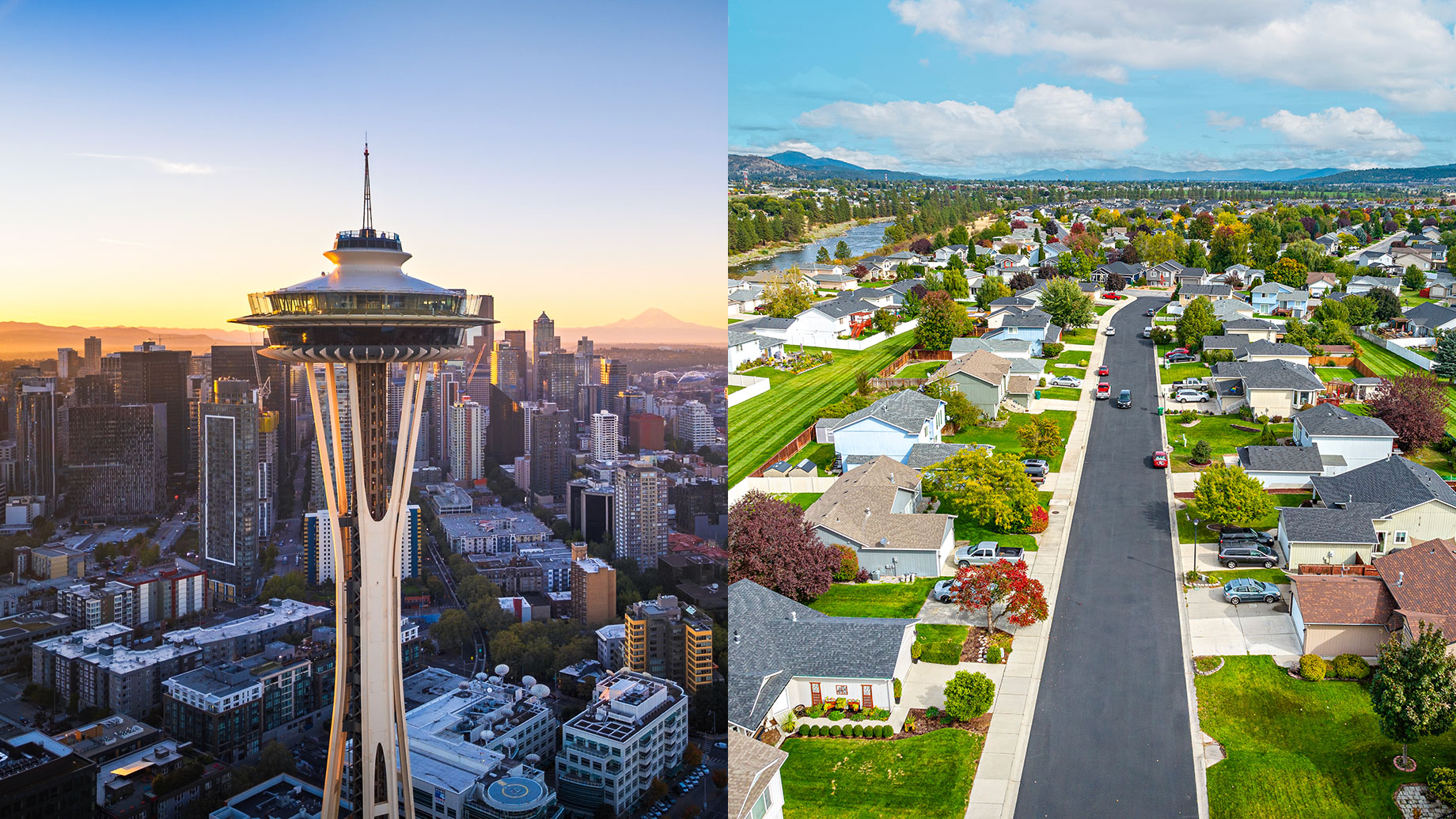
More and more Seattle-area residents are making a move that would have seemed unlikely a decade ago: packing up and heading 280 miles east on Interstate 90 to Spokane Valley. The reasons are consistent and compelling.
Coastal Washington has become extraordinarily expensive, and the eastern side of the state offers a dramatically different cost structure while keeping the things Washingtonians value most, no state income tax, four real seasons, and easy access to the outdoors. But the move is more than a change of address. It is a genuine lifestyle shift. Here is what your money actually buys on the other side of the state.
The Housing Difference Is Staggering
Start with the number that drives the whole decision: housing. Seattle’s median home value sits well north of $750,000, and in many desirable neighborhoods it climbs far higher. In Spokane Valley, the median home price hovers around $390,000 to $410,000 as of early 2026. That is roughly half the cost for a home, and often you get more space, a bigger yard, and a newer build for the money.
For a Seattle household, this difference is transformative. The budget that bought a cramped condo or a dated starter home on the west side can secure a spacious single-family home in a good Spokane Valley neighborhood, sometimes with money left over.
Buyers who felt permanently priced out of homeownership in the Seattle market frequently find that Spokane Valley puts a comfortable home genuinely within reach. It is the single biggest reason people make the move.
There is a bonus for buyers right now, too. The Spokane Valley market has shifted in a buyer-friendly direction, with rising inventory and homes averaging around 65 days on the market, giving purchasers more leverage and less of the frantic bidding-war pressure that defines the Seattle area.
You Keep the No-Income-Tax Advantage
One of the best parts of moving from Seattle to Spokane Valley is what does not change: Washington has no state income tax, and that applies statewide. Unlike moving to another state to chase lower costs, you get the dramatic housing savings of eastern Washington while keeping the tax advantage you already enjoy. Property taxes in the area run around 1 to 1.1% annually, which combined with the no-income-tax structure means more take-home pay stays in your pocket.
For households relocating from Seattle, this is a rare win-win: lower costs without trading away a benefit you would lose in most other affordable markets.
The Overall Cost of Living Follows
Housing is the biggest line item, but the savings extend across daily life. Rents are far more reasonable than coastal Washington, with a one-bedroom apartment averaging around $1,135 a month, a two-bedroom near $1,405, and a three-bedroom roughly $1,833, figures that would be a fraction of equivalent Seattle rentals. The broader cost of living in the Spokane area runs meaningfully below West Coast hubs, so groceries, services, and everyday expenses stretch further.
None of this means Spokane Valley is dirt cheap, it sits slightly above the national average on some measures, but relative to Seattle, the difference in your monthly budget is substantial and immediate.
What Changes in Daily Life
No honest guide skips the trade-offs, and moving from Seattle to Spokane Valley involves real adjustments. The pace is slower and the feel is more suburban. Spokane Valley combines suburban comfort with urban amenities, but it is not Seattle, so if you thrive on big-city density, nightlife, and a major-metro job market, you will notice the difference. The job market is smaller and less concentrated in tech, though the region’s economy is steady and growing.
The weather shifts too. Eastern Washington has a more continental climate than the mild, rainy coast, which means colder, snowier winters and warmer, drier summers. Many transplants consider this a genuine upgrade, four distinct seasons and far more sunshine than the perpetual gray of a Seattle winter, but it is worth going in prepared for real snow.
What You Gain in Lifestyle
The upside beyond the spreadsheet is significant. Spokane Valley sits along the Spokane River with immediate access to the outdoors that Washingtonians love. Skiing, snowboarding, fishing, hiking, and biking are all close at hand, and the Spokane River Centennial Trail offers miles of paved pathways stretching toward the state line. For families and outdoor enthusiasts, the recreation access rivals or exceeds what you had near Seattle, without the crowds or the drive times.
Spokane Valley also puts you minutes from the Idaho border and charming towns like Coeur d’Alene and Post Falls, expanding your options for recreation and day trips. It is a quieter, more community-oriented way of life that many former Seattleites come to deeply appreciate.
Planning the Cross-State Move
A move from Seattle to Spokane Valley is a long-distance relocation of roughly 280 miles across the state, which means real planning, careful timing, and coordination. The I-90 corridor over the mountains can be affected by winter weather, so if you are moving in the colder months, factor in the pass conditions. And remember the practical steps of settling in, though you are staying in Washington, you will still want to update your address and registration details for your new location.
Given the distance, working with experienced movers Spokane Valley residents rely on takes real stress out of the cross-state haul. A crew that knows both the logistics of a long-distance move and the Spokane Valley area can handle the drive, the timing, and the settling-in details so you can focus on your new chapter.
The bottom line is that moving from Seattle to Spokane Valley is one of the smartest financial and lifestyle trades available to Washington residents right now. You cut your housing costs roughly in half, keep the no-income-tax advantage, gain space and outdoor access, and slow down to a more manageable pace, all without leaving the state.
Prepare for the seasons and the quieter rhythm, plan the cross-state move carefully, and you may find that the other side of Washington offers exactly the room to breathe you were looking for.
