When choosing glass for a home, office, storefront, vehicle, or architectural project, safety is usually the first consideration. Two of the most common options are laminated glass and tempered glass. Although both are considered safety glazing products, they are engineered to behave differently when exposed to impact, heat, and breakage. The biggest distinction is simple: tempered glass is designed to improve strength and reduce injury from broken shards, while laminated glass is designed to keep broken glass attached to an interlayer. That difference affects where each type works best.
There is no universal winner. The right choice depends on whether the project prioritizes impact resistance, post-breakage retention, security, sound control, weather performance, or cost.
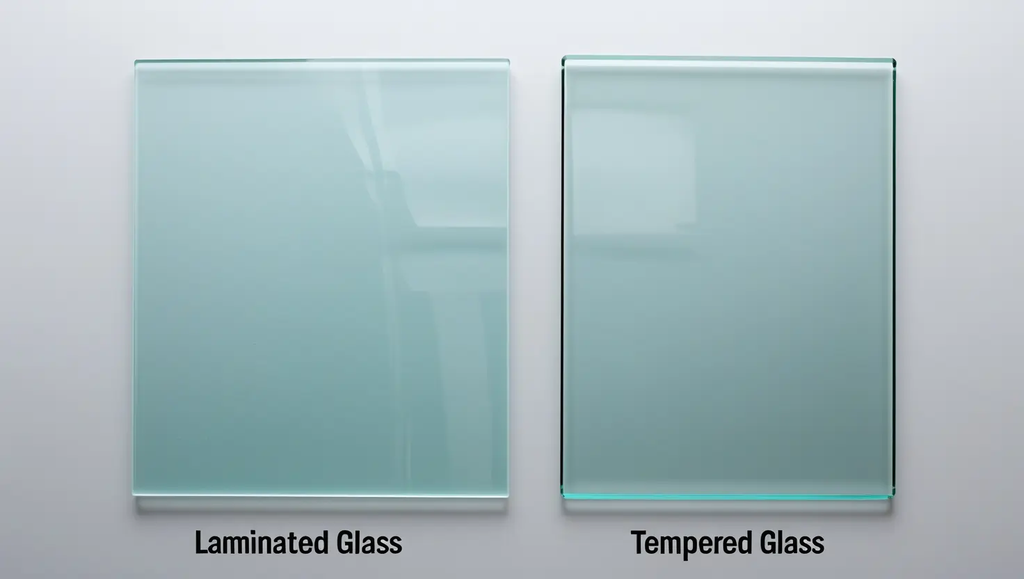
Laminated Glass Explained
Laminated glass consists of two or more glass plies bonded together with an interlayer. The interlayer is commonly made from materials such as PVB or other engineered polymers. ASTM C1172, the current ASTM specification for laminated architectural flat glass, covers laminated glass made from multiple glass lites bonded with an interlayer for building applications.
The important feature is what happens after breakage. If the glass cracks, the interlayer can hold many of the broken pieces together instead of allowing the pane to immediately fall apart.
This makes laminated glazing particularly useful when glass retention matters. Applications can include windows, doors, skylights, overhead glazing, security glazing, sound-reduction applications, and areas where falling glass could create a hazard. ASTM specifically recognizes laminated glass for safety, security, sound reduction, hurricane/cyclic-wind, and other specialized applications.
Laminated glass is also not necessarily made from ordinary annealed glass. Depending on the specification, laminated construction can incorporate heat-treated glass plies, allowing designers to combine strength with the retention characteristics of a laminated assembly.
Tempered Glass
Tempered glass is manufactured by heating glass and then rapidly cooling it to create a controlled stress pattern. This heat-treatment process increases its resistance to mechanical and thermal stresses compared with ordinary annealed glass.
ASTM C1048 covers heat-strengthened and fully tempered flat glass used in building construction. The standard also specifies an important fabrication requirement: cutting, drilling, edgework, notching, and similar fabrication must be completed before tempering because heat-treated glass cannot be cut afterward.
When fully tempered glass breaks, it typically fractures into many small particles rather than large, sharp pieces. That breakage pattern significantly reduces the likelihood of severe laceration compared with ordinary annealed glass. The U.S. government’s architectural glazing guidance describes tempered glass as safety glazing because of this characteristic.
Tempered glass is widely used where resistance to impact, thermal stress, and everyday wear is important. Common examples include shower enclosures, doors, partitions, furniture applications, and other interior or architectural installations.
The Main Difference in How They Break
The most useful way to compare these materials is to forget the marketing language and look at their failure behavior.
Tempered glass is intentionally processed so that, when it eventually fails, it breaks into relatively small pieces. The entire pane can lose its structural integrity quickly after a major break.
Laminated glass takes a different approach. The glass layers can crack, but the interlayer helps retain the fractured pieces. The pane may remain substantially in place rather than immediately collapsing.
That distinction matters in locations where glass fallout creates an additional hazard. For example, the National Glass Association’s heat-treated glass guidance identifies laminated glass as particularly important where retaining the glass after breakage is necessary, including certain overhead and railing applications.
Strength: Which Glass Is Stronger?
This question is more complicated than it appears. Fully tempered glass generally has substantially greater resistance to impact and thermal stress than ordinary annealed glass. However, saying that tempered glass is simply “stronger than laminated glass” is misleading because laminated glass is an assembly, not one specific strength level.
A laminated unit can contain annealed, heat-strengthened, or tempered glass plies. Its performance depends on the thickness and treatment of those plies, the interlayer, the overall construction, and the way the glass is supported.
In other words, don’t compare only the words “laminated” and “tempered.” Compare the actual glass construction specified for the project.
Safety After Breakage
For many applications, this is the most important difference. Tempered safety glass is intended to minimize injury from broken glass by fracturing into smaller pieces. This makes it a common choice for locations where people are likely to come into contact with the glazing.
Laminated safety glass adds another layer of protection: glass retention. The interlayer can help prevent fractured pieces from separating completely from the assembly.
Neither characteristic makes a pane indestructible. Laminated glass can still crack, and tempered glass can still break suddenly. Safety glazing should therefore be selected according to the specific installation, loading conditions, and applicable building requirements rather than simply choosing whichever material sounds stronger.
U.S. building codes and safety standards also distinguish between different glazing applications. Safety glazing in hazardous locations may need to meet requirements such as CPSC 16 CFR Part 1201 or ANSI Z97.1, depending on the application and governing code.
Sound Reduction and Privacy
Laminated construction can provide an advantage when reducing sound transmission is part of the design objective. The interlayer and multiple glass layers can alter the acoustic performance of the glazing assembly. The actual improvement depends on glass thickness, interlayer type, air spaces, framing, and the frequencies involved.
Tempered glass by itself is not specifically an acoustic glazing technology. It can be incorporated into an insulating glass unit, but tempering alone does not automatically make a window soundproof.
For homes near busy roads, commercial spaces, offices, schools, and other noise-sensitive environments, acoustic performance should therefore be evaluated as an entire glazing-system specification rather than based solely on whether the glass is tempered.
ASTM C1172 specifically recognizes sound-reduction glazing among laminated glass applications.
Security and Forced-Entry Resistance
Laminated construction can also be useful when the goal is to delay penetration after the glass has been damaged.
Because the interlayer can help hold broken glass together, an attacker may have a more difficult time creating a completely open passage through the glazing compared with a monolithic pane that has fractured.
However, ordinary laminated glass should not automatically be described as burglar-resistant glass. Security performance depends on the specific glass construction, interlayer, framing system, attachment method, and tested assembly.
ASTM C1172 covers different levels and applications of laminated architectural glass, including security and burglary-resisting glazing.
UV Protection and Interior Protection
Certain laminated glass constructions can also reduce the transmission of ultraviolet radiation because of the interlayer. This can be useful in buildings containing furnishings, artwork, flooring, fabrics, and merchandise that may be affected by prolonged UV exposure.
But UV performance varies by glass and interlayer specification. A laminated label alone should not be treated as a guarantee of a particular UV-transmission level. For projects where fading protection is important, request the actual spectral or UV-performance data for the proposed glazing.
Where Tempered Glass Usually Makes Sense
Tempered glass is often appropriate when the project needs increased strength and a safer breakage pattern without requiring the glass-retention characteristics of laminated construction.
Typical applications include shower doors and enclosures, glass partitions, some doors and sidelites, furniture, and other interior installations.
It is especially useful when the glass is exposed to frequent handling, impact, or temperature changes. However, the specific application still needs to satisfy applicable safety-glazing requirements.
For example, the International Building Code requires safety glazing in designated hazardous locations and specifies identification and performance requirements for regulated glazing.
Where Laminated Glass Usually Makes Sense
Laminated glass becomes more attractive when retaining broken glass is a major concern. It can be appropriate for certain windows and doors, skylights, overhead glazing, guardrails, hurricane-resistant glazing systems, security applications, and acoustic glazing.
The National Glass Association specifically notes laminated construction for situations where glass fallout is a concern and identifies laminated glass in certain overhead and guardrail applications.
For exterior glazing exposed to severe weather, the exact specification becomes particularly important. Wind loads; impact requirements, framing, anchorage, and local building codes all influence the appropriate glass construction.
Is Laminated or Tempered Glass More Expensive?
In many comparable applications, laminated glass costs more because it requires multiple glass plies and an interlayer, along with additional fabrication and processing.
Tempered glass is generally simpler when a single fully tempered lite meets the project’s requirements. But price should not be the only factor. Replacing a failed pane, repairing water or weather damage, addressing excessive noise, or dealing with a safety issue can cost considerably more than the initial difference in glazing price.
The better question is not “Which glass is cheaper?” It is “Which glass construction provides the required performance without paying for features the project does not need?”
Can You Use Both Laminated and Tempered Glass?
Yes. In fact, combining the two technologies can provide advantages in some applications.
A laminated assembly can contain tempered glass plies. This creates a glazing system that benefits from the strength characteristics of heat-treated glass while retaining the post-breakage characteristics associated with laminated construction.
This is one reason professional specifications should identify the complete glass makeup rather than simply calling for “safety glass.”
ASTM C1172 explicitly accounts for the number, thickness, and treatment of glass plies when specifying laminated architectural glass.
How to Choose the Right Glass for Your Project
Start with the location and the risk rather than the product name. If the primary concern is impact resistance and a safer breakage pattern in an interior application, fully tempered glass may be appropriate. If the concern is retaining fractured glass, reducing fallout, improving acoustic performance, or meeting certain security or weather requirements, laminated construction may be more suitable.
Then consider thickness, glass dimensions, support conditions, wind loads, thermal exposure, framing, hardware, and applicable local codes.
For regulated applications, the glass should be specified and documented according to the applicable safety standard rather than selected solely on appearance or price. ASTM standards provide separate specifications for laminated architectural glass and heat-treated glass, while U.S. building regulations establish requirements for safety glazing in designated applications.
Final Takeaway
Neither material is universally better. Tempered glass is primarily about strength and safer breakage, while laminated glass is primarily about glass retention and additional performance options such as security and sound reduction.
The smartest choice depends on what happens if the glass is struck, how the glazing is supported, whether falling glass is a concern, and what the building code requires.
For straightforward interior applications such as many shower enclosures and partitions, tempered glass is often a practical solution. For applications where retaining the glass after breakage is critical, particularly certain overhead, railing, security, acoustic, and weather-resistant systems, laminated construction deserves closer consideration.
Most importantly, specify the complete glazing assembly, not just the word “safety glass.” The glass type, thickness, treatment, interlayer, framing, installation method, and applicable safety standard all work together to determine real-world performance.