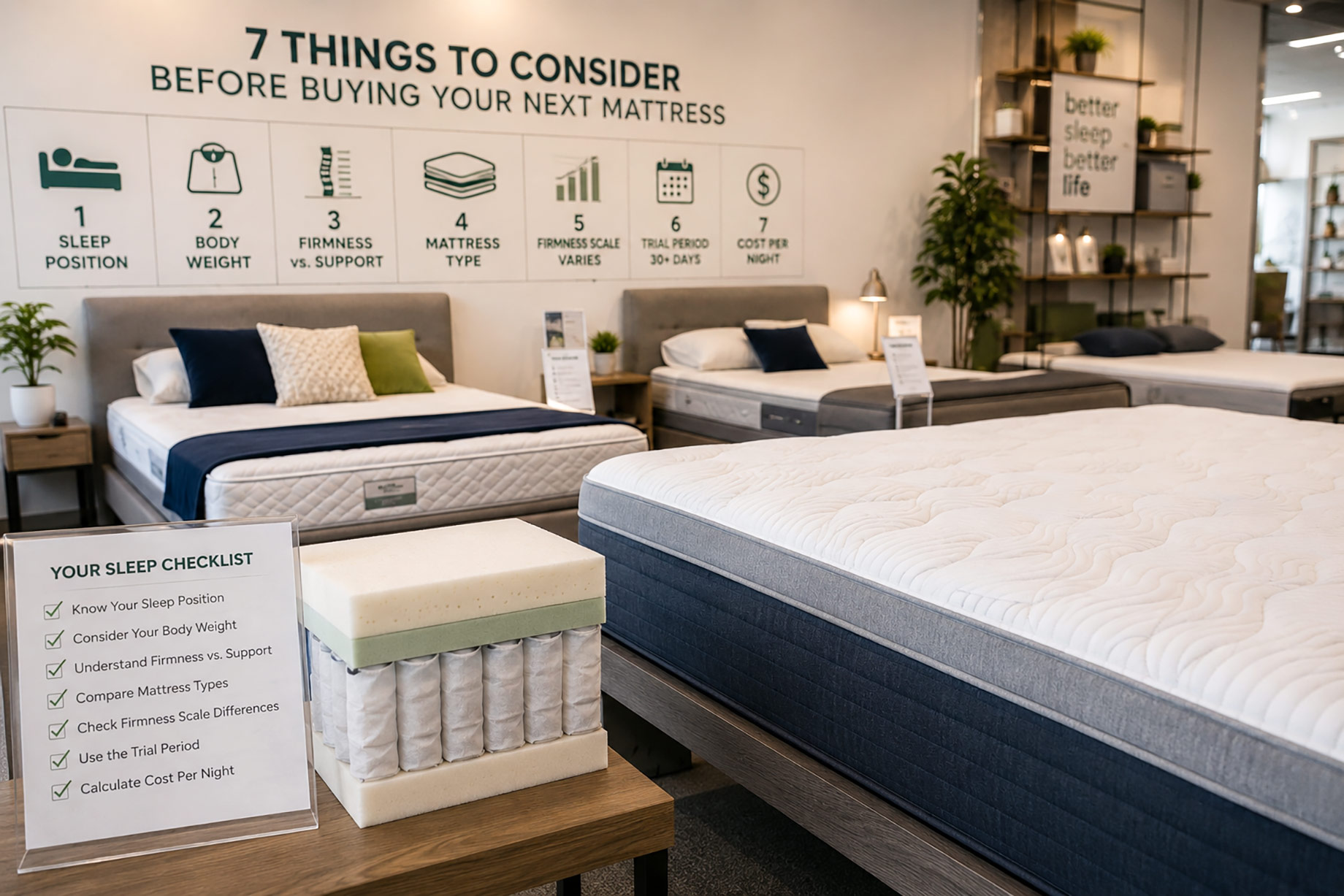
A mattress is one of the few purchases where the consequences of getting it wrong show up every single morning. Bad sleep compounds. So does back pain that started around month three of sleeping on the wrong surface. And yet most people spend less time researching a mattress than they do researching a laptop. The decision is more predictable than it feels in a showroom. There are a handful of things that, if you know them going in, make the choice considerably easier.
For example, the owners at Sleep Basil, one of the local mattress stores in Denver, have pointed out that many customers arrive with the wrong question. They ask “what’s comfortable?” when they should be asking “what keeps my spine neutral for eight hours?” Comfort and support aren’t the same thing, and understanding that distinction changes how you shop.
1. Your Sleep Position Is the Starting Point
Sleep position is the most reliable predictor of firmness range. Side sleepers typically need medium to medium-soft (4-6) to let the shoulder and hip sink in without forcing the spine sideways.
Back sleepers do well in medium to medium-firm (5-7) for lumbar support without the hips dropping. Stomach sleepers generally need firmer (6-8), since a soft surface lets hips sink and creates a spinal curve. Combination sleepers usually land in the medium range (5-6).
2. Body Weight Adjusts That Starting Range
A mattress rated “medium” compresses more under a 240-pound sleeper than a 140-pound sleeper. Heavier sleepers should consider moving one level firmer than their sleep position suggests, for the resistance needed to support properly.
Lighter sleepers, especially side sleepers, often need to shift slightly softer to get adequate pressure relief at the shoulder and hip.
3. Firmness and Support Are Not the Same Thing
Firmness is what you feel when you lie down. Support is whether the core keeps your spine aligned through the night.
A mattress can feel plush and still support you well. Another can feel firm and still let your hips sink over time. If you wake up stiff in specific spots, the issue is usually support, not firmness. Look for a mattress that holds your spine in the same neutral position it would be in standing.
4. Mattress Type Affects How It Behaves, Not Just How It Feels
Memory foam contours closely and softens as it warms, good for pressure relief, but it retains heat and resists motion. Innerspring is more responsive, cooler, and easier to move on, but doesn’t contour as closely. Latex is responsive like innerspring but contours more, breathes well, and holds firmness longer.
Hybrids combine foam comfort layers with a coil base. If you share a bed, motion isolation (foam or latex) is worth prioritizing over a bouncier innerspring.
5. The Firmness Scale Is Not Standardized Across Brands
A “7” from one brand can feel like a “5” from another. The scale is internal to each manufacturer, so comparing numbers across brands doesn’t tell you much. What matters is understanding the feel you need, then researching how a specific model performs for people with similar sleep positions and body weights.
If shopping in person, a specialist at a reputable store can translate across brands in ways a product tag cannot.
6. Give It at Least 30 Days Before Making a Judgment
Your body adjusts to a new surface, and the first week or two often feels off regardless of fit. Most reputable brands offer a trial period.
Thirty days is a reasonable minimum before judging. That said, consistent joint or back pain after two weeks isn’t adaptation. That’s a sign the mattress isn’t right, and waiting won’t fix it.
7. Think in Terms of Cost Per Night, Not Sticker Price
A $600 mattress that loses support after three years costs more per night than a $1,800 one that lasts ten. Going too cheap usually means shorter useful life. That said, you don’t need top of the range.
A mid-tier mattress from a reputable brand, matched well to your needs, is the practical sweet spot. Also worth asking: does the purchase include free delivery, haul-away, and a trial period? Those details add real value and are easier to get at local specialty stores.
Conclusion
None of these factors is complicated on its own. The difficulty is that most people walk into a store without having thought through any of them, which is when a salesperson or a good-looking display model ends up making the decision instead. So, know your sleep position, factor in your weight, understand the difference between firmness and support, and have a rough sense of which material fits your needs.
