Producing the same high-quality weld from the first part to the last can be difficult. Small changes in torch angle, travel speed, joint fit-up, heat input, and operator fatigue can affect the finished joint. When production volumes rise, or skilled welders are stretched across several jobs, cobot welding can help you control these variables while keeping experienced people involved.
A collaborative robot does not remove the need for welding knowledge. Instead, cobot welding lets you apply that knowledge through repeatable automated motion. Once suitable weld paths and process settings are established, the system can reproduce them across similar parts. This can help reduce variation and rework while giving skilled welders more time for inspection, troubleshooting, and complex tasks.
Why Weld Consistency Can Be Difficult to Maintain
A good weld depends on more than the welding machine. You need the correct relationship between the torch, joint, workpiece, filler material, shielding conditions, speed, and heat input.
During manual welding, maintaining every variable through a long shift can be challenging. Even an experienced welder makes continuous physical adjustments. Repetitive movement, awkward positioning, changing visibility, and fatigue can introduce differences between welds.
Automation can help because a programmed robot can repeat a defined movement without fatigue. Controlled torch orientation, welding speed, and distance from the workpiece can contribute to more consistent results.
You may notice inconsistency through:
- Different bead widths
- Changes in penetration or appearance
- Excessive finishing or grinding
- Rework after inspection
- Variations between operators
- Unpredictable cycle times
The objective is to create a stable process in which important welding variables remain repeatable.
How Collaborative Robot Technology Improves Weld Repeatability
Consistent Torch Movement
One of the main advantages of collaborative robot technology is repeatable movement. Once you program a suitable path, the cobot can follow the same trajectory, orientation, and travel pattern for comparable workpieces.
This consistency matters because a torch moving too quickly, too slowly, too close, too far, or at an unsuitable angle can affect the weld.
Collaborative welding systems can also use sensing, seam detection, trajectory planning, and adaptive control to respond to production conditions. Automation works best when programming and physical setup are treated as parts of the welding process.
Stable Welding Parameters
Motion is only one part of the equation. Reliable results also depend on controlling parameters appropriate to the material, joint, and process.
A well-integrated cobot welding system can help maintain repeatable:
- Travel speed
- Torch orientation
- Welding power
- Wire feeding
- Weld paths
- Start and stop locations
Greater control also provides a stable baseline when you need to investigate defects or process changes.
Manual and Collaborative Welding: Where the Difference Matters
You do not need to automate every weld. Collaborative robot technology is often most useful for work where repeatability and repetitive motion matter.
| Production Factor | Manual Welding | Collaborative Robot Welding |
| Torch movement | Depends on operator control | Programmed and repeatable |
| Repetitive joints | Can increase fatigue | Suited to repeated paths |
| Changeovers | Flexible through welder skill | Requires setup or reprogramming |
| One-off work | Strong fit for manual welding | May require extra programming |
| Process consistency | Can vary by conditions | More predictable after setup |
| Human expertise | Directly controls the weld | Guides programming and quality |
Automation is not automatically better for every application. A one-off repair may be faster manually, while repeated brackets, frames, enclosures, or similar seams can provide a stronger case for automation.
Your production mix should determine where collaborative technology is applied.
Getting Better Results From Cobot Welding
A robot can repeat both good and bad instructions precisely, making preparation essential.
Start With Reliable Part Fit-Up
Automation performs best when incoming parts are reasonably consistent. When joint positions vary between assemblies, robotic repeatability alone may not compensate for uncontrolled variation.
Before automating a job, check:
- Fixture repeatability
- Joint position
- Part dimensions
- Surface preparation
- Clamping stability
- Welding head accessibility
Improving these areas can support better results before automated welding begins.
Validate Before Scaling
Do not treat the first successful program as the final version.
Run test pieces and examine penetration, bead profile, distortion, start and stop behavior, and relevant inspection criteria. Small changes to travel speed, orientation, path points, or process settings can influence the result.
Once you establish a stable procedure, document it to simplify future setup and troubleshooting.
Track Process Variation
Reject counts show when something has already gone wrong. Process tracking can help you identify changes earlier.
Useful measurements include:
- Rework per batch
- First-pass acceptance
- Average welding cycle
- Common defect locations
- Setup time
- Consumable usage
- Unplanned interruptions
Calibration, fixture condition, and maintenance should also be monitored because changes can affect how accurately the programmed weld is reproduced.
Collaborative Robot Technology Still Depends on Welding Knowledge
Collaborative technology works best as a tool for skilled people, not as a substitute for process understanding.
Your welder may know that a joint is sensitive to heat, a fixture tends to shift, or a section requires a different approach angle. This knowledge is valuable when programming and refining an automated procedure.
A skilled person can spend more time on:
- Developing weld procedures
- Checking fixtures
- Programming paths
- Inspecting finished parts
- Solving production problems
- Handling complex work
Human judgment remains important when parts vary, or defects require detailed interpretation.
When Collaborative Robot Welding Makes Sense
Before investing time in automation, choose the right application.
A good candidate typically has repeatable geometry, accessible weld locations, predictable fit-up, and enough recurring production to justify programming and setup. The workpiece should also remain secure while suitable torch angles are maintained.
Cobot welding can help when you need to improve repetitive weld consistency, reduce rework, or allow skilled employees to focus on higher-value tasks.
It may be less suitable when components change substantially, fit-up cannot be controlled, or programming takes longer than completing a small batch manually.
Building a More Controlled Welding Process
Choosing suitable equipment is only the beginning. You need to consider how the collaborative robot, welding source, controls, fixtures, workpieces, and operator function as one process.
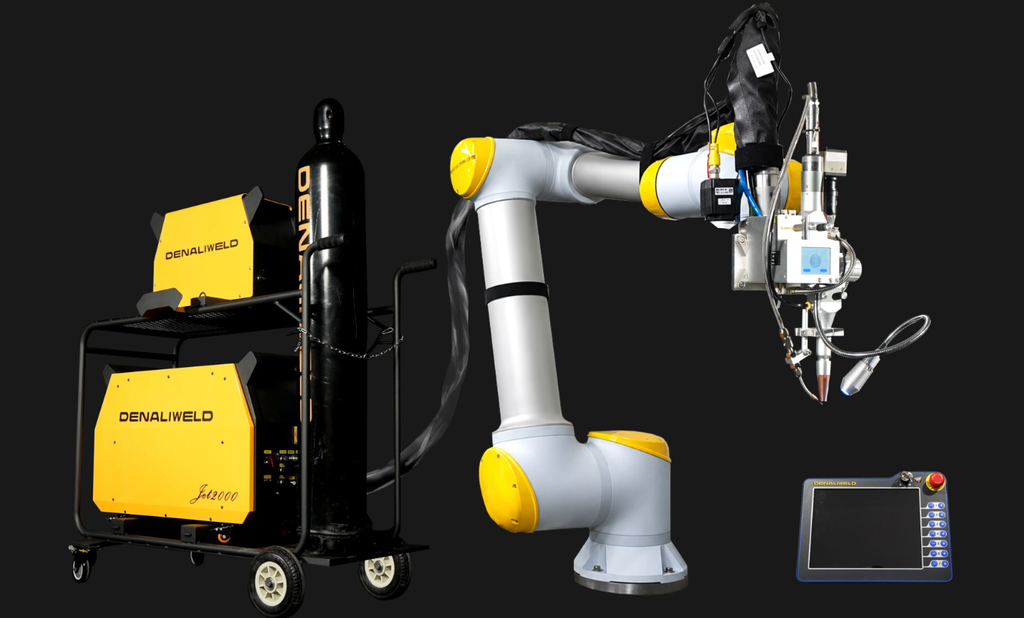
Denaliweld provides equipment intended for automated welding applications. When assessing a system, focus on capabilities that support repeatable parameters, process control, practical integration, and reliable operation. Their value still depends on proper setup, programming, maintenance, and welding procedure development.
Focus on measurable goals rather than automation alone. Identify what needs improvement, establish a baseline, automate a suitable application, and compare performance after the process becomes stable.
Conclusion
Improving weld consistency requires control over the complete process. Collaborative robot technology can help maintain repeatable torch movement, welding paths, and process settings while reducing the physical demands of repetitive welding. Strong results still depend on reliable fixtures, proper preparation, validated procedures, equipment checks, and skilled oversight.
Start with an application that gives you a clear way to measure success. Record rework, production time, quality results, and setup requirements before automation, then compare those measures once the process is stable. Used as a practical process-control tool, collaborative robot technology can help you create a more predictable and adaptable welding operation.