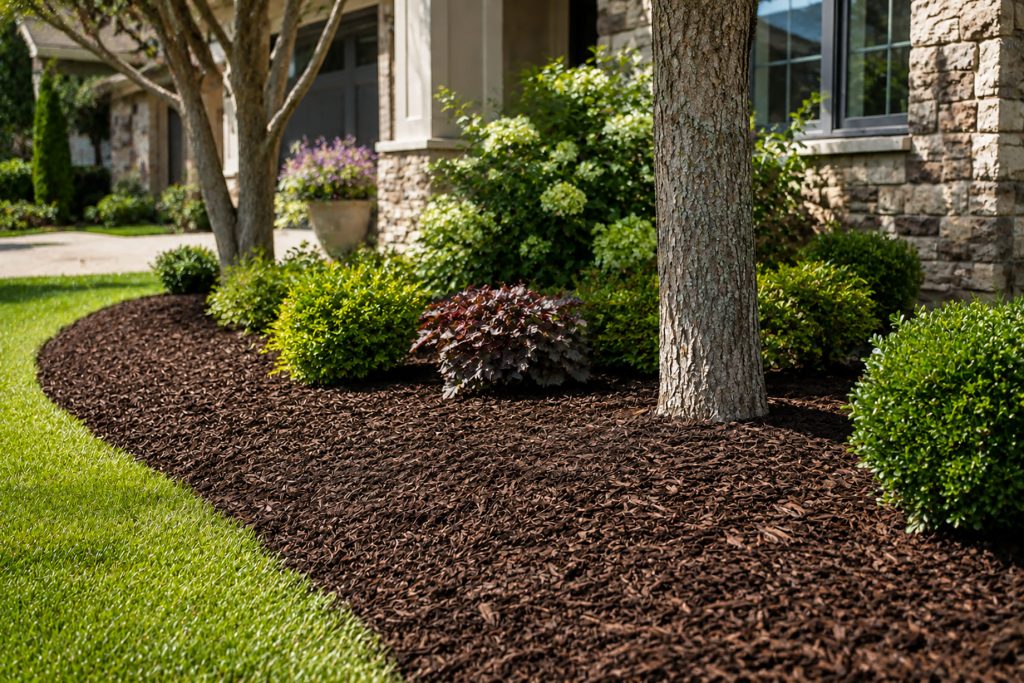
Mulch buying feels like it should be simple. Pick a color, order enough bags, spread it around. What most people discover after their first significant mulch purchase is that the decisions made before material arrives determine whether beds look sharp for a full season or require remediation within weeks. Wrong material for the site, insufficient depth, poor installation timing, or quality that looked fine in product photos and arrived as something else entirely — each of these produces outcomes that more upfront research would have prevented.
Material type matters more than color. Shredded hardwood — the most widely used residential mulch — interlocks as it settles, resisting displacement on slopes and in beds with established irrigation that creates surface water movement. It decomposes over one to two years, adding organic matter to soil as it breaks down. Pine bark nuggets drain faster and suit moisture-sensitive plants but move under heavy rainfall on any slope worth mentioning. Cedar and cypress carry natural oils that provide modest insect deterrence, which adds marginal value around foundations in high-termite areas but shouldn’t drive material selection in low-risk situations.
Volume calculation trips up first-time bulk buyers consistently. One cubic yard covers roughly one hundred square feet at three-inch depth — three inches being the minimum effective depth for weed suppression in most soil types. Below that threshold, light still penetrates enough to germinate weed seeds regardless of surface coverage. Measure actual bed area accurately, calculate cubic yards needed at three-inch depth, then add ten percent for settling, edge waste, and the universal tendency to underestimate coverage needs until material runs short mid-project.
Dyed mulch color retention depends heavily on colorant quality, which varies more than packaging suggests. Premium dyed products maintain color through six to twelve months of UV exposure. Standard products fade noticeably within three to four months during summer sun. Natural hardwood mulch sidesteps the color retention question by fading from rich brown to silver-gray through weathering rather than UV degradation — some gardeners prefer the aged look, others find annual refresh worth the cost.
For projects covering more than a few hundred square feet, bagged product from garden centers becomes expensive and physically demanding at scale. Scheduling a mulch delivery of bulk material drops per-cubic-yard cost significantly compared to bagged retail pricing and eliminates the per-bag lifting that makes large projects genuinely exhausting. The practical requirement is confirming delivery truck access before ordering — vehicle width, overhead clearance, surface load capacity, and turning radius all affect whether bulk delivery reaches intended drop locations without complications.
Installation Timing and Bed Preparation
Bed preparation before mulch arrives changes how well installation performs across an entire season. Existing weeds pulled or treated before mulch goes down prevents layering over live root systems that find mulch coverage creates favorable germination conditions rather than suppression. Edging bed boundaries cleanly — spade cut along lawn transitions, defined border along hardscape — prevents lateral mulch migration that destroys sharp bed lines within months of installation. Neither step requires special equipment; both require doing before mulch arrives rather than discovering their importance afterward.
Spring installation between April and early May catches most beds before peak weed pressure builds and ahead of heat that accelerates moisture loss from unprotected soil surfaces. Mulch applied ahead of summer retains soil moisture through the months when supplemental irrigation demand peaks, reducing watering frequency in established beds by measurable amounts across a full summer. Fall mulch application after perennial dieback protects root zones through winter temperature swings and positions beds for clean spring emergence without competing with late-season weed seed germination that warm-soil fall mulching sometimes accelerates.
Placement Around Plants
Mulch volcano — piling mulch directly against tree trunks and shrub stems in a cone shape — appears in residential landscapes constantly and causes damage consistently. Sustained moisture contact with woody stem tissue creates conditions for fungal collar rot, bark beetle attraction, and vole tunneling. Maintain four to six inches of clearance around every woody plant stem, creating a donut shape with mulch rather than a volcano. This detail is visually subtle and practically significant — the difference between mulch that helps plants and mulch that slowly harms them.
Annual topdressing rather than complete replacement preserves soil biology that accumulates in decomposing lower layers over time. Rake existing material to restore the loft, add fresh material to restore depth to three inches, address bare spots where soil has been exposed. Complete removal becomes necessary every three to four years when material has fully composted into soil surface and topdressing would create excessive depth rather than restoring it. Recognizing which situation applies — topdress or replace — prevents over-mulching that creates the anaerobic root zone conditions that deep mulch produces when accumulated depth exceeds five inches.
