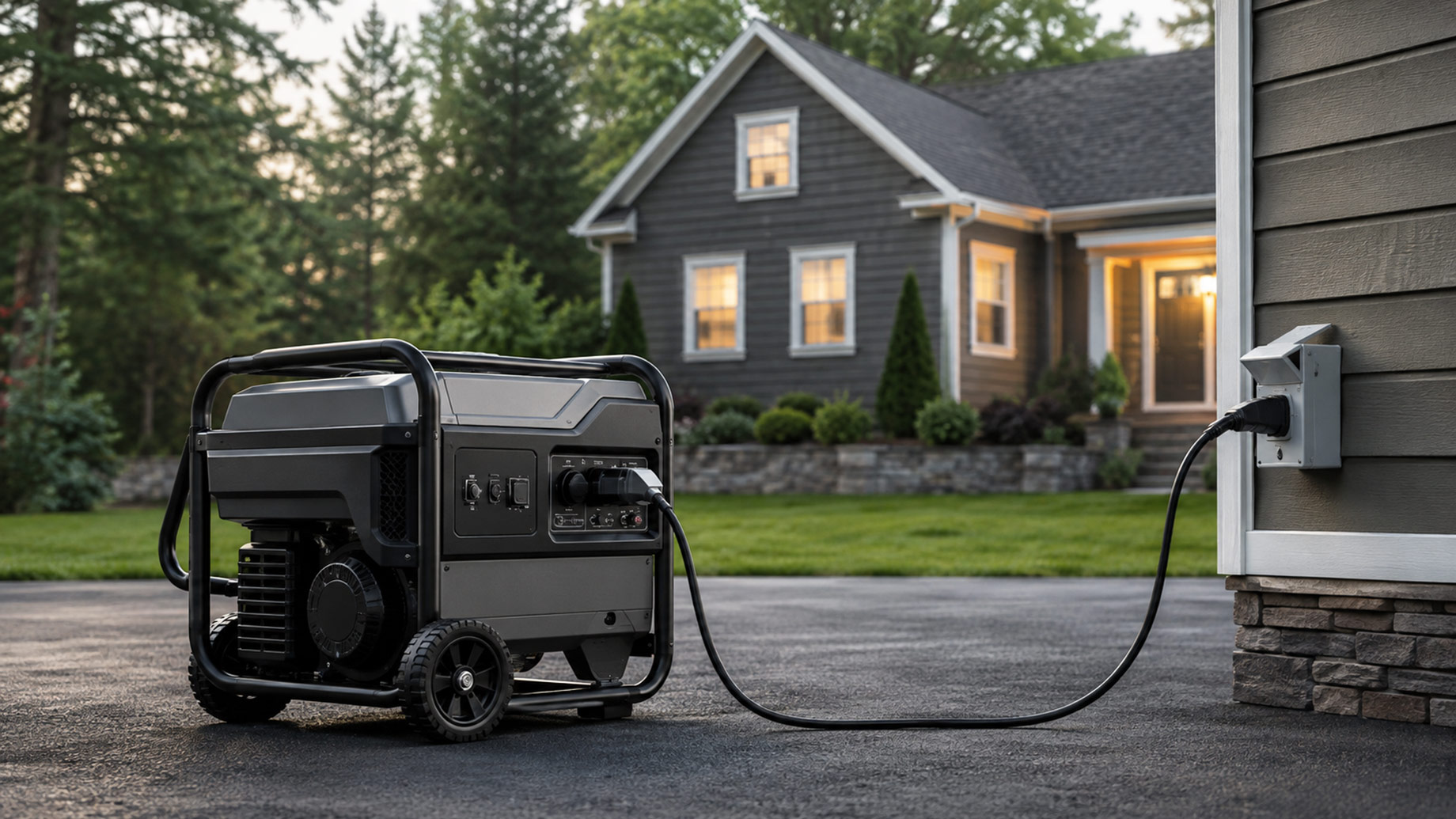
An outage can quickly put essential systems at risk. The freezer goes quiet, the sump pump stops, and heating or cooling equipment may no longer work.
Keep three goals in view when choosing a portable generator: enough capacity for essential loads, manageable noise, and a safe connection. The generator must run outdoors, well away from the house, with its exhaust pointed away from doors, windows, and vents. If you want it to power circuits through your electrical panel, have a licensed electrician install approved transfer equipment.
Step 1: Decide what you need to power
List the essential loads
Write down your priorities, such as the refrigerator and freezer, sump or well pump, furnace or air-handler fan, internet equipment, a few lights, and device chargers. Leave out appliances you can manage without during a short outage.
Pay close attention to equipment with motors. A compressor or pump can draw several times its normal power for a few seconds when starting. During an outage, switch on large loads one at a time and let each settle before adding another.
Estimate watts without overbuying
Add the running watts for the loads you plan to use at the same time, then add the largest single starting surge. This provides a rough capacity target. Check whether any essential equipment needs 240 volts, which is common for well pumps, mini-splits, and some central air conditioners.
Appliance nameplates are more reliable than estimates. Use a portable generator buying guide as a checklist, and run your figures through an online power calculator that converts watts, kilowatts, kilovolt-amperes, and amps. Treat the result as a starting point, not a substitute for an electrician’s load calculation.
Step 2: Choose the type that fits your home
Inverter or conventional
Inverter generators adjust engine speed as demand changes. They usually run more quietly at light loads and provide stable power for computers, routers, and other sensitive electronics. Open-frame conventional models often cost less per watt and may provide more 240-volt capacity.
An inverter model can be easier to live with if your list mainly includes electronics, lights, and refrigeration. If you need to start a well pump, large motor, or HVAC system, available capacity and outlet configuration may determine your choice.
Fuel choices
Gasoline is widely available, but it degrades during storage and requires careful rotation or stabilization. Propane stores longer and burns cleanly, although a generator will usually produce slightly less power on propane than on gasoline. A side-by-side comparison of generator fuel options is useful if you are weighing storage limits against expected runtime.
Before choosing, consider how much fuel you can safely store and how long the generator runs at your expected load. Keep fuel outside living areas in approved containers, follow local storage rules, and never refuel a hot or running engine.
Step 3: Plan the hookup and placement before you buy
Decide how the generator will connect to your home before selecting a model. The connection plan affects the outlets, voltage, and capacity you need. The Pinnacle List’s homeowner guidance on preparing for outages with emergency generators can serve as a broader planning checklist.
Use an approved transfer switch or interlock
When a generator connects to a home’s wiring, transfer equipment must prevent the generator and utility supply from energizing the panel at the same time. A transfer switch or panel-compatible interlock installed by a licensed electrician is required by code under NEC Article 702. The electrician can determine whether the equipment is allowed under local code and can install the correct power inlet.
Never connect a generator to the house through a standard wall outlet. This practice, known as backfeeding, can energize utility lines, damage equipment, start a fire, and seriously injure utility workers. Do not modify plugs, cords, or breaker panels to create a temporary connection.
Choose a safe operating location
Run the generator outdoors, at least 20 feet from the house, with the exhaust directed away from doors, windows, vents, and neighboring buildings. Never operate it in a garage, shed, basement, crawl space, breezeway, or other partly enclosed area, even if doors are open.
Place the unit on stable, non-combustible ground and protect it from rain only with a setup approved by the manufacturer that maintains open airflow. Install working carbon monoxide alarms on every level of the home and near sleeping areas. Use outdoor-rated cords sized for the connected load, and let the engine cool before adding fuel. Once your site and connection are planned, you can buy a portable generator from Macfarlane to compare capacity and fuel options.
Step 4: Compare noise, runtime, and ownership costs
Eco mode allows an inverter generator to lower engine speed when demand is light. This reduces noise and fuel use, but some manufacturers recommend turning it off when starting equipment with a large surge. Runtime claims also depend on load, so compare fuel-tank size and expected overnight demand rather than relying only on the longest advertised figure.
The purchase price is only one part of the cost. Budget for transfer equipment and installation, an inlet cord or heavy-duty extension cords, fuel, oil changes, and scheduled test runs. Macfarlane’s catalog organizes many units by kilovolt-amperes, which can help with initial comparisons, but confirm the usable wattage and voltage of each model.
Where to buy and what to compare
Once you have settled the required capacity, fuel, and connection method, compare models side by side using the same criteria:
- Rated running watts and starting watts for each fuel type
- True 120/240-volt support and a receptacle compatible with the planned inlet
- Carbon monoxide shutoff and markings such as UL 2201 or PGMA G300
- Sound level, measurement distance, and test load
- Runtime at a load close to what you expect to use
- Weight, handle design, wheel size, warranty, and local service options
If you want to filter models by capacity and fuel type before speaking with an installer, use a power calculator for an initial kilovolt-ampere estimate. The collection lists comparison details, but availability, specifications, and prices can change. Verify the current model details and local electrical requirements before ordering.
Final thoughts
A dependable backup plan starts with three decisions: identify the essential loads, arrange an approved electrical connection, and choose a safe outdoor operating location. Confirm the final generator size and hookup with a licensed electrician before buying. It is also worth testing the complete setup in good weather so you know how to position, start, connect, and refuel the unit safely during an outage.
