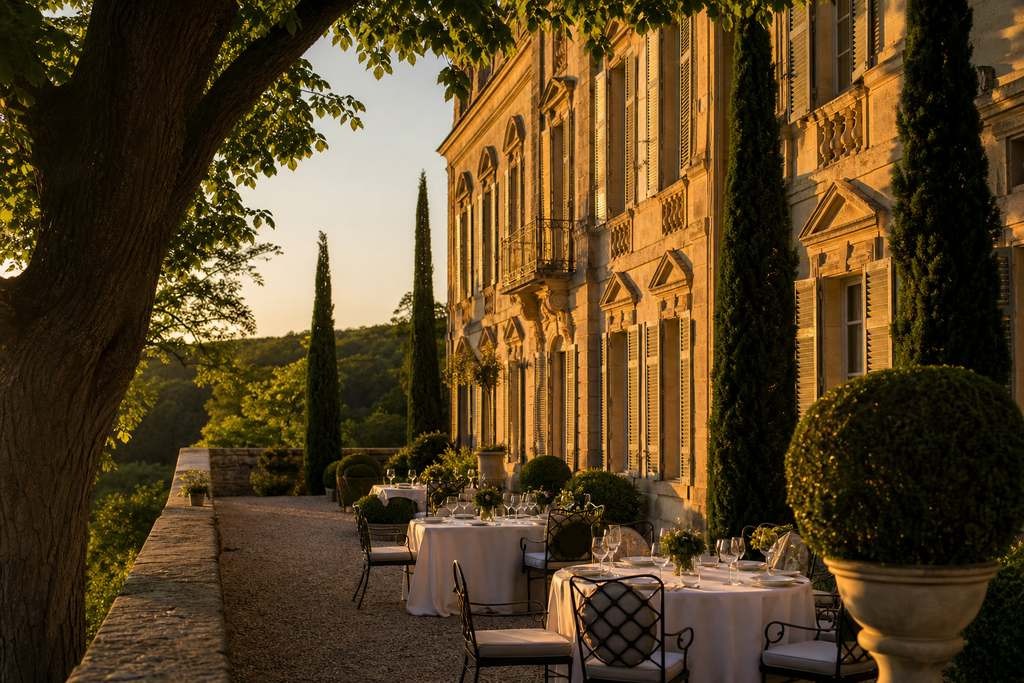
A European destination wedding is now a mainstream choice rather than an outlier: according to The Knot Real Weddings Study, 18% of couples married at what they considered a destination wedding, and 26% of international destination weddings took place in Europe. That puts the continent second only to Mexico, which accounted for 34%. For owners of estates, villas and historic properties, those figures translate into a specific and demanding category of buyer: couples who will judge a property on how it performs across three days, not on how it photographs in a listing.
Key takeaways
- The average destination wedding cost $39,000 in 2025, against roughly $33,000 for weddings overall.
- 26% of international destination weddings were held in Europe, behind Mexico at 34% and ahead of the Caribbean at 21%.
- Only 37% of couples book a professional videographer, making it the most commonly skipped line in the budget.
- The average videographer cost is $2,300, with a spread from $1,000 in the lower quartile to $3,300 in the upper.
- A venue’s usable value comes from logistics, on-site accommodation and a credible indoor alternative, not from its facade.
What the data says about European destination weddings
The Knot Real Weddings Study puts the average destination wedding at $39,000 in 2025, a decrease from $41,000 the previous year. International destination weddings average $41,000. Set against an overall wedding average of about $33,000, the premium for going abroad is real but narrower than most people assume, at roughly $6,000.
The geographic split matters more than the headline cost. Mexico takes 34% of international destination weddings, Europe 26% and the Caribbean 21%. Europe’s share is not driven by beach resorts but by a category that barely exists elsewhere at scale: privately owned historic properties that can be booked exclusively for several days. That is a supply characteristic, and it is what a property owner is actually selling.
Guest capacity deserves separate thought. Asking guests to travel internationally filters the list in a way a local wedding does not, so a property whose economics only work at full capacity is exposed in this market. Flexibility across a wide range of guest counts, rather than a single optimal number, is what keeps a venue viable for destination bookings.
Budgeting the film: the line couples most often skip
Among all wedding suppliers, video is the one where intention and follow-through diverge most sharply. The Knot’s data shows that only 37% of couples book a wedding videographer, while the average spend among those who do is $2,300. The distribution is wide.
| Spending band | Videographer cost |
| Lower quartile | $1,000 |
| Median | $1,900 |
| Average | $2,300 |
| Upper quartile | $3,300 |
The gap between the median of $1,900 and the average of $2,300 tells its own story: a minority of higher-end bookings pulls the mean upward, which is exactly the pattern you would expect in a market where destination work sits at the top end. Multi-day coverage, travel and a second shooter do not fit inside an entry-level package.
Destination bookings add a scheduling constraint that domestic ones do not. A destination wedding videographer in Europe is typically covering a welcome dinner, the ceremony day and often a farewell brunch, which means blocking out several days and arriving before the couple’s guests do. Booking late in the planning cycle narrows the field considerably, because the suppliers who work this way hold limited dates per season.
For a venue owner, this has a practical consequence worth understanding. Film crews shape their day around light and access. A property that grants early morning and blue hour access, and that allows a crew to move freely between the accommodation, the ceremony site and the reception space without crossing a public road, is materially easier to work with. That ease circulates by word of mouth among suppliers long before it reaches couples.
What makes an estate work as a wedding venue
Properties that photograph beautifully do not automatically function well across a wedding weekend. The criteria below separate the two, and they are the questions experienced planners ask on a site visit.
| Criterion | Why it decides the booking |
| On-site accommodation | Removes transfer logistics for the couple and the core party, and extends the event from one day to a weekend. |
| Credible indoor alternative | A marquee slot is not a plan. Couples want to see the wet-weather option in person before committing. |
| Orientation and light | Determines when the ceremony can realistically be held. A west-facing terrace and an east-facing one produce very different timelines. |
| Noise and curfew rules | Local restrictions on amplified music set the end time. This is the constraint most often discovered too late. |
| Access for suppliers | Vehicle access to the reception space, power supply and a preparation area decide whether caterers and crews can work efficiently. |
| Exclusivity of use | Sharing the grounds with other guests during a wedding weekend is a common cause of dispute and of poor reviews. |
Two of these carry disproportionate weight. The indoor alternative is the one couples return to repeatedly during negotiations, because it is the only genuine risk they cannot control. And curfew rules are the one owners most often present late, which erodes trust at precisely the moment a deposit is being discussed. Stating both openly on the first enquiry shortens the sales cycle rather than lengthening it.
Frequently asked questions
Is a destination wedding significantly more expensive than a wedding at home?
Less than the reputation suggests. The Knot Real Weddings Study puts destination weddings at an average of $39,000 against roughly $33,000 for weddings overall, so the measured gap is about $6,000 rather than the doubling many couples expect. Note that these figures cover what the couple spends, not what guests pay to attend.
Why is Europe the second most popular international destination?
It holds 26% of international destination weddings, behind Mexico at 34%. The distinguishing factor is supply: privately owned historic estates and villas that can be reserved exclusively for several consecutive days exist across Europe at a scale that other regions cannot match.
How far in advance should a destination videographer be booked?
Earlier than a domestic one, because destination coverage consumes several days rather than a single day. Suppliers working this way hold a limited number of dates per season, so availability, not budget, is usually the binding constraint once the venue is confirmed.
What should a property owner prepare before marketing an estate to couples?
Written answers to the six criteria above, particularly the wet-weather plan and the amplified music curfew. Planners screen venues on these points before arranging a visit, and an enquiry that answers them upfront converts at a noticeably higher rate than one that defers them.
Sources
- The Knot Real Weddings Study, via The Knot, “How Much Does a Destination Wedding Cost? Real Couples Share” (theknot.com).
- The Knot Real Weddings Study, via The Knot, “The Average Cost of a Wedding Videographer, According to Data” (theknot.com).