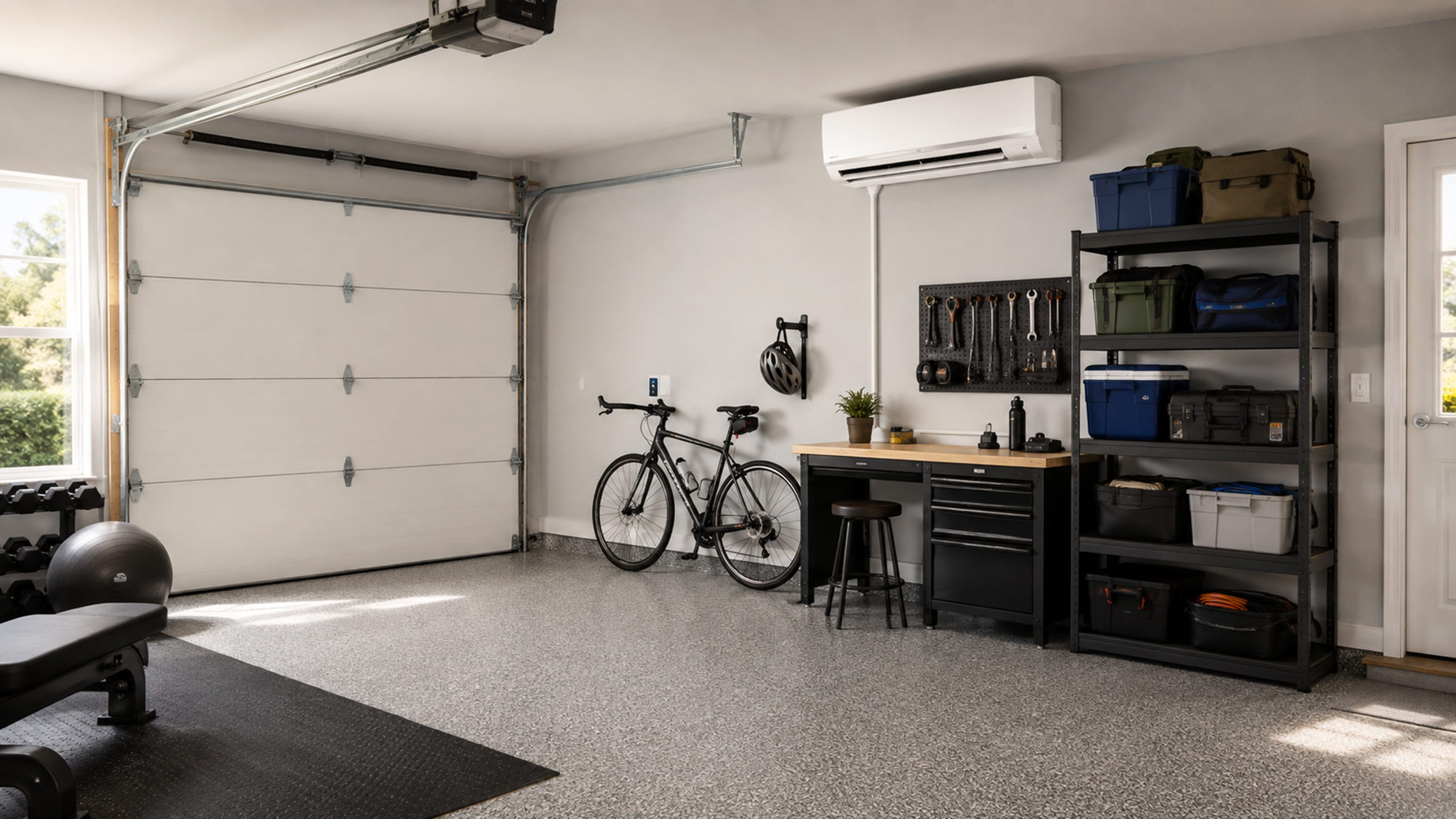
A garage often carries more heat stress than the rest of a house. Concrete, overhead doors, roof exposure, and limited airflow can trap warmth for hours after sunset. Before adding cooling equipment, homeowners need a clear look at insulation, air leakage, electrical service, moisture control, and daily use. Careful preparation protects comfort, equipment life, stored supplies, and the household budget during long periods of summer heat.
Start With Garage Use
A garage used for woodworking, workouts, laundry, or weekend repairs carries a different cooling burden than a bay used only for parking. Before homeowners install air conditioning in garage spaces, they should map occupancy hours, stored materials, heat exposure, and comfort limits. That usage profile guides capacity, mounting location, ventilation needs, and whether a fixed system justifies its higher installed cost.
Check Insulation First
Cooling an unfinished garage without insulation forces equipment to fight constant heat gain. Bare studs, thin doors, and open ceiling cavities allow warm air to move quickly. Insulated wall bays, attic coverage, and thermal door panels slow that transfer. The result is steadier comfort, shorter run times, less noise, and lower wear during peak afternoon demand.
Seal Air Leaks
Small gaps can drain conditioned air faster than many owners expect. Door edges, thresholds, outlets, framing seams, and wall penetrations deserve close inspection. Weatherstripping, sweep replacement, and low-expansion foam can reduce heat entry and dust movement. A smoke pencil, incense stick, or visual check can identify leaks before equipment selection begins.
Measure Heat Load
Square footage gives only part of the picture. Ceiling height, window area, roof color, sun angle, and door material all influence heat load. A west-facing metal door can radiate warmth deep into the evening. Freezers, lighting, chargers, tools, and recently parked vehicles add more heat. Proper sizing begins with these conditions, not guesswork.
Choose the Right Unit
Portable units, window systems, through-wall models, ductless heat pumps, and duct extensions each fit different situations. Portable equipment may help during short work sessions, but exhaust routing matters. Window systems need strong framing and weather protection. Ductless units usually offer quieter cooling and better efficiency. Extending household ducts requires load review, airflow balancing, and code-aware installation.
Avoid Poor Sizing
Undersized equipment may run continuously while still leaving the room hot. Oversized cooling can drop temperature too fast without removing enough moisture. That pattern may leave surfaces clammy and encourage corrosion. Capacity should reflect room volume, insulation quality, solar exposure, and planned activity. A qualified calculation reduces strain and improves comfort consistency.
Review Electrical Capacity
Garage circuits often already support openers, lights, freezers, chargers, compressors, or power tools. Adding cooling without checking amperage can overload breakers. Some systems need a dedicated circuit, correct conductor size, and proper protection. Electrical review should happen before purchase because service limits may narrow equipment choices. This step supports safer performance during high-demand weather.
Plan Condensate Drainage
Air conditioners remove moisture as they cool. That water needs a clean, reliable path away from floors, shelves, and stored materials. Poor drainage can lead to slipping, rust, staining, or microbial growth. Portable units may require manual emptying or pump support. Wall-mounted and ductless systems usually need routed drain lines that remain accessible.
Think About Venting
Any unit that exhausts hot air must move it outdoors without pulling heated air back inside. Single-hose portable models may struggle because they create negative pressure. Dual-hose designs often perform better in very warm spaces. Window and through-wall systems need secure mounting, flashing, and tight seals. Good venting also helps keep rain, pests, and dust outside.
Keep Vehicle Safety Separate
Cooling does not make indoor engine operation safe. Carbon monoxide can rise quickly, even with fans or partially open doors. Vehicles should be started only for necessary movement, then taken outside promptly. Connected garages need sound door seals and working carbon monoxide alarms near living areas. Comfort upgrades must stay separate from basic life-safety practices.
Compare Operating Costs
Operating cost depends on run time, efficiency rating, insulation, thermostat setting, and local electricity prices. A garage used briefly may need cooling only before planned activity. Daily use may justify a higher-efficiency fixed system. Programmable controls can limit waste during empty hours. Owners should compare purchase price with installation, maintenance, expected use, and utility impact.
Protect Stored Items
Temperature control can help protect paints, adhesives, batteries, electronics, and certain finishes. Prolonged heat may shorten shelf life or damage sensitive materials. Cooling still needs good storage habits, including labels, dry shelves, and safe clearance around drain lines. Food, chemicals, and flammables require separate caution. Climate control supports organization, but it cannot replace proper material handling.
Conclusion
Adding air conditioning to a garage can make the area more useful, comfortable, and protective for stored items. Strong results depend on preparation as much as equipment choice. Insulation, sealing, sizing, electrical capacity, drainage, venting, and safe installation all shape performance. A careful review helps prevent wasted energy and weak cooling. With the right plan, a garage can support work, exercise, storage, and daily routines through hotter months.
