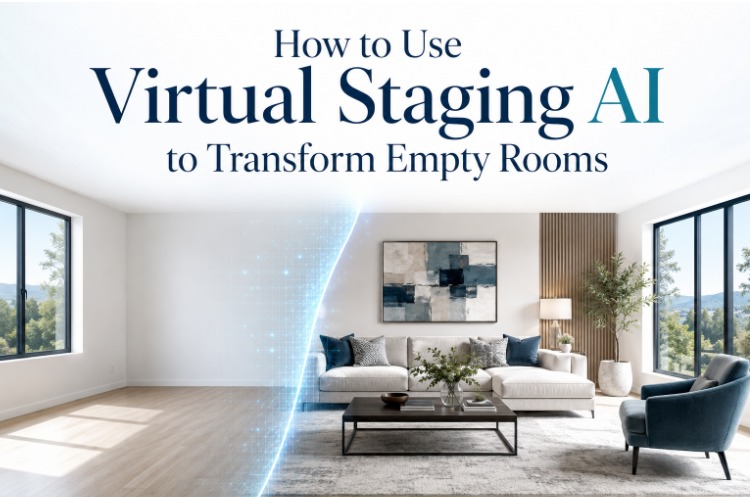
use virtual staging ai to design empty rooms
Empty rooms can be difficult to present.
A vacant property may have great natural lighting, a good layout, and plenty of potential, but photos of an unfurnished space often fail to communicate that feeling. Without furniture, decoration, or a clear sense of scale, many people struggle to imagine how the room could look in daily life.
This is one of the biggest challenges in real estate marketing and interior design. Buyers want to understand the possibilities of a space, while designers and property owners need effective ways to communicate their ideas.
Traditional home staging can solve this problem, but it often requires renting furniture, arranging deliveries, hiring professionals, and managing additional costs. For many properties, especially online listings, this process is not always practical.
Today, virtual staging AI provides a faster way to visualize empty rooms by digitally adding furniture, decorations, and interior styles to existing photos. Instead of physically changing a space, users can create realistic design concepts that help others understand its potential.
In this guide, we will look at how to use Virtual Staging AI effectively, what types of rooms work best, and how AI-powered staging can improve property presentation.
1. Start With the Right Room Photo
The quality of virtual staging depends heavily on the original image.
While AI tools can add furniture and improve the visual appearance of a room, they still rely on the photo provided. A clear, well-composed image gives better results.
Before uploading a photo, consider the following:
Use Good Lighting
Natural lighting usually creates the most realistic results.
Dark or heavily shadowed rooms can make it harder for AI to understand:
- Room dimensions
- Wall positions
- Floor materials
- Existing design elements
Taking photos during the daytime and opening curtains or blinds can help create a better starting point.
Choose the Correct Angle
The camera angle affects how viewers understand the space.
A good property photo should show:
- The size of the room
- The relationship between different areas
- Doors and windows
- Available floor space
Wide-angle photos are often useful for living rooms, bedrooms, and open areas because they provide a better sense of scale.
Keep the Original Space Clear
Before taking photos, remove unnecessary objects whenever possible.
A clean room allows AI staging tools to focus on creating a new design rather than working around existing clutter.
For best results:
- Remove temporary furniture
- Clear personal items
- Avoid blocking important areas
A simple photo often provides the strongest foundation for virtual staging.
2. Choose the Right Interior Style for the Room
One of the biggest advantages of AI virtual staging is the ability to test different design styles without physically changing the room.
The same empty room can create completely different impressions depending on furniture choices, colors, and decoration styles.
For example:
Modern Minimalist Style
This style focuses on:
- Clean lines
- Neutral colors
- Simple furniture
- Open space
It works well for apartments, modern homes, and smaller rooms where creating a spacious feeling is important.
Scandinavian Style
Scandinavian interiors often use:
- Light wood
- Soft colors
- Functional furniture
- Natural materials
This style can make empty rooms feel warmer and more comfortable.
Luxury Interior Style
Luxury staging may include:
- High-quality furniture
- Decorative lighting
- Elegant textures
- Premium materials
This approach is often used for high-end properties where presentation plays an important role.
Industrial Style
Industrial designs commonly include:
- Metal elements
- Exposed textures
- Darker tones
- Functional furniture
It can work well for loft apartments or modern urban properties.
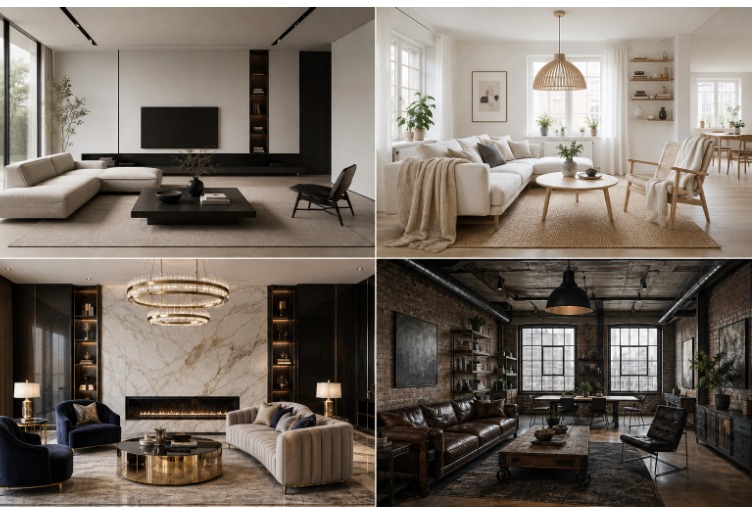
different room styles
Choosing different styles allows property owners and designers to understand which visual direction best matches the space.
Instead of preparing multiple physical setups, an AI virtual staging tool can help create different concepts from the same original image.
3. Use AI Virtual Staging to Highlight Room Potential
The main purpose of virtual staging is not simply adding furniture.
The real value is helping viewers understand how a room can be used.
An empty living room, for example, may look ordinary in a listing photo. After staging, buyers can immediately imagine:
- Where a sofa could be placed
- How much walking space is available
- Where a dining area could fit
- How the room connects to other spaces
Different room types benefit from different staging approaches.
Living Rooms
Living rooms are usually the center of a home.
Effective staging can highlight:
- Seating arrangements
- Entertainment areas
- Conversation spaces
- Natural lighting
A well-designed living room image helps buyers understand the lifestyle a property can offer.
Bedrooms
Bedrooms often need a sense of comfort.
Virtual staging can show:
- Bed placement
- Storage solutions
- Lighting ideas
- Decorative details
This is especially useful for empty bedrooms that may otherwise feel cold or unfinished.
Kitchens and Dining Areas
Kitchen spaces can sometimes be difficult to understand without furniture.
Adding:
- Dining tables
- Chairs
- Decorative items
can help viewers imagine how the space functions in everyday life.
4. Compare Different Design Options Before Making Decisions
One of the biggest benefits of virtual staging AI is flexibility.
With traditional staging, changing a design requires moving furniture, purchasing new items, or hiring additional services.
AI allows users to test different possibilities much faster.
For example, a homeowner preparing a renovation project may compare:
- Modern versus traditional furniture
- Different color palettes
- Alternative room arrangements
- Various decoration styles
Real estate professionals can also create multiple versions of a listing image to appeal to different audiences.
A young buyer may prefer a modern minimalist style, while another buyer may respond better to a warmer traditional design.
Testing different concepts helps identify which presentation works best.
5. Use Virtual Staging AI for Real Estate Marketing
Real estate has become increasingly visual.
Most buyers begin their search online, which means property images often determine whether someone continues looking or moves on.
Empty rooms can create several challenges:
- They may look smaller
- Their purpose may be unclear
- Buyers may struggle to imagine living there
AI virtual staging for real estate helps solve this problem by making listings more engaging.
Staged images can be used for:
- Property websites
- Online listings
- Social media posts
- Marketing materials
For properties that are vacant, under renovation, or newly built, virtual staging provides a way to present possibilities before the space is physically furnished.
A professional-looking image does not replace accurate property information, but it can improve the first impression and help potential buyers connect with the space.
6. Common Mistakes When Using AI Virtual Staging
Although AI staging is powerful, good results still require thoughtful choices.
Using Unrealistic Furniture Sizes
Furniture should match the scale of the room.
Oversized sofas or extremely small tables can make the space feel unrealistic.
Choosing Styles That Do Not Match the Property
A design should support the character of the property.
For example:
- A small apartment may benefit from simple furniture
- A traditional home may suit warmer materials
- A luxury property may require more refined styling
The goal is not to create the most impressive image, but the most suitable one.
Over-Staging the Room
Adding too many decorations can make a room feel artificial.
Good staging should help viewers understand the space, not distract them from it.
7. How AI Tools Are Changing the Future of Interior Visualization
Virtual staging is becoming part of a broader shift toward digital property visualization.
In the past, presenting a property required:
- Physical furniture
- Professional photography
- Multiple preparation steps
Today, AI tools allow people to create design concepts much faster.
A modern virtual staging software can help users experiment with layouts, styles, and room functions before making real-world changes.
This is valuable not only for real estate but also for:
- Interior designers
- Home renovation projects
- Furniture companies
- Property developers
The future of interior visualization will likely combine AI efficiency with human design judgment.
AI can generate ideas and visual concepts, while professionals decide which solutions are practical and suitable.
Conclusion
Virtual staging AI provides a practical way to transform empty rooms into more understandable and attractive spaces.
By choosing the right photos, selecting suitable design styles, and using AI tools carefully, homeowners and professionals can create better visual presentations without the cost and complexity of traditional staging.
For anyone looking to improve property images or explore interior ideas, a free virtual staging AI solution can be a useful starting point.
The goal of virtual staging is not to replace real spaces, but to help people see their possibilities more clearly. A well-presented room can make communication easier, improve online presentation, and help viewers imagine what a space could become.