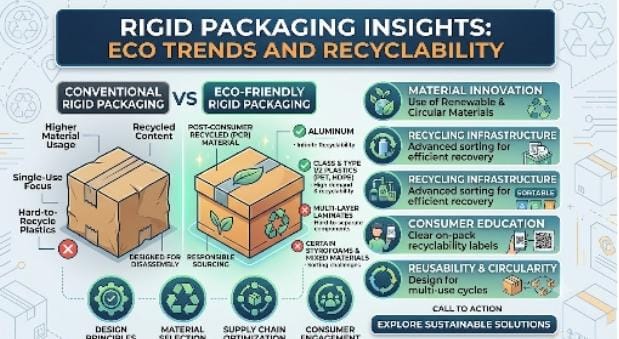
Packaging is not only protection. It influences customers’ decisions and the environment. Brands are after packaging solutions that are safe and environmentally friendly. A 2025 Sustainable Packaging Survey by McKinsey found that 77 percent of U.S. consumers say that recyclable packaging is very important to their decision-making around sustainable products. This demand is making brands opt for rigid packaging that will be environment friendly.
Why Rigid Packaging is Important to Sustainability
Cut down on waste and preserve natural resources by using sustainable materials. Brands can create good rigid packaging from recycled paperboard and kraft board. These materials also reduce environmental impact. Sustainability enables companies to cut down waste. It enables them to satisfy customer needs, develop customer trust and aid recycling.
Key Eco Trends in Rigid Box Packaging
The packaging industry is on the path to more Sustainable Rigid Packaging. Brands are making use of superior materials and production processes. These changes decrease waste. They also develop packaging systems that safeguard products.
1. Use of Recycled and Recyclable Materials
Recycled and recyclable materials are becoming prime focuses in the packaging. These materials are increasingly being adopted by brands. Use of recycled paperboard and kraft board contributes to conserving resources. They are also effective at reducing packaging waste.
The materials offer excellent product protection. They promote recycling initiatives.Custom rigid boxes are an option that’s favored by many brands. These boxes can be taken out, treated and reused once they are thrown away. This makes for a more effective packaging system. It also decreases waste disposed of in landfills.
2. FSC Certified Packaging Materials
Evolving in rigid packaging, FSC certified materials are gaining popularity. Materials are sourced from well managed forests. They also promote sustainable sourcing practices.
For brands, high quality rigid boxes are manufactured from FSC certified paperboard. These boxes result in less environmental impact. FSC packaging is frequently employed by high-end brands, retail and cosmetic companies. It helps to provide them a premium look with sustainable practices.
3. Reduction of Plastic Use
One key trend in rigid packaging is the reduction of plastic usage. A lot of brands are substituting plastic inserts, wraps and additional layers. Instead, they are using paper alternatives.
These alterations help to decrease plastic waste. They also enhance packaging recycling. Companies such as cosmetic, food and retail organizations are opting for plastic free packaging. This helps them to cater to the demands of their customers for sustainable products. There are fewer plastic parts, which facilitates packaging recycling.
4. Sustainable Printing and Finishing Options
The selection of print and finish has an impact on the sustainability of rigid packaging. Brands are using eco-friendly inks, such as water based and soy based inks. These inks will help to minimize harmful chemicals.
Businesses are opting for simple designs and finishes that can be recycled. Recycling may be more difficult in certain cases because of coatings, laminations and combinations of materials. The use of better finishing methods will help brands make attractive packaging. They also contribute to the sustainability objectives.
Recyclability: What Brands Need to Know
The materials and design of rigid packaging affect its recyclability. Paperboard and kraft rigid boxes are easier to recycle. They can frequently be recycled as paper.
Simplicity is the key to better recyclability for brands. They have the option of removing the layers of materials and selecting sustainable finishes. Recycling guidelines are in plain language to guide the customer with proper disposal of packaging. Packaging protects the products and good packaging design. It also helps to achieve sustainable objectives.
Sustainability Challenges and Solutions
Rigid packaging is beneficial to the environment. Costs, product safety and recyclability are other considerations for brands.
Challenges and solutions are:
- The material used for sustainability can be more expensive. Brands can also control costs through careful management of their designs and material.
- Packaging, during storage and transportation should ensure the safety of the product. Recyclable materials can be used to protect and keep the environment.
- Some coatings and finishes can make recycling difficult. Its simple design and environmentally friendly finishes make it easy to recycle.
- The recycling instructions are clear and easy to understand ensuring that customers know how to recycle packaging correctly.
What’s Next: The Future of Rigid Packaging
The packaging industry is moving toward smarter, more custom packaging solutions. Brands are employing recyclable materials, reusable designs and improved production methods.
These techniques are used to minimize waste. Proper protection will be ensured by new packaging technologies leading to the creation of boxes. They will also use fewer resources.
Future rigid packaging will be based on circular systems. Brands are more inclined to select the best packaging that can help keep products safe and sustainable.
Conclusion
The rigid packaging industry has a path towards a more sustainable future. Brands are looking to decrease waste by utilizing recyclable materials and improved design. Eco-friendly packaging will play a significant role in protecting products and reducing the environmental impact. Sustainable rigid packaging is a business solution to offer customers the green option. This contributes to the trust of the brand and sustainable environmental targets.