Some artists are defined by a subject; others by a material. Dmytro Andrukhov belongs to the second kind. Working under the art name LumiDim, the Chicago-based artist has spent the past several years developing a body of work in which light is not an effect applied to an object but the material the object is made from.
Andrukhov combines LED neon, acrylic, printed imagery, and sculptural elements into framed, wall-mounted works that hold together like paintings and read like light. The result resists a single category — part painting, part sculpture, part architectural element — and that ambiguity is the point. Light, in his hands, is treated as a fine-art medium with its own logic, capable of carrying an image and altering a space.
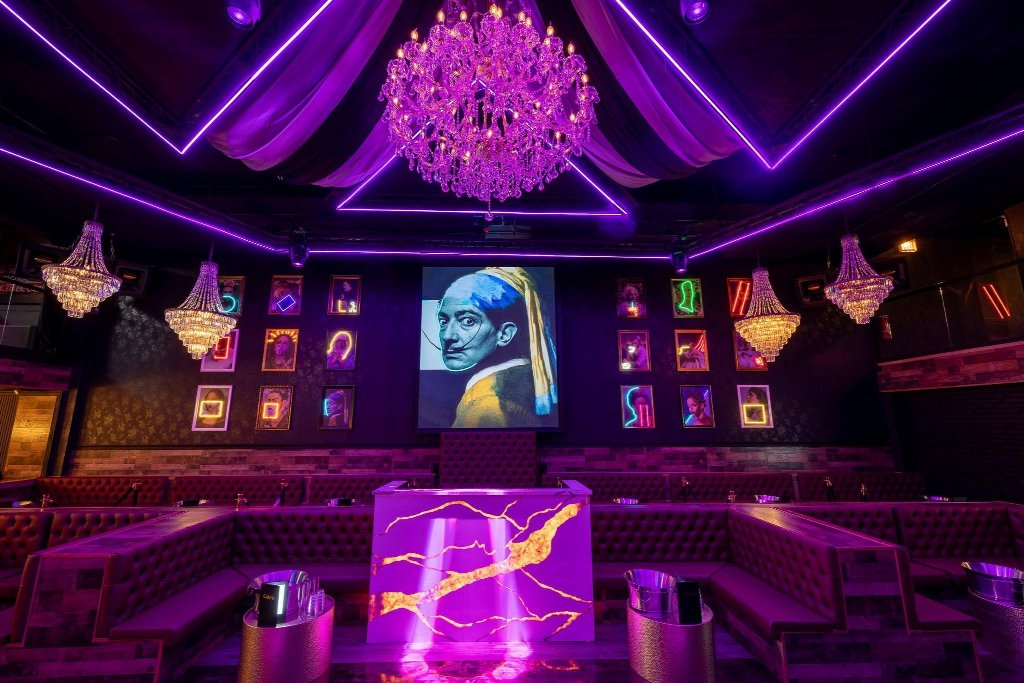
A large-scale illuminated installation by Dmytro Andrukhov at Galeria in Chicago’s Gold Coast. At this scale the work becomes part of the architecture itself.
A form of his own
The clearest through-line in Andrukhov’s work is the framed illuminated artwork he has developed as his signature form. Neon has historically belonged to the storefront and the barroom — a bare glass tube spelling out a word. Andrukhov instead treats the illuminated line as one element within a composed image. Printed and painted grounds, layered acrylic, and shaped LED neon are assembled into a single framed piece, so that the light sits inside the work rather than in front of it.
It is a genuine formal development. It takes a material long dismissed as commercial and gives it the structure of fine art: framed, scaled to the wall, composed rather than lettered, and built to be read as an image by day and to transform under its own light after dark. In doing so it asks neon to carry the concerns of painting — composition, palette, figure and ground — that the medium had never before been required to hold.
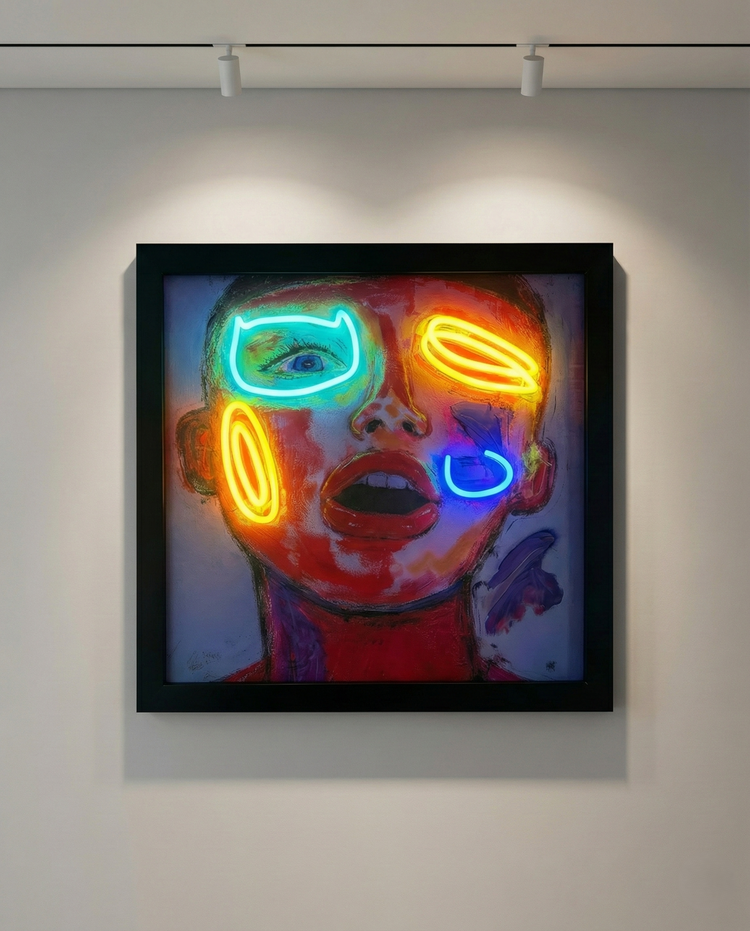
“Emotion Mapping.” Andrukhov’s framed works are conceived as compositions, using colour and luminous line the way a painter uses pigment.
Exhibition and recognition
Andrukhov’s work has entered the exhibition context that fine art occupies. In 2025 he presented at the Millennium Art Festival and at the Gold Coast Art Fair — the latter a juried fine-art fair, produced by Amdur Productions, that is among the most established in the country. At the Gold Coast Art Fair that year his work received two Outstanding Achievement awards.
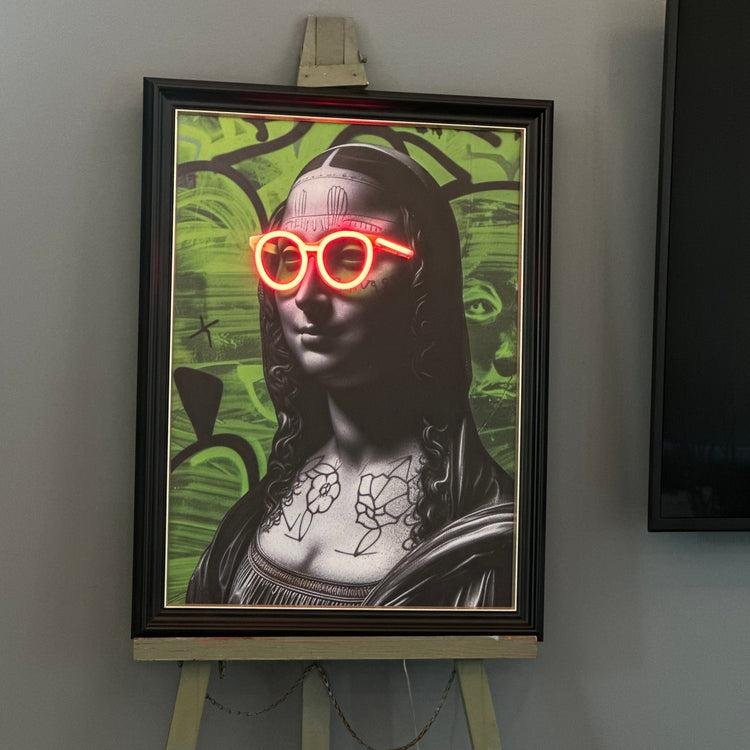
Andrukhov’s reinterpretation of the Mona Lisa, incorporating colour-shifting lenses — a work that places art history in dialogue with a contemporary, luminous medium.
Light as architecture
Alongside the framed works, Andrukhov treats light as an architectural material at the scale of a room. His large-format installations include the major piece at Galeria in Chicago’s Gold Coast, and illuminated environments realized for ROOF on theWit Hotel, Sushi by Bou, Brisa do Mar, and Electric Star. In these settings the work leaves the frame and becomes part of the building — defining a wall, a ceiling, an atmosphere. It is the logical extension of an artist who thinks of light as something one builds with.
The volume of the practice is considerable. Andrukhov has produced more than a thousand custom illuminated artworks and commissioned projects, work that has been acquired by clients across the United States and internationally.
Standing and reach
The audience for the work extends well beyond the gallery wall. Andrukhov’s portfolio reaches roughly 1.2 million monthly views on Pinterest, and his professional relationships span the art and design worlds and the collaborators who help realize large installations — among them Wayfair, the Springfield Art Association, and Amdur Productions, alongside partners across hospitality, architecture, retail, and interior design.
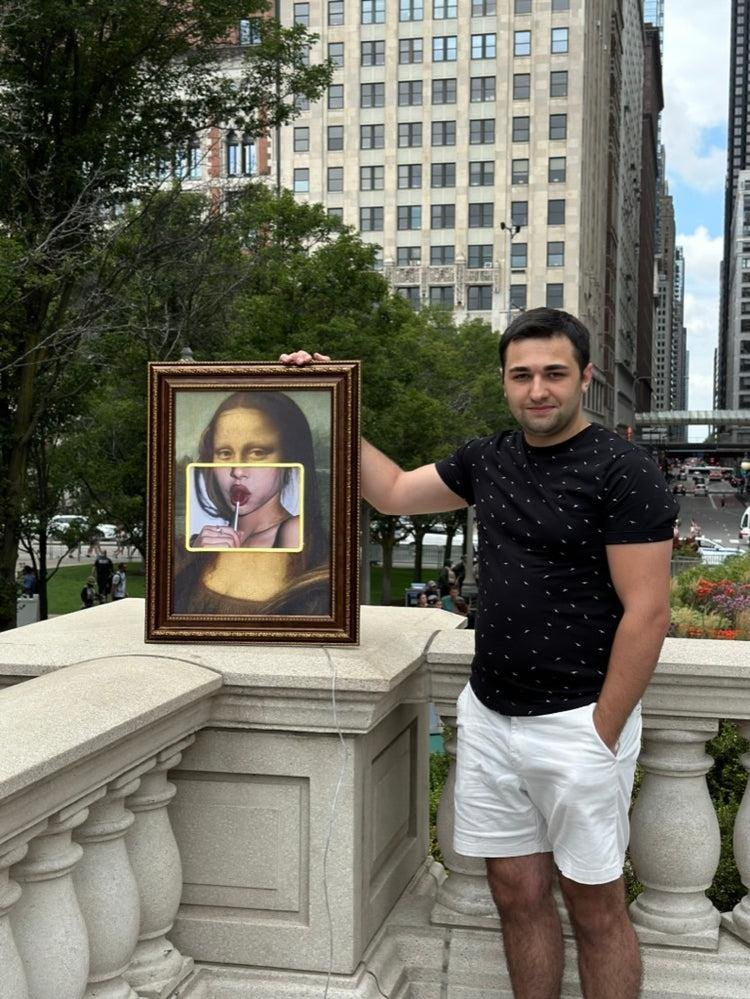
Dmytro Andrukhov. Originally from Ukraine and now based in Chicago, he works under the art name LumiDim.
The medium ahead
What distinguishes Andrukhov is less any single piece than the consistency of one idea carried across scales — from a framed work on a wall to an installation that shapes a room. Light is treated with the seriousness usually reserved for paint or stone: a material capable of carrying an image and altering a space. His practice is documented under LumiDim, where the range of Dmytro Andrukhov’s illuminated works can be seen in full.
