A nightstand and dresser shape the first and last minutes of your day. When both collect unrelated items, bedtime feels unfinished and mornings begin with searching. A simple division of tasks can make the bedroom easier to use.
Keep sleep-related essentials at the bedside cabinet and dressing decisions in clothing storage. The two pieces should support one sequence, from setting down a book at night to finding clothes and accessories after waking.
The system does not need many organizers. It needs clear limits, comfortable reach, and a reset that still works when you are tired or in a hurry. Each return point should require one simple motion.
Map the Routine Before Emptying Drawers
Write down what you do during the final ten minutes before bed and first ten minutes after waking. Note where you remove jewelry, charge a phone, find medication, choose clothing, and handle laundry. Those actions define the storage plan. Record the sequence on workdays and weekends.
Move every unrelated object out before assigning compartments. A nightstand should not hold old receipts simply because it has a drawer. A dresser should not become the default home for cables, books, or unopened packages that lack another destination. Relocate those items before buying drawer inserts.
- Record the bedtime and morning sequence.
- Sort objects by the action they support.
- Relocate anything used outside the bedroom.
Build a Bedside Station for Sleep
The bedside area should reduce decisions and keep the path around the bed clear. Sleep guidance consistently favors a dark, quiet, comfortable room. Storage can support that environment by removing bright screens, loose objects, and tripping hazards from view.
Match the Surface to the Mattress
Measure from the floor to the top of the mattress, including any topper. A surface close to that height usually improves reach. Check the measurement while lying down, because a lamp switch or glass can feel farther away than it looks when standing.
Limit What Stays Within Reach
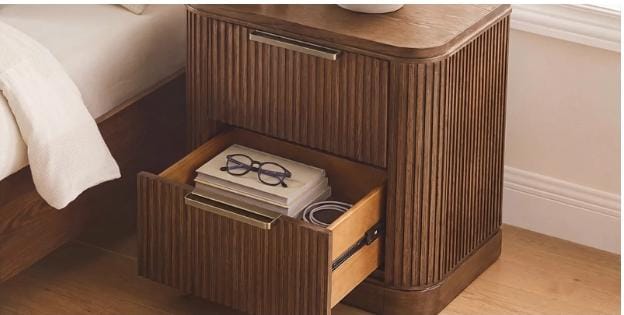
Use the nightstand for a lamp, current book, glasses, tissues, and essential nighttime items. Keep the center open enough to set down a glass safely. The nightstand works best when its top supports tonight, not the past month.
Hide Charging Light and Cable Slack
Route charging cables behind the furniture and secure excess length. Turn off nonessential indicator lights or place devices inside a ventilated drawer when their instructions allow it. The nightstand should not create a bright cluster beside the pillow.
Keep the Floor Route Clear
Maintain an unobstructed path from the bed to the door or bathroom. Avoid baskets that project into that route. A stable nightstand with fully closing drawers reduces the chance of catching clothing or a foot during a dark, half-awake walk.
Arrange Clothing in Decision Order
Organize clothing by how you choose it, not by abstract category alone. The easiest drawers should hold pieces used most mornings. Less frequent items can sit lower or farther back, while off-season clothing belongs outside the daily decision zone. Review the order after one full laundry cycle.
Put Complete Choices Together
Store underwear, socks, and everyday basics where they can be reached in sequence. A clothing drawer with small dividers can prevent categories from mixing. Keep the most common combinations close so the routine requires fewer stops around the room. Fold items so the full category remains visible.
Use the Top as a Short-Term Station
Reserve one tray for jewelry, a watch, or tomorrow’s small accessories. Leave the remaining surface clear. When the dresser top becomes permanent storage, useful items disappear into a layer of bottles, receipts, and clothing. Choose a tray that can be emptied in one trip.
Label by Use When Categories Blur
Simple labels help shared rooms and deep drawers. Use plain terms such as work basics, weekend wear, or exercise gear. The table below shows one practical division between the two furniture pieces. Temporary paper labels are enough while testing the system.
| Storage Zone | Best Contents | Reset Point |
| Bedside surface | Lamp, book, glasses, water | Before sleep |
| Bedside drawer | Small nighttime essentials | Weekly review |
| Top clothing drawer | Daily basics | Laundry day |
| Clothing surface tray | Tomorrow’s accessories | Each morning |
Connect the Evening and Morning Systems
The two stations should exchange only a few objects. Jewelry may move from the bedside area to its daytime storage, while tomorrow’s clothing may be prepared near the clothing drawers. Limit that movement so neither surface becomes a transfer warehouse. A small handoff area prevents items from drifting elsewhere.
Create a One-Way Evening Handoff
Place worn clothing in a hamper, not on the nightstand or floor. Return accessories to the dresser unless they are part of tomorrow’s plan. This one-way flow keeps sleep items separate from dressing items and reduces morning decisions. Put the hamper beside the route you already follow.
Prepare One Visible Choice
Use the dresser to stage one folded outfit or a small group of accessories, not several possibilities. The dresser should narrow the morning decision. Too many visible options recreate the same clutter the drawer system was meant to prevent. Return unused choices before leaving the bedroom.
Add Safety and Maintenance
Organization should never compromise stability. Follow the manufacturer’s assembly and anchoring instructions. The U.S. Consumer Product Safety Commission recommends securing top-heavy furniture and installing supplied anti-tip devices, especially in homes where children may climb. Recheck hardware after moving or reorganizing the furniture.
Keep Heavy Items Low
Place heavier clothing or objects in lower drawers and avoid overloading the top. Open one drawer at a time. A dresser remains safer and easier to use when weight stays balanced and every drawer closes without force. Keep the floor directly in front free of obstacles.
Run a Weekly Five-Minute Edit
Clear the nightstand surface, empty the accessory tray, and return clean laundry to the dresser. Remove cups, packaging, and items from other rooms. A short weekly review prevents the daily stations from absorbing unrelated household overflow. Check charging cables and discarded packaging during the same pass.
- Close drawers and confirm the anchor remains secure.
- Refill only regularly used bedside items.
- Move off-season clothing out of prime drawer space.
Protect the First Minutes of the Day
The bedroom works better when each object supports either rest or getting dressed. Keep the nightstand focused on sleep and the dresser focused on clothing, then connect them with one deliberate evening handoff.
Review the system whenever the routine changes. A new job, medication schedule, season, or shared-room arrangement may require different categories. The best setup stays simple enough to adjust without rebuilding the entire room.