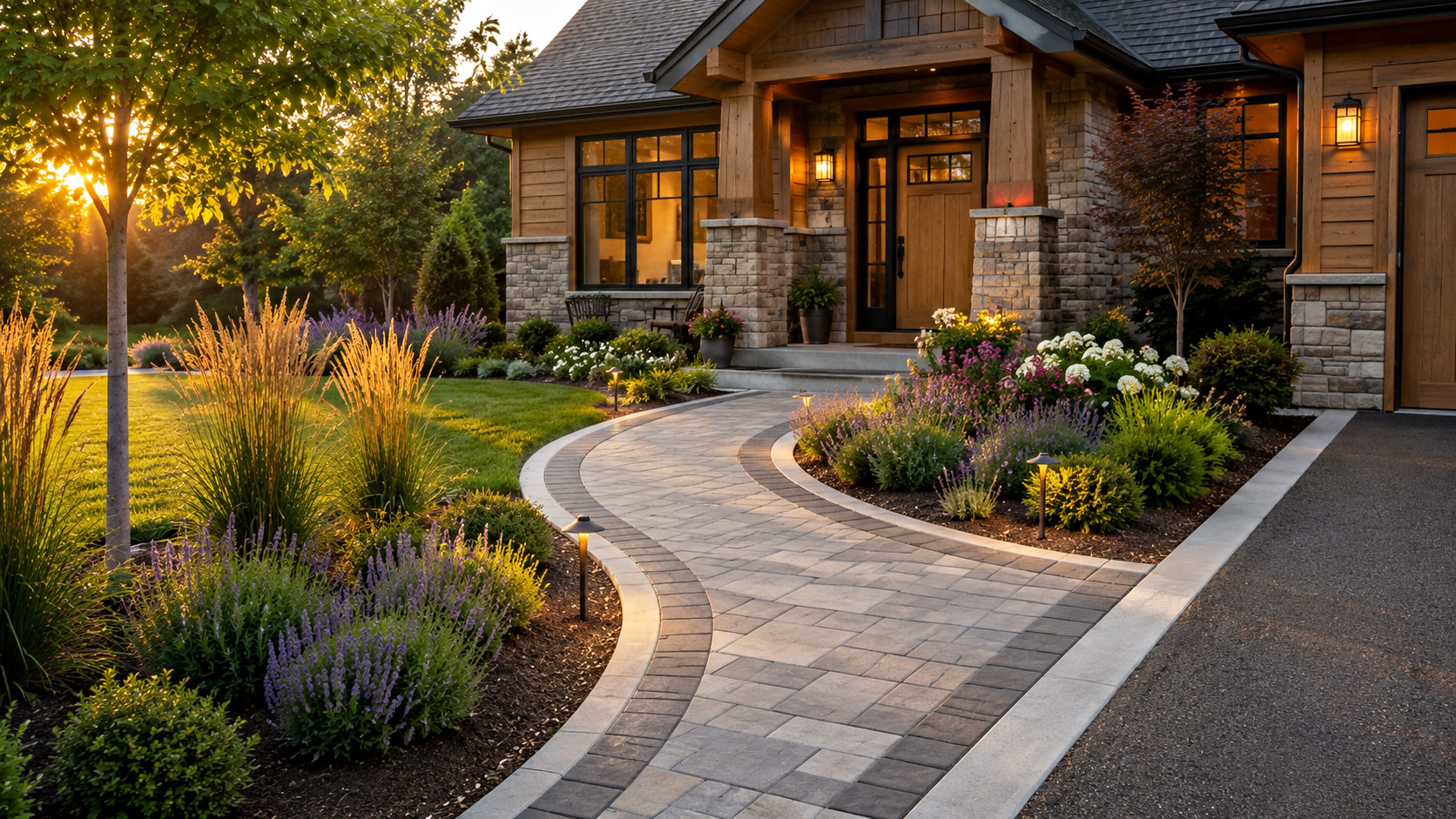
A well-designed walkway does more than connect your driveway to your front door. It sets the tone for your entire property, guides visitors safely, and shapes the first impression your home makes. Designing one well means balancing function, durability, and style from the very first sketch. This guide walks you through every decision, from planning the layout and choosing materials to selecting a style, building a solid base, and adding the finishing touches.
What Makes a Well-Designed Walkway?
A well-designed walkway feels effortless to use and looks like it belongs. It carries foot traffic comfortably, drains water away from your home, and complements the architecture around it. When these elements work together, the path becomes both practical and beautiful.
Getting the surface right from the start is what keeps a path looking intentional for years, and the material you choose carries most of that weight. Companies like Techo-Bloc make premium walkway pavers designed to hold their color and shape through heavy use and cold winters. Starting with a durable surface means less time spent on repairs and more time enjoying the finished look.
How Does a Walkway Improve Curb Appeal and Function?
A walkway shapes how people experience your property before they reach the door. A clear, inviting path draws the eye, frames your landscaping, and signals that the home is cared for. It also solves practical problems, because a defined route keeps visitors off the lawn, reduces mud tracked indoors, and creates safe footing in every season.
What Are the Key Elements of Walkway Design?
Every strong walkway design rests on a few core elements. Layout determines where the path goes and how wide it feels. Material sets the durability and character of the surface. Style ties the path to your home through color, texture, and pattern. A stable base holds everything in place over time. When you plan these elements together rather than one at a time, the finished walkway reads as a single, intentional design.
How Do You Plan a Walkway Layout?
Planning the layout comes first, because the route defines every decision that follows. Start by mapping how people actually move across your property, then shape the path to match those natural lines of travel.
What Shape and Path Should Your Walkway Follow?
The shape of your walkway should reflect both the distance it covers and the mood you want to set. A straight path creates a formal, direct connection that suits symmetrical home fronts. A curved path slows the pace and feels more relaxed, which works well through gardens or across wider yards. Choose the shape that fits your landscape rather than forcing a style that fights the terrain.
How Wide Should a Walkway Be?
Width determines how comfortable a walkway feels in daily use. A primary front path should let two people walk side by side, so a width of 4 to 5 feet works well for main entrances. Secondary garden paths can narrow to around 3 feet, since they carry lighter traffic. Matching the width to the path’s purpose keeps the design both practical and proportional.
How Do You Map the Route and Transitions?
Mapping the route means connecting your walkway cleanly to the spaces it serves. Trace the line from the driveway or sidewalk to the entrance, then note where the path meets steps, patios, or garden beds. Plan smooth transitions at each junction so the surface stays level and safe. A route that flows without awkward turns or abrupt edges feels natural to walk and easy to maintain.
Which Materials Work Best for a Walkway?
Material choice defines how your walkway looks, performs, and ages. The right surface stands up to weather, foot traffic, and time while matching the character of your home.
Pavers vs. Slabs vs. Natural Stone: Which Should You Choose?
Each material offers a different balance of design and performance. Interlocking pavers deliver a wide range of shapes and colors, and their segmented surface resists cracking as the ground shifts. Large-format slabs create a clean, modern look with fewer joints. Natural stone brings unique texture and variation, though it often demands more upkeep. Weigh the look you want against the maintenance you’re willing to take on before you commit.
What Makes a Walkway Material Durable?
Durability comes down to how well a material handles moisture, temperature swings, and repeated use. Surfaces engineered to resist freeze-thaw cycles hold up far better in climates with cold winters, because they don’t crack or spall when water freezes and expands. A material that costs more upfront can prove the smarter choice over time, since a durable walkway avoids the recurring repairs and seasonal patching that cheaper surfaces often need.
Choosing the Right Style and Pattern
Style is where a walkway stops being purely functional and starts reflecting your home. Color, texture, and laying pattern all work together to tie the path into its surroundings.
Which Colors and Textures Complement Your Home?
The best walkway colors echo tones already present in your home’s exterior. Warm blends suit brick and earthy palettes, while cool grays pair naturally with modern facades. Texture matters just as much, because a subtle surface adds grip and hides wear, while a smooth finish reads as refined and contemporary. Sampling materials against your siding and trim before deciding helps you see how they’ll look in real light.
What Laying Patterns Suit a Walkway?
The laying pattern sets the rhythm of the path. A running bond feels simple and timeless, a herringbone adds movement and strength, and a modular blend creates visual interest across wider surfaces. Narrow paths generally look best with straightforward patterns, since busy layouts can overwhelm a small space. Match the pattern to the width so the design feels balanced.
How Do You Build a Solid Walkway Base?
A walkway is only as reliable as the foundation beneath it. Base preparation is the step that determines whether your path stays level for decades or shifts within a few seasons.
Why Does Base Preparation Matter?
Base preparation matters because it controls drainage and stability. A properly compacted base of crushed stone gives the surface a firm, even foundation and channels water away so it can’t undermine the path. When the base is rushed, water pools, materials settle unevenly, and the walkway develops dips and heaves. Investing effort here protects every layer above it.
What Are the Steps to Install a Walkway?
Installing a walkway follows a clear sequence. First, excavate the path to the depth your material and climate require. Next, add and compact a layer of crushed stone for the base, followed by a leveling layer of bedding sand. Then set your pavers or slabs, keeping the surface even and the joints tight. Finally, sweep jointing sand across the surface and compact it to lock everything in place. Following the steps in order gives you a walkway that stays true over time.
How Do You Light and Finish a Walkway?
Lighting and finishing details turn a functional path into a polished landscape feature. These final touches improve safety at night and frame the walkway within your yard.
What Lighting Options Enhance a Walkway?
Lighting makes a walkway safer and more inviting after dark. Low path lights spaced along the edges cast a soft glow that guides footing without glare. Recessed fixtures set into borders or steps highlight changes in level, which helps prevent trips. Choosing warm, even lighting keeps the path welcoming while drawing attention to the design.
How Do You Add Borders and Edge Restraints?
Borders and edge restraints give a walkway its finished frame and hold the surface together. A defined edge keeps pavers from spreading under foot traffic, so the path holds its shape year after year. Contrasting border stones also sharpen the design by outlining the route and separating it from the lawn or garden. Adding restraints during installation saves you from repairs later.
Key Takeaways for Designing Your Walkway
Designing a walkway comes down to planning each layer with intention. Start with a layout that follows how people move, choose a durable material suited to your climate, and select a style that echoes your home. Build on a compacted base, then finish with lighting and clean borders. When every decision supports the next, you end up with a walkway that stays beautiful and functional for years.
Frequently Asked Questions About Walkway Design
How Long Does a Paver Walkway Last?
A well-built paver walkway can last for decades when it sits on a properly compacted base. Because individual pavers can be lifted and reset, small repairs are simple and don’t require replacing the whole surface. Regular joint maintenance extends its life even further.
Can You Install a Walkway Over an Existing Concrete Path?
You can lay some paver systems over existing concrete, provided the slab is stable and drains well. The concrete must be free of major cracks and heaving, since any movement below will transfer to the new surface. When the old slab is failing, removing it first gives you a more reliable result.
How Do You Maintain a Paver Walkway?
Maintaining a paver walkway is straightforward. Sweep it regularly, rinse away debris, and top up the jointing sand when it thins out. Sealing the surface every few years helps guard against stains and keeps colors vivid. This light routine preserves both the look and the stability of the path.
Do You Need a Permit to Build a Walkway?
Permit rules vary by municipality, so check with your local building office before you start. Many residential walkways at grade don’t require a permit, but paths that affect drainage, easements, or public sidewalks sometimes do. Confirming the requirements early prevents costly changes later.
