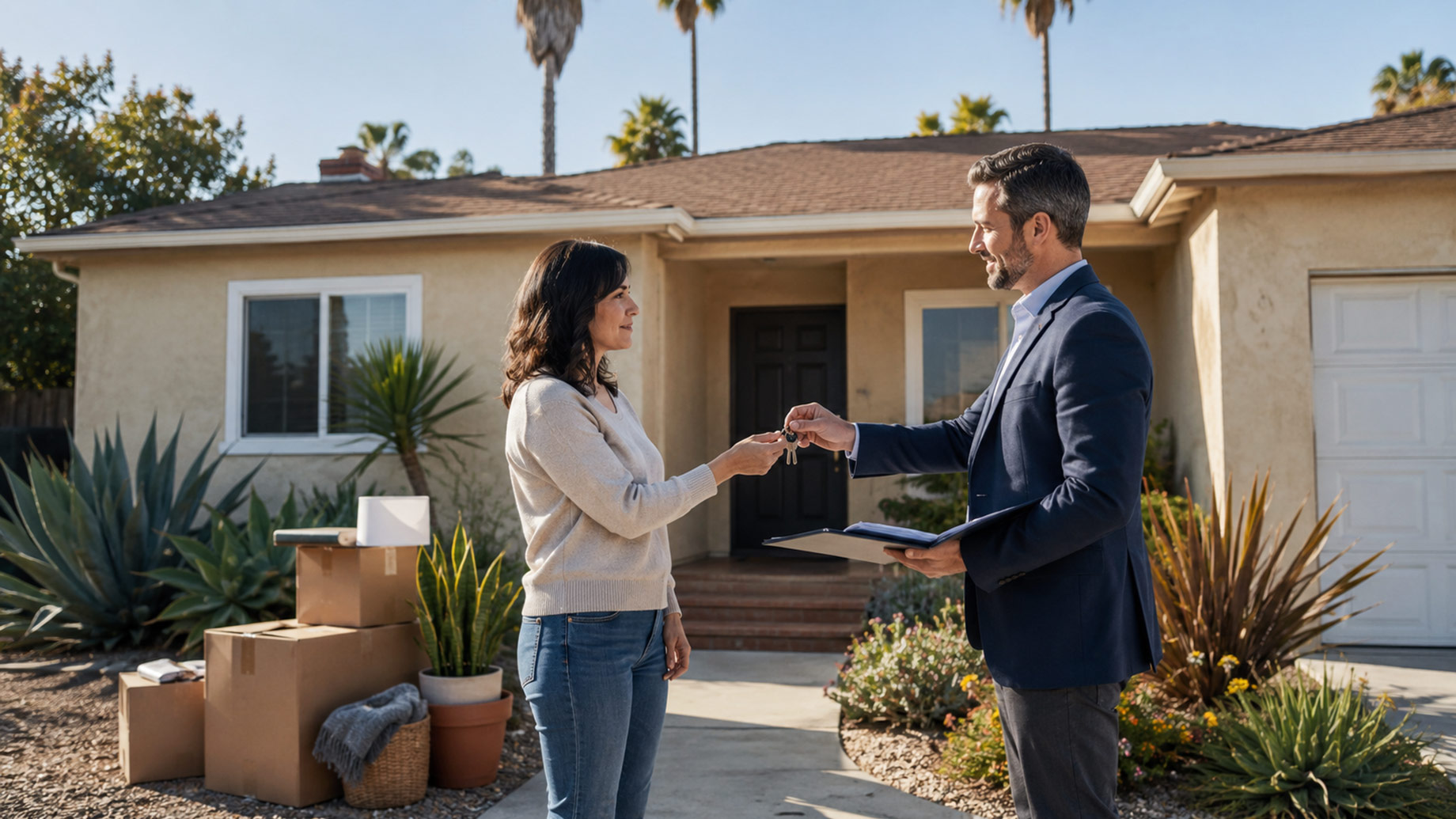
For most of the last century, selling a house in California followed a familiar script. You called an agent, staged the property, listed it on the market, waited for offers, negotiated repairs after the inspection, and hoped the buyer’s financing didn’t fall apart before closing. The process could stretch across two or three months, and it assumed one thing above all: that the seller had the time, money, and patience to see it through.
That assumption no longer holds for a growing share of California homeowners. Over the past two decades, a parallel path has taken shape alongside the traditional listing — the direct cash sale, in which a company buys the property outright, as-is, without agents, showings, or lender approvals. What began as a niche corner of the market has become a mainstream option that sellers now weigh openly against listing with a Realtor.
Why the model took hold
Several forces pushed the cash-buyer model from the margins toward the center of the conversation.
The first is condition. California’s housing stock is aging, and a meaningful portion of it no longer meets the standard that mortgage lenders require. A home with a failing roof, outdated electrical, foundation movement, or fire and water damage can be difficult or impossible to finance conventionally. When a bank won’t lend on a property, the pool of traditional buyers shrinks dramatically — and a cash purchaser who plans to renovate becomes one of the few realistic options.
The second is certainty. Traditional sales fall through more often than most people expect. Financing collapses, appraisals come in low, inspections trigger renegotiations, and buyers get cold feet. Each of those risks disappears when the buyer is paying cash and has already committed to the property in its current state. For a seller facing a deadline, that reliability can matter more than squeezing out the last few thousand dollars.
The third is speed. A conventional escrow in California commonly runs 30 to 45 days once an offer is accepted — and that clock only starts after the listing period. A cash transaction can close in as little as a week, because there is no loan underwriting to wait on. For someone relocating for work, settling an estate, or trying to stay ahead of a financial deadline, weeks versus months is not a small distinction.
The tradeoff sellers should understand
None of this makes the cash route universally better. It comes with a clear tradeoff, and the honest framing matters. A direct cash buyer is typically an investor who intends to repair and resell the property, which means the offer usually lands below what a fully renovated home might fetch on the open market. Sellers are effectively exchanging some of that top-line price for speed, certainty, and the elimination of repair costs, agent commissions, and carrying expenses.
Whether that trade is worth it depends entirely on the situation. A pristine, move-in-ready home in a hot neighborhood will almost always do better on the open market. But a distressed property, an inherited house full of decades of belongings, or a home owned by someone who simply cannot afford months of uncertainty tells a different story. The right answer is situational, not ideological.
A maturing corner of the industry
The early years of the “we buy houses” world earned a mixed reputation, and some of that skepticism was deserved. The space attracted operators who used high-pressure tactics, tied up properties under contract only to assign them to someone else, or quietly lowered their offer at the closing table. That history is exactly why reputation now carries so much weight in this market.
The operators who have lasted tend to share a few traits: they buy directly rather than reselling the contract, they put their offer in writing and honor it, they cover closing costs, and they can point to years of completed transactions and verifiable reviews. Companies such as Osborne Homes, which has been buying houses for cash across California since 2007, illustrate how the model has matured from a fringe pitch into an established transaction type with a track record attached.
How the market has shifted
The broader real estate industry has adapted to this reality. Agents now routinely discuss cash offers with clients whose homes need significant work. Estate attorneys mention them to families managing probate. Even homeowners who ultimately choose to list will often request a cash offer first, simply to establish a floor and understand their options.
That shift reflects a healthier market, not a compromised one. Sellers benefit from having genuine alternatives, and competition among paths tends to produce better information and clearer choices. A homeowner today can compare a traditional listing, an iBuyer’s algorithmic offer, and a direct cash purchase side by side, then choose based on their own priorities.
The takeaway
The direct cash sale is not a replacement for the traditional listing — it is a complement to it, suited to a specific set of circumstances that the conventional process handles poorly. For homeowners with a pristine property and time to spare, the open market still tends to win. For those dealing with condition problems, tight timelines, or the need for absolute certainty, the cash route has earned its place as a legitimate option worth understanding.
The most useful thing any California seller can do is know which situation they are actually in. Once that’s clear, the right path usually follows.
This article is for general informational purposes and is not legal, tax, or financial advice. Homeowners should evaluate their specific circumstances and consult qualified professionals before making a decision.
