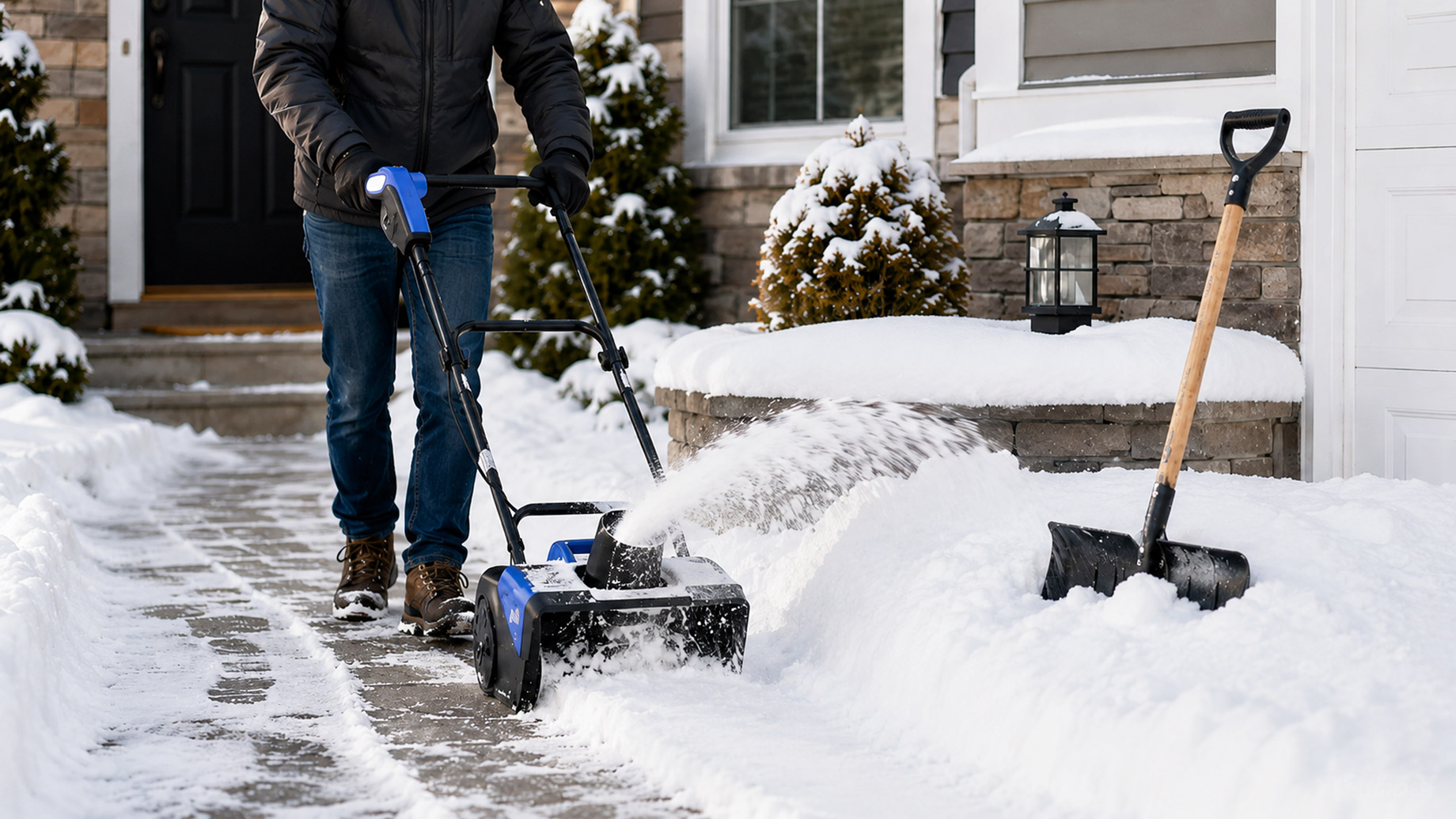
Not every winter storm calls for a full-size snow blower. In many parts of the country, homeowners spend most of the season clearing a few inches of snow from sidewalks, front steps, patios, and short driveways. For these routine tasks, choosing the right tool can save both time and physical effort.
An electric shovel fills the gap between a manual snow shovel and a larger snow blower, offering powered snow removal without the bulk of heavy equipment. If you’re evaluating compact winter tools, comparing an electric shovel with traditional hand tools can help determine which option best matches your property’s size, snowfall patterns, and maintenance routine.
After spending more than a decade testing residential outdoor power equipment in a wide range of winter conditions, I’ve found that efficiency isn’t simply about moving snow faster it’s about reducing fatigue while maintaining consistent performance throughout the season.
Why the Right Snow Removal Tool Depends on More Than Snow Depth
Many homeowners assume deeper snow automatically requires powered equipment, while lighter snowfall should always be handled with a manual shovel. In reality, the decision depends on several factors beyond accumulation alone.
These include:
- Area to be cleared
- Snow consistency
- Frequency of snowfall
- Physical effort required
- Storage availability
- Time available for cleanup
Someone clearing a short walkway every few days may benefit more from compact powered equipment than someone shoveling a larger area only once or twice each winter.
How Traditional Snow Shovels Continue to Serve Small Winter Jobs
Manual snow shovels remain practical for many households because they’re affordable, simple to store, and always ready for use.
They’re especially effective for:
- Clearing isolated patches
- Removing packed snow from corners
- Cleaning around vehicles
- Breaking up small icy areas
- Emergency snow removal
However, repeated lifting and twisting can quickly become tiring, particularly during consecutive snowstorms or when clearing wet, heavy snow.
The Centers for Disease Control and Prevention (CDC) has long encouraged homeowners to recognize the physical demands of snow shoveling, particularly for individuals with underlying cardiovascular concerns.
How Electric Shovels Improve Efficiency During Routine Snow Removal
Unlike manual shovels that require lifting and throwing snow repeatedly, electric shovels use a rotating auger to collect and discharge snow away from the walking path.
This changes the nature of the work.
Instead of repeatedly lifting snow, the operator primarily guides the machine forward while it performs most of the clearing.
For many homeowners, this provides noticeable advantages:
- Less strain on the back and shoulders
- Faster clearing of paved surfaces
- More consistent snow removal
- Reduced fatigue during repeated storms
- Easier operation for routine maintenance
The efficiency gains become increasingly noticeable throughout an entire winter rather than during a single snowfall.
Understanding Which Snow Conditions Favor Electric Equipment
Powered compact equipment performs best under certain conditions.
Electric shovels are particularly effective when clearing:
- Fresh snowfall
- Light to moderate accumulation
- Powdery snow
- Sidewalks
- Patios
- Decks
- Short driveways
Performance naturally decreases as snow becomes wetter, deeper, or heavily compacted.
The National Weather Service frequently recommends removing fresh snowfall promptly before repeated freeze-thaw cycles increase density and make clearing substantially more difficult.
Electric Shovel vs. Traditional Snow Shovel: A Practical Comparison
Each tool excels under different circumstances.
| Feature | Electric Shovel | Traditional Snow Shovel |
|---|---|---|
| Physical effort | Low | High |
| Speed | Faster for paved surfaces | Slower |
| Storage | Compact | Very compact |
| Maintenance | Minimal | None |
| Best for | Frequent light snowfall | Small cleanup tasks |
| Snow discharge | Powered throwing action | Manual lifting |
Rather than replacing manual tools completely, many homeowners find that electric shovels complement them by handling the majority of routine snow removal.
Battery Technology Has Expanded the Practical Uses of Electric Snow Tools
Battery-powered outdoor equipment has advanced considerably over the past decade.
Modern cordless systems provide:
- Push-button starting
- Quiet operation
- Consistent power delivery
- Low maintenance requirements
- Cross-compatible battery platforms
According to the U.S. Department of Energy, continued improvements in lithium-ion battery technology have increased energy density and efficiency, allowing cordless outdoor equipment to handle more demanding residential applications than previous generations.
Best Practices for Maximizing Efficiency During Snow Removal
Good technique allows both manual and powered equipment to perform better.
Professional maintenance crews often recommend:
- Clearing snow before it becomes compacted.
- Working in overlapping passes.
- Removing snow in multiple lighter layers during heavier storms.
- Keeping batteries fully charged before expected snowfall.
- Clearing high-traffic areas first.
These habits improve efficiency while reducing unnecessary strain on both equipment and operators.
Common Mistakes That Reduce Snow Removal Efficiency
Even quality equipment performs poorly when used incorrectly.
Avoid these frequent mistakes:
- Waiting until snow freezes into dense layers.
- Expecting compact electric tools to replace large snow blowers.
- Using partially charged batteries.
- Attempting to clear excessive snow depth in one pass.
- Ignoring routine cleaning after each use.
Small operational adjustments often produce the greatest improvements in long-term performance.
How to Decide Whether an Electric Shovel Is Right for Your Property
Before purchasing, evaluate your typical winter routine instead of preparing only for extreme weather events.
Ask yourself:
- Do I usually clear less than six inches of snow?
- Are sidewalks and walkways my primary concern?
- Would reducing lifting make winter maintenance easier?
- Do I have limited storage space?
- Do I already use battery-powered outdoor equipment?
If most of these answers are yes, an electric shovel is likely to become one of your most frequently used winter tools.
Frequently Asked Questions
Is an electric shovel better than a traditional snow shovel?
For routine light snowfall, many homeowners find electric shovels faster and less physically demanding because they reduce repetitive lifting.
Can an electric shovel remove wet snow?
Yes, although performance is generally best with fresh, lighter snowfall. Wet, compacted snow often requires slower operating speeds or multiple passes.
How much snow can an electric shovel handle?
Most models are designed for light to moderate snowfall on paved surfaces, making them ideal for sidewalks, patios, decks, and smaller driveways.
Are electric shovels difficult to maintain?
No. Routine maintenance typically involves cleaning after use, inspecting moving parts, and properly storing batteries during the offseason.
Can an electric shovel replace a snow blower?
For smaller residential properties with frequent light snowfall, it often can. Larger driveways or regions with heavy snow accumulation may still benefit from a dedicated snow blower.
Final Thoughts: Efficiency is About Matching the Tool to the Task
Snow removal becomes much easier when the equipment fits the job. While traditional shovels continue to serve an important purpose, electric shovels provide meaningful efficiency gains for homeowners who regularly clear sidewalks, patios, entryways, and compact driveways.
Rather than focusing solely on power or equipment size, consider your property’s layout, local snowfall patterns, and the amount of physical effort you’re willing to invest. In many residential settings, an electric shovel delivers the ideal balance of convenience, portability, and productivity throughout the winter season.