You’re getting ready to sell your home and you have some money to put into it. Two big projects keep coming up: replace the HVAC system or redo the kitchen. Both sound like smart moves. Both cost real money. So which one actually pays off when buyers show up and offers come in?
This is one of the most common questions homeowners face before listing. The answer isn’t the same for everyone, and it depends on your home, your market, and what buyers in your area actually care about. Let’s break it down clearly so you can make a smart call.
What Each Project Costs You
Before talking about returns, you need to know what you’re getting into cost-wise. A new HVAC system typically runs between $5,000 and $12,500 depending on the size of your home, the brand, and whether you need ductwork repairs too. It’s a big check, no doubt, and most of that cost is hidden behind the walls where buyers never see it.
A kitchen remodel is a much wider range. A minor refresh: new countertops, hardware, paint, and maybe a new faucet can cost $5,000 to $15,000. A full gut renovation with new cabinets, appliances, flooring, and lighting can run $30,000 to $80,000 or more. The gap between a kitchen update and a kitchen remodel is enormous, so it matters a lot which one you’re actually planning.
| $5–12kNew HVAC system | $5–15kMinor kitchen refresh | $30–80k+Full kitchen remodel |
How Buyers React to Each One
According to DeGusipe Real Estate, buyers react differently depending on what they find during showings and inspections. A new HVAC is mostly an inspection-stage win. When a buyer’s inspector notes that the system is brand new, it removes a major negotiating chip. Buyers can’t come back and ask you to drop the price by $8,000 because the AC is old. That protection has real dollar value even if buyers don’t visibly react to it during the showing.
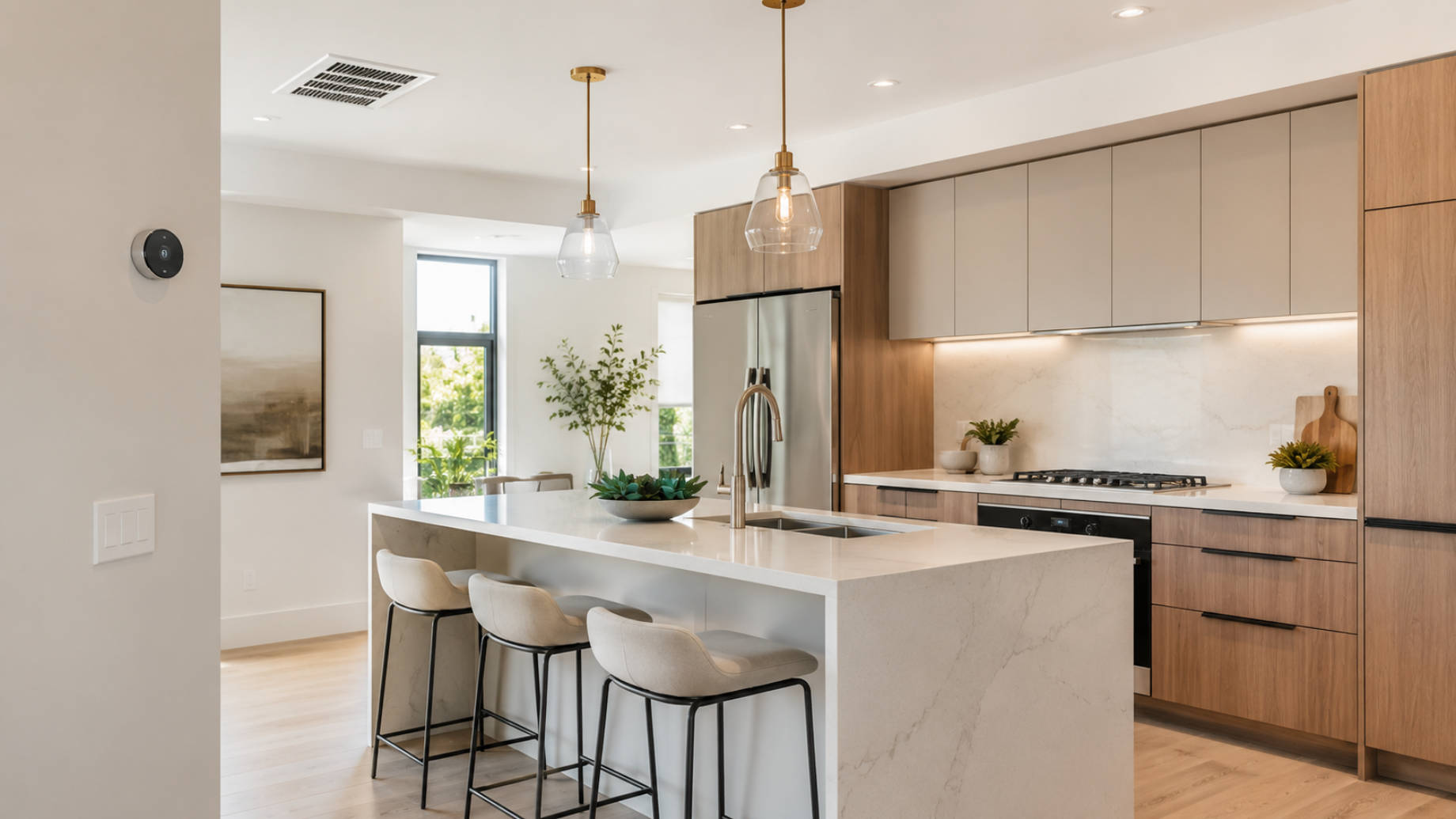
A kitchen update, on the other hand, creates emotional pull during the showing itself. Buyers walk in, see clean counters, fresh cabinets, and nice finishes, and they feel good about the home. That feeling can push an offer higher or get you multiple offers. Emotion drives real estate decisions more than people want to admit. So in simple terms: HVAC protects your price. A kitchen update can raise it.
Return on Investment: What the Numbers Say
Remodeling data consistently shows that kitchen projects have a wide ROI range. Minor kitchen updates tend to return around 70–80 cents on the dollar at resale. A mid-range full kitchen remodel typically returns 60–70 cents. That means you’re likely spending more than you’ll get back, which is fine if you’ve been living in the home and enjoying it, less ideal if you’re doing it purely to sell.
HVAC replacement has a different kind of ROI story. It rarely adds value in the way a kitchen does; buyers don’t typically offer more because of a new furnace. What it does is prevent value loss. Homes with aging HVAC systems often get lower offers or bigger inspection concession requests. Replacing it ahead of time eliminates that drag on your sale price.
| HVAC Replacement Protects Your Price | Kitchen Update Raises Buyer Interest |
|---|---|
| Removes inspection red flagsSpeeds up negotiationsReduces buyer concession requests~60–70% direct ROIStrong in all market types | Creates emotional pullDrives faster offersCan support a higher list price~70–80% ROI on minor updatesStronger in competitive markets |
Market Conditions Change Everything
In a hot seller’s market, buyers are competing and willing to overlook minor issues. An old HVAC might not kill a deal when three buyers are bidding on your home. A kitchen that looks dated might not matter much either. In this environment, you might not need to spend heavily on either project: a good cleaning, fresh paint, and solid staging can do a lot.
In a slower, buyer-friendly market, things shift. Buyers get pickier. They have more options. A home with an HVAC that’s 15 years old starts to look like a risk. A kitchen that feels tired and outdated gives buyers a reason to move on to the next listing. In this market, both projects become more relevant, and the HVAC investment in particular becomes a stronger defensive move.
Your Home’s Condition Drives the Decision
Here’s a straightforward way to think about it. If your HVAC system is over 12–15 years old, replacing it before you list is a genuinely smart move. It will come up in the inspection, it will be a negotiating point, and buyers will factor it into their offer. Getting ahead of it means you stay in control of the price conversation.
If your HVAC is relatively new and working fine, put that energy into the kitchen, but be strategic. You don’t need a full remodel. New countertops, a fresh coat of paint on the cabinets, updated hardware, and modern light fixtures can transform a kitchen for $5,000 to $10,000 and make your home feel current to buyers without breaking the bank. If both are in rough shape, prioritize the HVAC. A beautiful kitchen doesn’t close a deal that falls apart at inspection.
| Quick rule of thumb: HVAC first if it’s aging or failing. Kitchen second if you want to lift your sale price and appeal. For most sellers, a strategic minor kitchen refresh paired with a well-maintained HVAC is the sweet spot. You protect your floor and raise your ceiling. |
A Few Things Worth Knowing Before You Decide
Get a pre-listing inspection first. This will tell you exactly what condition your HVAC is in and flag anything that buyers are likely to catch. You might find the system has a few good years left, in which case a simple tune-up and service record will do more than a full replacement.
Talk to a local real estate professional before spending big. Kitchen trends vary a lot by region. What buyers want in one city isn’t the same as in another. Spending $25,000 on a kitchen update that doesn’t match local buyer preferences can be a costly mistake. A local agent knows what’s selling, what buyers are asking for, and what price range your neighborhood supports.
Also consider timing. Major renovations take weeks. If you’re planning to list within 60 days, a full kitchen remodel is likely off the table. A cosmetic refresh, though, can be done in a weekend and still move the needle meaningfully.
| At the end of the day, both investments can be worth it. It just depends on your timeline, your home’s condition, your market, and how much you’re willing to spend. The right move is the one that gets you the most money home after the sale, not just the one that costs the most upfront. |
FAQ
Q1: Which investment is better: a new HVAC system or an updated kitchen?
Answer: It depends on your home, your market, and buyer preferences in your area. A new HVAC system protects your sale price by preventing negotiation issues, while a kitchen update can create emotional appeal and potentially raise your offer price. DeGusipe Real Estate often considers this when advising sellers on where to invest for maximum return.
Q2: How much does it typically cost to replace an HVAC system?
Answer: The cost to replace an HVAC system generally ranges from $5,000 to $12,500, depending on factors like home size, brand, and any required ductwork repairs.
Q3: What kind of return on investment (ROI) can I expect from a kitchen remodel?
Answer: A minor kitchen refresh typically returns around 70-80 cents on the dollar, while a mid-range full kitchen remodel usually returns 60-70 cents. It’s important to note that these figures suggest you might spend more than you’ll recoup, especially if you’re doing the remodel solely for resale.
Q4: Should I prioritize HVAC replacement or kitchen updates if both are in poor condition?
Answer: If your HVAC system is over 12-15 years old or failing, it’s wise to prioritize its replacement first. A well-maintained HVAC system protects your sale price, while a beautiful kitchen won’t close a deal if the home fails inspection. If the HVAC is in good shape, focus on strategic kitchen updates.
