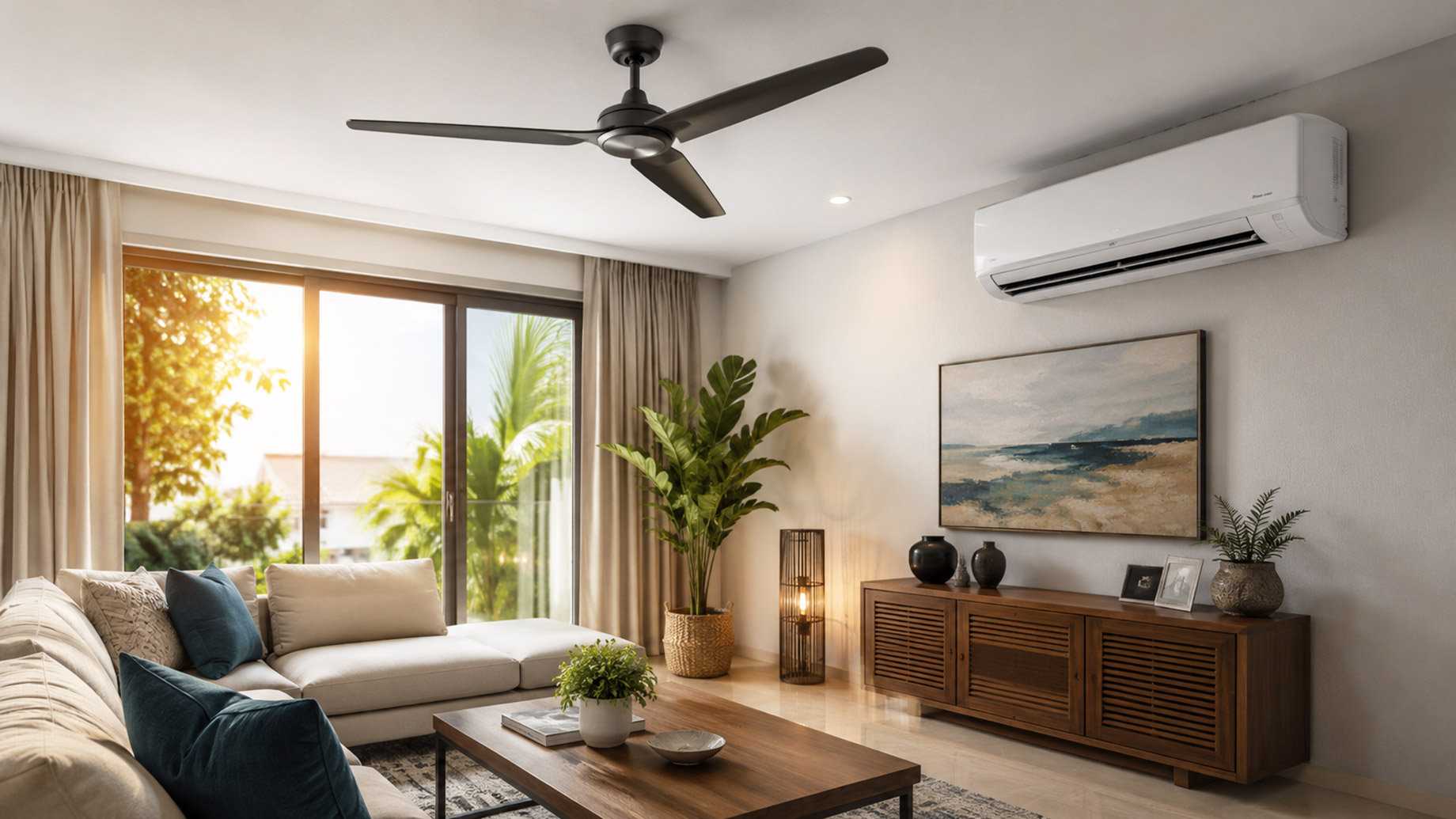
Summer heat is miserable. When it gets hot out, you want two things: cool air and little to no bill from your electric company. You have two choices to get cool air: a simple fan or an air conditioner. Both can help cool down a stuffy room, but they achieve that goal in very different fashions. One will use mere pennies of electricity while the other could cool your whole house. So, which one is more energy efficient? Well, that depends on what you mean by “efficient” and what you need.
How They Keep You Cool
Fans don’t actually cool the air. No, they literally just move air around your room. That moving air touches your skin and accelerates sweat evaporation. The result is that you feel cooler without actually lowering the temperature of the room. Ceiling fans and box fans just make you feel cooler without altering the temperature.
Air conditioners function in a completely different manner. They suck warm air from your room over cold coils filled with refrigerant. They then blow that cooler air back into your room. Additionally, air conditioners suck moisture from the air which helps you stay cool. After all, a humid 90 degree day feels hotter than a dry 90 degree day because of moisture in the air. Air conditioners change the temp of the room you are in while fans let your body trick itself into thinking it’s cooler than it actually is.
Energy Consumption
This is where fans kick air conditioners’ butts. A ceiling fan uses between 15 and 75 watts of energy to run. A box fan uses about 40-100 watts. Compare that to an air conditioner. Window units run between 500 and 1,500 watts. Central air conditioners run anywhere from 3,000 to over 5,000 watts depending on the size of your house.
Using a ceiling fan for eight hours may only cost you a couple of cents. Leaving your central air unit on for eight hours can cost you over a dollar depending on your electrical rate. Multiply that by all the hot days of summer and that can add up to several hundred dollars. If you’re trying to keep your monthly bills down, that’s a huge difference.
When to Use a Fan
There will be plenty of days when you can get by with just a fan. If the weather is under 85 degrees Fahrenheit and not too humid you can stay comfortable with an AC unit. Having a steady breeze going will make your rooms feel cooler and more comfortable.
You can also use fans to supplement your air conditioner. By setting your thermostat a few degrees warmer you can keep cool with just a fan. The Department of Energy says you can set your thermostat four degrees higher if you have a ceiling fan blowing. This small increase can save you on AC energy use monthly.
Something else fans offer is cross-ventilation. By opening windows on opposite sides of your home, you can place fans at either end to move air through the house. On cooler days, this can replace your AC units and keep your home smelling fresh.
When to Use an Air Conditioner
There will also be times when a fan is just not enough. If it is over 95 degrees outside, sending that hot air blowing around your house will not feel good. Likewise, if your house is already hot you don’t want to push that hot air around with a fan.
Moisture in the air is another reason why you might want to turn on your AC. If it’s a humid day outside, that humidity will make its way indoors. High humidity prevents sweat on your body from evaporating which causes you to feel hotter. Fans become ineffective at keeping you cool when humidity gets too high. Air conditioners help lessen that humidity and will truly make you feel cooler.
Not only does high humidity make you feel more uncomfortable, but it can also be dangerous. High temperatures paired with high humidity can cause serious health risks to children, older adults, and those with preexisting conditions.
If you’re like most people you’ll also have a harder time sleeping when it’s hot out. There’s nothing worse than trying to sleep when you’re hot and sticky. A fan might keep air moving throughout your room, but it will never actually cool down the room itself. A lack of sleep can harm your mood, job performance, and more. Sometimes paying the extra money for electricity is worth it.
Initial Cost Out of Pocket
Fans are relatively inexpensive. A quality box fan will set you back between 20 and 50 bucks. A good ceiling fan plus installation can run you from 150 to 300 dollars. Compare that to…
Air conditioners are pricey. You can get a window unit to cool a single room for 150 to 500 dollars. Central air units can range from 3,000 to over 7,000 dollars depending on your home and including installation. If your house doesn’t already have ducts you could be looking at even more cost.
There are also portable air conditioners. These can range from 300 to 700 dollars. They don’t cool as efficiently as window units, but they also don’t require you to cut holes in your walls.
Environmental Impact
When it comes to energy used and your carbon footprint, fans again beat AC units. Using less electricity from power plants means lower emissions into the atmosphere. This assumes you live under dirtier power sources. If you live in an area with cleaner power, then both options look better. However, you look at it, fans use WAY less energy.
Another thing to consider is the refrigerants used in air conditioners. Some of these chemicals can be harmful to the ozone layer if they leak out. Older air conditioners are more prone to leaking refrigerants that can damage the earth’s ozone. Newer air conditioners use different refrigerants due to stricter laws but are still worse than using a fan.
So, which should you get?
Honestly, most people should own both. Fans are great when it’s not oppressively hot out. They run for cheap and keep your air circulating naturally. But when the temperature starts to rise and that humidity creeps in, it’s time to break out the AC. Use your cooling fans as often as possible and only use your air conditioner when you absolutely need it. Turn your thermostat up a few degrees and let your ceiling fans do the work. It could lower your cooling costs significantly.
Real-Life Example: Using Ceiling Fans with Central Air Conditioner to Save Money
A family from Atlanta complained their summer electric bills were increasing due to excess air conditioner use. They run their central air conditioner almost 24/7 during humid afternoon weather and warm summer evenings.
Instead of buying a new HVAC system, they partnered with an energy consultant who helped them enhance indoor cooling through ceiling fans, programmable thermostats, and improved airflow.
Simple Upgrades Made By The Family
Below are some of the simple energy efficiency upgrades this family made:
- Installed ceiling fans in bedrooms and living rooms
- Raised thermostat temperatures by 4 degrees when running fans
- Operated ceiling fans only when rooms are occupied
- Opened windows during cool evening hours for natural ventilation
- Prevented excess heat buildup during the day by keeping blinds and curtains shut
- Had air conditioning serviced to improve airflow/refrigerant efficiency
Final Results Summary
Here are the results the family experienced after one summer season:
- Paid less on monthly electric bills during hotter months
- Decreased runtime on central air conditioner
- Stayed cooler in-home even with higher thermostat temperatures
- Noticed better airflow and circulation
- Less humidity and stuffiness indoors
- Felt more comfortable sleeping at night due to consistent temperatures
Conclusion: They learned ceiling fans were not enough to cool their home during peak summer months and periods of high humidity. However, when strategically used together with air conditioners, fans can greatly improve energy efficiency.
Key Lesson – Fans work best when combined with air conditioning. Use air conditioners to lower room temperature and humidity levels while using fans to create a wind chill effect and improve air circulation.
Source / Reference: https://www.energy.gov/energysaver/fans-cooling
Fan vs Air Conditioner FAQs
Do ceiling fans or air conditioners use less electricity?
Ceiling fans use much less electricity than air conditioners. However, an air conditioner can actually cool a room by lowering the temperature and humidity levels.
How do fans cool off a room?
Fans do not cool off the air in a room. Instead, they provide a wind chill effect that helps sweat evaporate from your body and make you feel cooler.
Why do air conditioners use so much electricity?
Air conditioners have to remove heat and moisture from the air. This process requires electricity to power compressor units, refrigerants, condenser coils, and fan motors.
Can I use ceiling fans with my air conditioner to save money?
Yes. Using a ceiling fan with your air conditioner can allow you to raise your thermostat settings while still feeling comfortable. This may decrease your overall cooling costs.
Are fans enough to keep you cool in extreme heat?
During extremely hot or humid conditions, an electric fan may have little to no effect. The fan can’t lower the temperature in your home or reduce humidity levels.
Is it cheaper to leave a fan on all night?
Typically, it is cheaper to leave a fan on all night versus an air conditioner. Ceiling fans and box fans don’t consume nearly as much electricity as AC units do.
Do air conditioners cool or just remove humidity from the air?
Air conditioners do both of these things. Air conditioners lower the temperature in your home and remove moisture from the air through dehumidification.
Does using a ceiling fan save money on cooling costs?
Many people have realized savings by supplementing air conditioner usage with ceiling fans. Other tips include increasing ventilation, sealing air leaks, and installing a programmable thermostat.
Are portable air conditioners energy efficient?
Portable air conditioners work great for cooling down small rooms. But, these units are typically less efficient than window air conditioners. Some heat will always escape back into the room.
Which is better for the environment – fans or air conditioners?
Fans have less of an environmental impact. Fans use substantially less electricity and don’t require refrigerants that can harm the environment when leaked.
