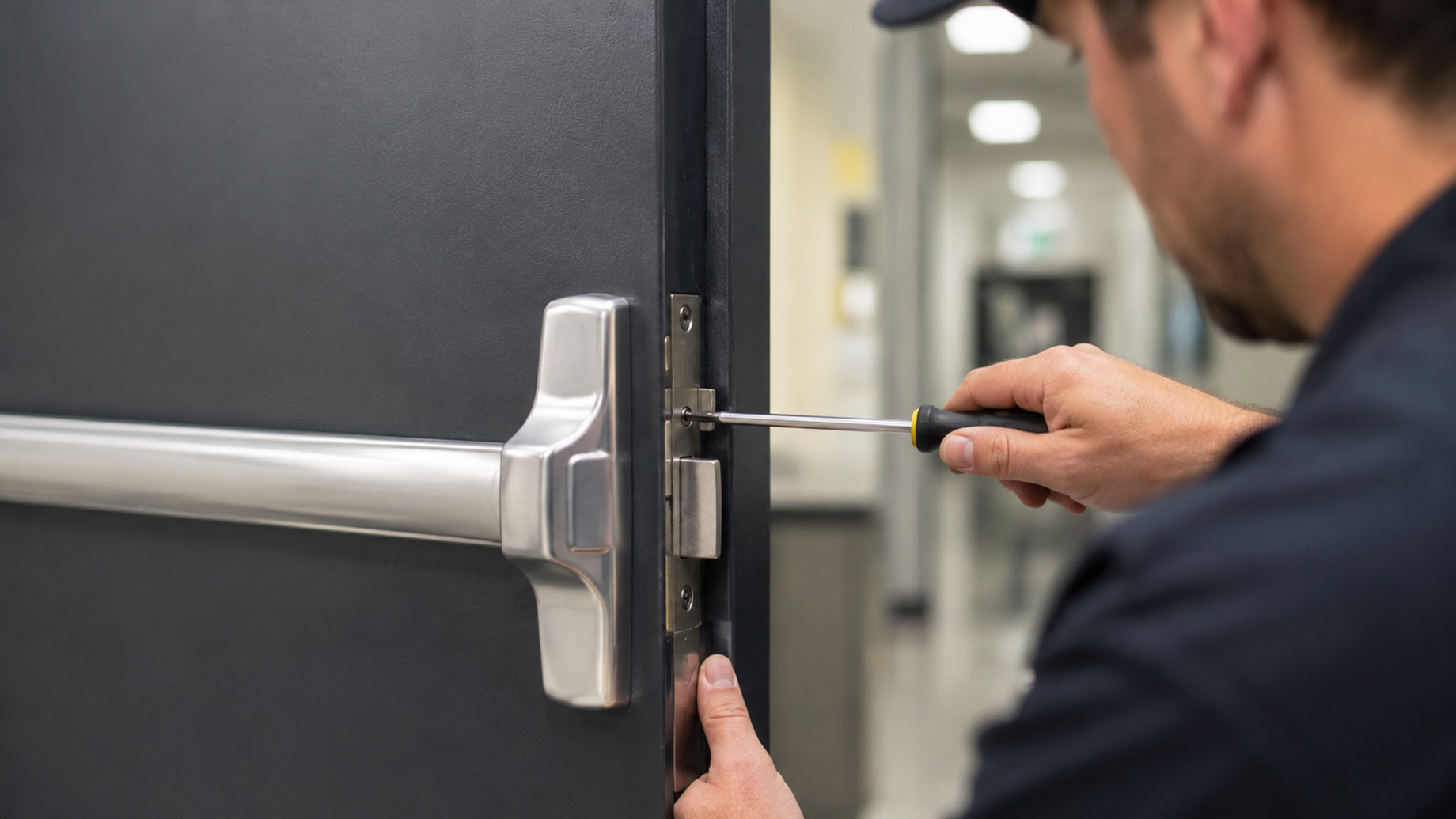
Commercial doors do more than provide access to a building. They protect employees, customers, inventory, equipment, and property. They also support fire safety, accessibility, energy efficiency, security, and daily workflow. When a door is damaged, misaligned, difficult to open, or unable to close properly, it can create safety hazards and business interruptions.
Following commercial door maintenance best practices helps extend the life of your doors, reduce repair costs, and keep your building safer over time. Whether your property uses steel doors, aluminum storefront doors, glass entry doors, fire-rated doors, roll-up doors, loading dock doors, or automatic doors, regular inspection and maintenance are essential.
Why Commercial Door Maintenance Matters
Commercial doors are used far more often than most residential doors. In busy buildings, doors may open and close hundreds or even thousands of times each day. That constant use puts stress on hinges, closers, locks, frames, rollers, seals, handles, panic hardware, and access control systems.
Poorly maintained doors can lead to:
- Security vulnerabilities
- Trip, pinch, or impact hazards
- Failed locks or latches
- Energy loss from air leaks
- Water intrusion
- Fire safety issues
- Accessibility problems
- Costly emergency repairs
- Business downtime
Routine maintenance allows small issues to be identified before they become serious. A loose hinge, worn sweep, or slow-closing door may seem minor, but over time, these problems can damage the frame, compromise security, or prevent the door from operating safely.
Create a Regular Inspection Schedule
One of the most important commercial door maintenance best practices is creating a consistent inspection schedule. The right schedule depends on the type of door, how often it is used, and the environment around it.
High-traffic doors should be inspected more frequently than doors used only occasionally. Doors exposed to weather, dust, moisture, forklifts, deliveries, or heavy equipment may also need more attention.
A good inspection schedule may include:
- Weekly visual checks for high-traffic entry doors
- Monthly checks for locks, handles, hinges, and closers
- Quarterly inspections for fire-rated and emergency exit doors
- Seasonal inspections for exterior doors and weather seals
- Annual professional service for major door systems
Inspections should be documented. Keep a simple maintenance log that includes the date, door location, condition, repairs made, and the name of the person who performed the inspection. Documentation helps track recurring issues and supports safety compliance.
Check Hinges, Pivots, and Moving Hardware
Hinges and pivots support the weight of the door and allow it to open and close smoothly. When they loosen, wear out, rust, or become damaged, the door may sag, scrape the floor, bind against the frame, or fail to latch.
During inspection, look for:
- Loose hinge screws
- Worn hinge pins
- Rust or corrosion
- Sagging door panels
- Grinding or squeaking sounds
- Gaps that look uneven
- Door movement that feels heavy or unstable
Loose hardware should be tightened promptly. If screws no longer hold, the frame or door may need repair. Worn hinges should be replaced with the correct grade and size for the door. Heavy commercial doors require hardware rated for their weight and usage level.
Lubrication may be needed for some hinges, pivots, rollers, and moving parts. Use only the lubricant recommended for the specific hardware. Too much lubricant can attract dirt and create buildup.
Test Door Closers and Closing Speed
Door closers control how quickly and safely a door closes. A properly adjusted closer prevents slamming, supports accessibility, helps the door latch, and reduces wear on the frame and hardware.
A closer may need adjustment if:
- The door slams shut
- The door closes too slowly
- The door does not latch
- The door stays partially open
- The door is difficult to pull open
- Fluid is leaking from the closer
- The closer arm is loose or bent
A leaking closer usually needs replacement. Adjusting a closer may seem simple, but incorrect adjustments can create safety problems or cause the door to fail accessibility or fire safety requirements. For fire-rated doors, the door must close and latch properly without being propped open.
Inspect Locks, Latches, and Access Control Systems
Security depends on doors closing and locking correctly. If a lock or latch is worn, misaligned, or damaged, the door may appear closed while remaining unsecured.
Check that:
- Keys turn smoothly
- Latches engage fully
- Deadbolts extend properly
- Electric strikes release and secure correctly
- Card readers or keypads respond consistently
- Panic bars operate without sticking
- Door contacts and alarms function correctly
- The door does not rattle excessively when locked
If a door requires force to lock or unlock, there may be an alignment problem. Forcing the lock can damage the cylinder, latch, strike plate, or access control hardware. Address the cause instead of relying on extra pressure.
Maintain Panic Hardware and Exit Devices
Panic hardware is critical for emergency exits. These devices allow people to exit quickly during a fire, security threat, or other emergency. Because they are life safety components, they should be inspected regularly.
Look for problems such as:
- Sticking push bars
- Loose mounting screws
- Delayed latch retraction
- Damaged end caps
- Missing labels
- Doors that do not open with reasonable pressure
- Exit alarms that do not sound when activated
- Exterior trim that does not work correctly
Never chain, block, disable, or modify an emergency exit door. Exit doors must remain accessible and functional whenever the building is occupied. If panic hardware is damaged or unreliable, schedule repair immediately.
Keep Door Frames Aligned and Secure
The door frame is just as important as the door itself. A strong door cannot perform properly if the frame is damaged, loose, rusted, or out of square.
Frame issues may show up as:
- Cracks around anchors
- Rust near the bottom of the frame
- Loose frame sections
- Uneven gaps
- Door rubbing at the top or sides
- Latch not meeting the strike plate
- Daylight visible around the perimeter
Exterior frames should also be checked for water damage, seal failure, and corrosion. In busy commercial environments, frames may be damaged by carts, pallet jacks, forklifts, and deliveries. Protective guards can help reduce recurring impact damage.
Clean Tracks, Thresholds, and Door Bottoms
Sliding doors, roll-up doors, overhead doors, and storefront doors often rely on clean tracks or thresholds. Dirt, debris, stones, salt, packaging materials, or metal shavings can interfere with operation.
Regular cleaning helps prevent:
- Dragging
- Jamming
- Uneven movement
- Roller damage
- Seal damage
- Water pooling
- Premature wear
Door bottoms and thresholds also affect safety and energy efficiency. Worn sweeps can allow air, pests, dust, and water into the building. Damaged thresholds may create trip hazards or prevent doors from sealing correctly.
Inspect Weatherstripping and Seals
Exterior commercial doors need proper seals to keep out heat, cold, wind, rain, dust, insects, and noise. Good seals also help reduce utility costs and improve comfort inside the building.
Replace weatherstripping if you notice:
- Cracks or missing sections
- Light coming through around the door
- Drafts near the entrance
- Water intrusion
- Flattened or brittle seals
- Pest activity near the doorway
- Increased heating or cooling costs
Weatherstripping should fit snugly without preventing the door from closing and latching. If the door must be slammed to close after new seals are installed, the seal type or alignment may be incorrect.
Pay Special Attention to Fire-Rated Doors
Fire-rated doors are designed to slow the spread of fire and smoke. They must be maintained carefully because damaged or altered fire doors may not perform as intended during an emergency.
Fire-rated door maintenance should include checking that:
- The door closes and latches on its own
- The door is not blocked or propped open
- Labels are visible and legible
- Hinges and hardware are secure
- Gaps are within allowable limits
- No unauthorized holes or modifications are present
- Glazing and vision panels are intact
- Smoke seals and gaskets are in good condition
Do not drill, cut, modify, or replace fire door hardware without confirming that the work is appropriate for the door rating. A qualified professional should inspect and repair fire-rated assemblies.
Train Staff to Report Door Problems
Employees are often the first to notice door issues. A door that sticks, slams, drags, or fails to lock may be used for days or weeks before management becomes aware of the problem. Training staff to report issues early is one of the simplest ways to improve safety.
Ask employees to report:
- Doors that do not close fully
- Broken handles or locks
- Slamming doors
- Doors that are hard to open
- Damaged glass or frames
- Loose panic bars
- Strange noises
- Water leaks near doors
- Doors that no longer feel secure
Make reporting easy. A simple form, maintenance email, or work order system can help your team respond faster.
Know When to Call a Professional
Some maintenance tasks can be handled by trained staff, such as visual inspections, cleaning, and reporting damage. However, repairs involving door closers, fire-rated doors, access control systems, automatic operators, roll-up doors, overhead doors, and structural frame issues should be handled by qualified technicians.
Call a professional if:
- A door will not latch or lock
- A closer is leaking
- A fire door fails to close properly
- Panic hardware is damaged
- A frame is bent or loose
- An automatic door behaves unpredictably
- A roll-up or overhead door is noisy, stuck, or uneven
- Glass doors are misaligned
- The door has been hit by equipment or a vehicle
Professional service helps ensure the repair is safe, durable, and appropriate for the door type.
Build Maintenance into Your Safety Plan
Commercial door maintenance should be part of your broader building safety strategy. Doors affect emergency exits, security, accessibility, energy efficiency, and daily operations. Waiting until a door fails can lead to higher costs and greater risk.
A strong maintenance plan should include:
- Routine inspections
- Written maintenance records
- Prompt repairs
- Staff reporting procedures
- Seasonal seal checks
- Professional service when needed
- Special attention to fire-rated and emergency exit doors
By following commercial door maintenance best practices, businesses can reduce hazards, extend door life, and keep their facilities safer for everyone who enters.
FAQ
How often should commercial doors be inspected?
High-traffic commercial doors should be checked frequently, often weekly or monthly. Fire-rated doors, emergency exits, and exterior doors should receive regular documented inspections and professional service as needed.
What are the most important commercial door maintenance best practices?
The most important practices include inspecting hinges, closers, locks, frames, panic hardware, seals, thresholds, and fire-rated doors. Businesses should also document inspections and repair issues quickly.
Why does my commercial door not close properly?
Common causes include hinge wear, frame misalignment, closer problems, damaged weatherstripping, floor clearance issues, or a latch that does not line up with the strike plate.
Can employees perform commercial door maintenance?
Employees can perform basic visual checks, clean tracks, report damage, and keep doorways clear. Repairs involving fire doors, electrical systems, access control, closers, or structural damage should be handled by professionals.
Why is fire door maintenance important?
Fire doors help slow the spread of smoke and flames. If they do not close, latch, or seal properly, they may fail during an emergency and put occupants at risk.
What signs mean a commercial door needs repair?
Signs include slamming, sticking, scraping, loose hardware, failed locking, uneven gaps, damaged seals, strange noises, rust, broken glass, or doors that do not close and latch securely.
How can maintenance reduce door repair costs?
Routine maintenance catches small problems early. Fixing loose hardware, worn seals, or minor alignment issues is usually less expensive than replacing damaged doors, frames, locks, or operators.
Should commercial door maintenance be documented?
Yes. Maintenance records help track recurring problems, support safety planning, and show that the business is taking reasonable steps to keep doors in safe working condition.
