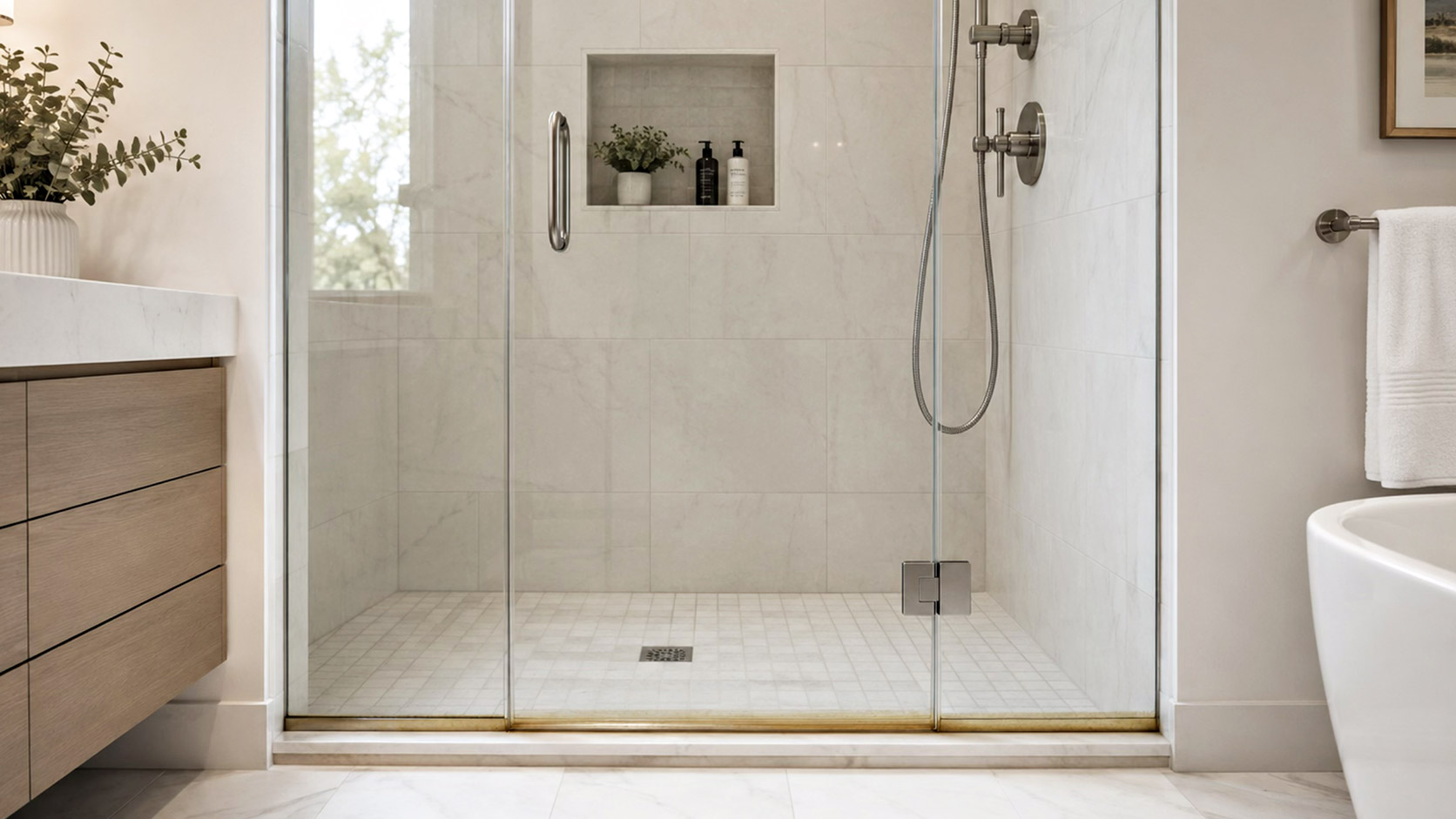
You can clean a bathroom from top to bottom and still feel as if something is off.
The glass shower screen looks clear. The taps have been polished. The mirror is clean, the counter is tidy, and the tiles look fine. Then your eye drops to the bottom of the shower door, where the seal has turned cloudy, yellow, or slightly black around the edges.
It is a small thing, but it is hard to unsee.
What makes it more frustrating is that the seal may not be very old. It might have looked perfectly clear when it was first fitted, only to become stiff, yellowed, or curled a few months later. For anyone who cares about a bathroom looking properly clean, that little strip at the bottom of the glass can become surprisingly annoying.
A Clean Bathroom Makes Old Seals Stand Out
Most bathroom marks can be dealt with quickly. Water spots on glass can be wiped away. Limescale on taps can usually be removed. Mirrors can be polished in seconds.
A tired shower seal is different.
Once it starts to yellow or grow mould, the issue is often deeper than surface dirt. The material may be ageing, the edge may be holding moisture, or the surface may have become rough enough to trap residue. Scrubbing may improve it for a short time, but it rarely brings back that new, clear look.
The location does not help either. Shower door seals sit right where the eye naturally lands: along the bottom of the glass, at the side of the door, around the closing edge, or near the floor where water collects. Against clean glass and pale tiles, even a small amount of yellowing or mould can look obvious.
That is why an old seal can make a bathroom feel almost clean, but not quite.
Small Signs Your Shower Area Needs Attention
For homeowners who want their bathroom to feel clean and well cared for, knowing when to consider bathroom seal replacement can be more useful than trying to scrub the same problem again and again.
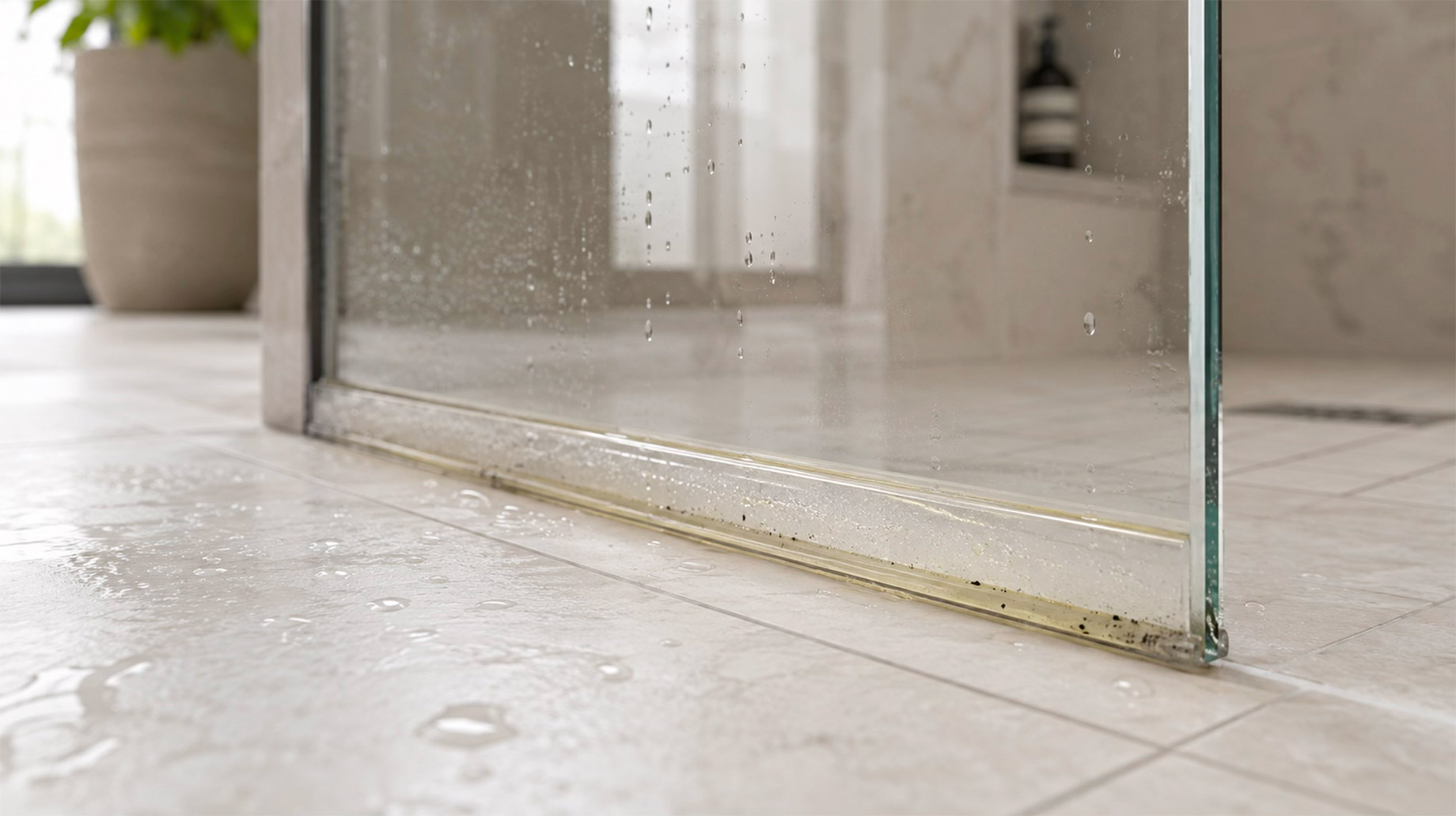
A seal may need attention if it has changed from clear to cloudy, if the bottom edge has started to curl, or if dark spots keep returning after cleaning. It may also feel stiff when pressed, no longer sit neatly against the glass, or allow water to escape onto the bathroom floor.
These are small signs, but they matter. They show up in everyday homes, busy family bathrooms, rental properties, Airbnb bathrooms, and houses being prepared for sale. The rest of the room may be in good condition, but a yellowed or mouldy strip around the shower can weaken the whole impression.
Why Some Shower Seals Turn Yellow So Quickly
It is easy to blame cleaning habits when a shower seal starts to look old, especially if it happens sooner than expected. But bathrooms are tough environments for soft materials.
A shower seal deals with hot water, steam, soap, shampoo, shower gel, cleaning products, hard-water minerals, and repeated door movement. Unlike glass or tile, it has to stay flexible while also staying clear and properly fitted.
Yellowing can come from ageing material, hard-water deposits, soap residue, or repeated exposure to cleaning products. Mould tends to appear where moisture sits for too long, especially around the bottom edge or in small folds. Curling, cracking, and stiffness usually mean the material is losing flexibility.
Once that happens, the seal can stop sitting tightly against the glass or floor. Water begins to escape, the floor needs wiping more often, and damp corners become harder to keep clean. In other words, an old seal does not just look bad; it can create more cleaning work.
The Right Seal Should Make Maintenance Easier
When people replace a shower seal, they often focus on whether the new one will fit. That matters, of course. But fit is only part of the story.
If a seal starts yellowing, stiffening, or collecting mould after a short time, the material may not be holding up well in a humid bathroom. A better shower seal should keep its shape, stay flexible, resist build-up, and continue to look clean through normal daily use.
This is where material quality makes a noticeable difference. SIMBA Seals UK, for example, tests its shower door seals for more than 30,000 open-and-close cycles. The material also includes anti-limescale and anti-mould additives, helping slow down build-up, yellowing, cracking, and general ageing.
For a homeowner, those details are not just technical claims. They can mean fewer replacements, less scrubbing, and a shower area that looks clean for longer after the bathroom has been tidied.
Do Not Forget the Seal When Cleaning
Even a good seal benefits from simple habits.
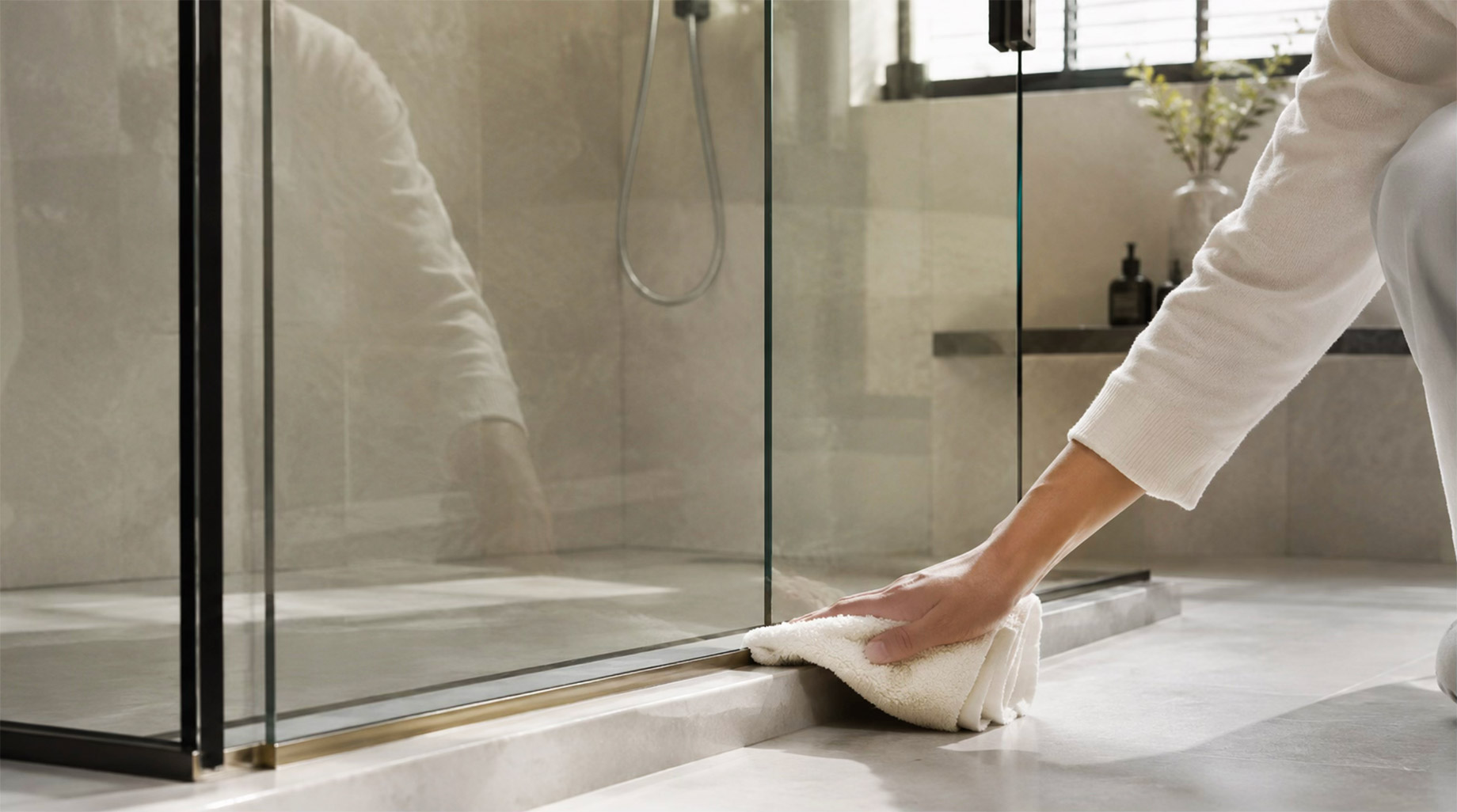
After showering, most people think to wipe the glass, but the seal itself is easy to miss. Running a dry towel along the bottom edge and side gaps helps remove water before it sits there for hours. This is especially useful in bathrooms without strong ventilation.
Airflow matters too. Opening a window, turning on the extractor fan, or leaving the bathroom door open after a shower helps the seal dry faster. In a small or windowless bathroom, even a quick blast of cool air around the bottom of the door can help reduce lingering moisture.
It is also worth being careful with harsh cleaners. Strong products can make a seal look better for a moment, but over time they may make soft materials more brittle or cloudy.
If the seal is already yellowed, blackened, cracked, or no longer flexible, it may simply be past the point where cleaning will fix it.
Final Thoughts
Bathrooms often lose their polished look through small details, not major flaws.
A yellowed shower door seal is one of those details. It is inexpensive, easy to overlook, and rarely the first thing people think about. Yet because it sits between the glass, water, and floor, it can change how clean the whole shower area feels.
Sometimes a bathroom does not need new tiles, new taps, or a full refresh. It just needs the one tired detail at the bottom of the shower door to be replaced.
