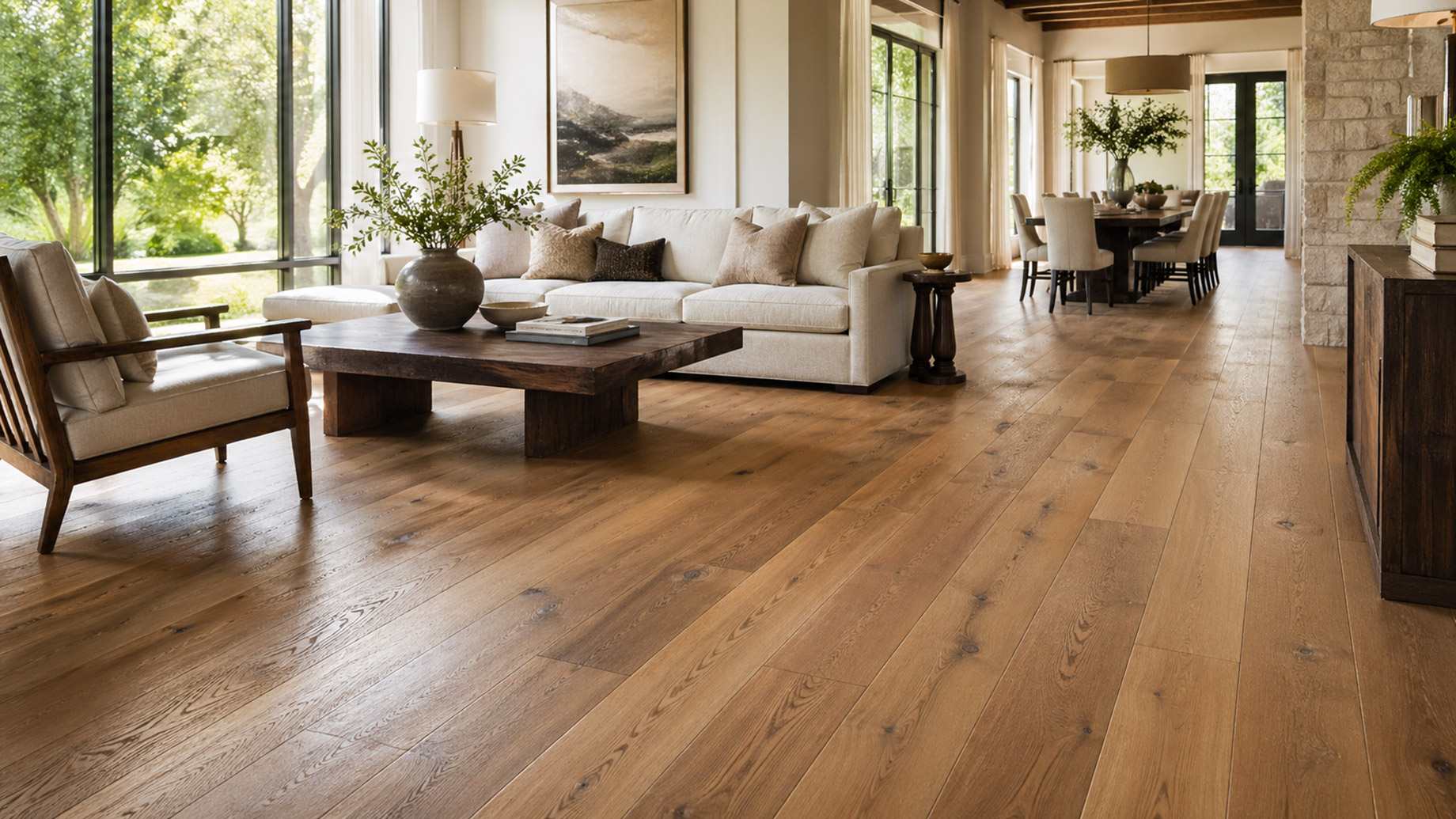
Wide plank hardwood flooring has become a popular choice for homeowners looking to create a high-end, timeless look. With boards that are significantly wider than traditional hardwood planks, this style offers a distinct visual impact that can transform a space. However, like any flooring option, it comes with both advantages and drawbacks. Understanding the pros and cons of wide plank hardwood can help you decide whether it is the right fit for your home.
What is Wide Plank Hardwood Flooring?
Wide plank hardwood refers to wood flooring boards that are typically five inches or wider. Traditional hardwood flooring usually ranges from two to four inches in width, making wide plank hardwood noticeably broader. These planks can be made from a variety of wood species, such as oak, maple, hickory, and walnut, and are available in both solid and engineered forms. The wider boards highlight the natural grain and character of the wood, giving each floor a unique and often more rustic or luxurious appearance.
The Visual Appeal of Wide Plank Hardwood
One of the biggest reasons homeowners choose wide plank hardwood is its aesthetic value. The wider boards create a more open and less busy look compared to narrow planks. Because there are fewer seams, the floor appears more cohesive and expansive. This can make rooms feel larger and more inviting. Wide plank hardwood also showcases the natural beauty of the wood more prominently. Knots, grain patterns, and color variations become standout features rather than subtle details. This makes it especially appealing for those who want a natural or organic design style.
Pro: Fewer Seams and a Cleaner Look
A major advantage of wide plank hardwood is the reduced number of seams across the floor. With fewer joints between boards, the overall appearance is smoother and less fragmented. This creates a clean and modern look that works well in both contemporary and traditional homes. The continuity of the boards can also enhance the flow between rooms, especially in open concept layouts. Many homeowners find that this seamless look adds a sense of calm and simplicity to their space.
Pro: Enhanced Property Value
Installing wide plank hardwood can increase the perceived value of a home. Buyers often associate this type of flooring with luxury and craftsmanship. Because it is less common than standard narrow planks, it can make a property stand out in the real estate market. High quality wide plank hardwood flooring can be a strong selling point, especially when paired with thoughtful interior design. While it may require a higher upfront investment, the potential return can make it worthwhile.
Pro: Versatility in Design Styles
Wide plank hardwood works well with a variety of interior styles. It complements rustic farmhouse designs, modern minimalist spaces, and even classic traditional interiors. The choice of wood species, finish, and color allows for a high level of customization. Light colored planks can create a Scandinavian-inspired look, while darker tones can add richness and warmth. This flexibility makes wide plank hardwood a versatile option for homeowners with different design preferences.
Pro: Showcases Natural Wood Character
Because the boards are wider, each plank reveals more of the tree’s natural features. This includes grain patterns, knots, and subtle color variations. For many people, this is a major benefit. It creates a floor that feels authentic and one of a kind. No two planks are exactly alike, which adds depth and personality to the space. This natural character is often lost or less noticeable in narrower boards.
Con: Higher Cost
One of the most significant drawbacks of wide plank hardwood is the cost. Wider boards require larger cuts of wood, which can be more expensive to source. This is especially true for high-quality or rare wood species. In addition to material costs, installation can also be more expensive. Skilled labor is often needed to properly install wide planks, particularly for solid hardwood. The overall investment can be considerably higher than traditional flooring options.
Con: Greater Susceptibility to Moisture Changes
Wood naturally expands and contracts with changes in humidity and temperature. Wide plank hardwood is more prone to these movements because of its larger surface area. This can lead to issues such as cupping, warping, or gaps between boards if not properly managed. Homes in areas with significant humidity fluctuations may require additional precautions, such as humidity control systems. Engineered wide plank hardwood can help mitigate some of these issues, but it does not eliminate them entirely.
Con: Installation Challenges
Installing wide plank hardwood can be more complex than installing narrower boards. The subfloor must be perfectly level and properly prepared to prevent future problems. Any imperfections in the subfloor are more noticeable with wider boards. In many cases, professional installation is recommended, which adds to the overall cost. Improper installation can lead to long-term issues that are difficult and expensive to fix.
Con: Limited Availability of Certain Wood Types
Because wide plank hardwood requires larger pieces of timber, not all wood species are readily available in this format. Some exotic or less common woods may be difficult to find in wider widths or may come at a premium price. This can limit design choices for homeowners who have a specific look in mind. It may also lead to longer lead times when ordering materials.
Con: Maintenance Considerations
While wide plank hardwood is generally durable, it does require proper care to maintain its appearance. Scratches, dents, and wear can be more noticeable on wider boards because of the larger surface area. Regular cleaning, protective pads under furniture, and occasional refinishing may be needed to keep the floor looking its best. Additionally, maintaining consistent indoor humidity levels is important to prevent movement in the wood.
Solid vs. Engineered Wide Plank Hardwood
When considering wide plank hardwood, it is important to understand the difference between solid and engineered options. Solid hardwood is made from a single piece of wood and can be sanded and refinished multiple times. However, it is more sensitive to moisture and environmental changes. Engineered hardwood consists of a top layer of real wood bonded to layers of plywood or other materials. This construction makes it more stable and less prone to expansion and contraction. Many homeowners choose engineered wide plank hardwood for areas where moisture or temperature fluctuations are a concern.
Is Wide Plank Hardwood Right for You?
Choosing wide plank hardwood ultimately depends on your priorities, budget, and lifestyle. If you value aesthetics, uniqueness, and a high-end look, it can be an excellent choice. The visual impact and ability to showcase natural wood beauty make it a standout flooring option. However, it is important to be prepared for the higher cost and potential maintenance requirements. Proper installation and climate control are key to ensuring the longevity of the floor.
Final Thoughts
Wide plank hardwood offers a combination of elegance and character that is hard to match. Its wide boards create a striking visual effect while highlighting the natural beauty of the wood. At the same time, it comes with challenges such as higher costs, sensitivity to moisture, and more complex installation. By weighing these pros and cons carefully, you can determine whether wide plank hardwood is the right investment for your home.
