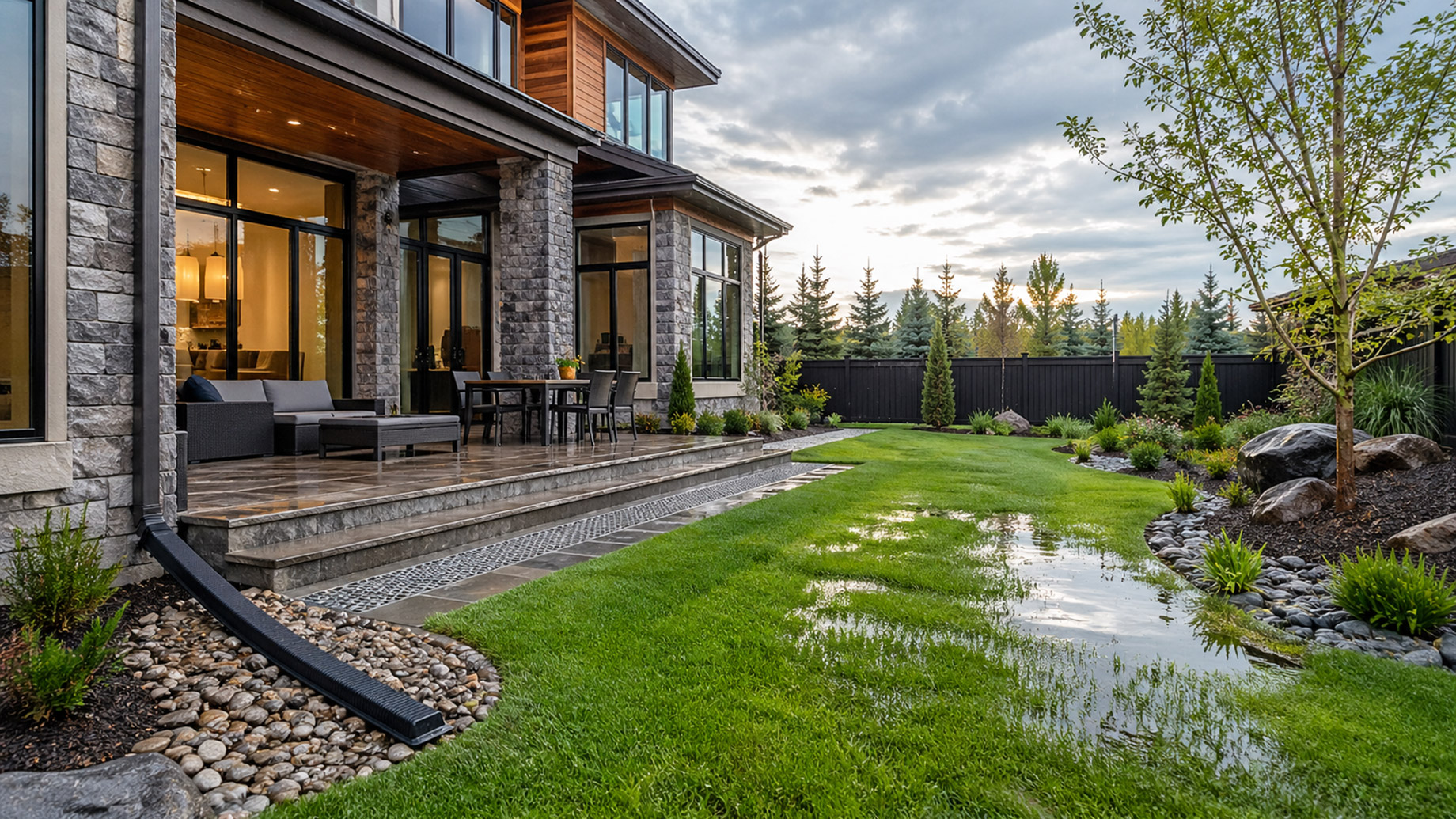
Excess water in a backyard can quickly lead to soggy lawns, damaged foundations, and unhealthy plants. Understanding the root causes of drainage issues is the first step in restoring the health and usability of your outdoor space.
Common Causes of Backyard Drainage Problems
Drainage issues often begin with poor grading or compacted soil. Over time, these conditions prevent water from flowing away from key areas, creating standing puddles and erosion. Downspouts that release water too close to the home can also worsen the problem.
Other factors include heavy clay soil, blocked drains, and overwatered lawns. In some cases, nearby construction or changes in ground elevation can redirect runoff into your yard, making the problem more persistent.
Assessing the Problem Before Taking Action
Begin by observing how water moves during heavy rain. Look for low spots, pooling areas, or soil that remains wet long after rainfall. A quick inspection can reveal whether the issue is surface-level or related to deeper soil drainage.
If you notice frequent flooding near patios or garden beds, evaluate how hardscapes and landscaping companies have shaped the area. Proper grading ensures that water flows away from the home rather than toward it.
Effective Solutions for Better Drainage
Once the causes are clear, several practical solutions can be applied. The choice depends on the yard’s design and the severity of the issue.
- Regrade the soil to create a gentle slope that directs water away from structures.
- Install French drains or dry wells to move excess water underground.
- Use gravel or permeable pavers in high-traffic areas to improve absorption.
- Extend downspouts so runoff is released farther from the foundation.
- Incorporate rain gardens to capture and filter stormwater naturally.
Improving Soil and Plant Health
Healthy soil structure plays an important role in managing water flow. Incorporating organic matter such as compost can improve aeration and water absorption. Deep-rooted plants also help stabilize the ground and reduce erosion.
Choosing suitable vegetation is equally important. Native plants with strong root systems can thrive in variable moisture conditions, supporting long-term drainage improvements without requiring excessive maintenance.
Integrating Hardscapes and Outdoor Features
Hardscape elements like patios, walkways, and decks influence how water moves across a property. When selecting surfaces, consider permeability and slope. A well-planned deck built with quality deck materials can help guide runoff while maintaining durability and aesthetics.
Combining structural design with natural solutions creates a balanced environment where water is managed efficiently and outdoor spaces remain functional year-round.
Maintaining a Long-Term Drainage Strategy
Regular maintenance ensures that systems continue to perform effectively. Clear debris from drains, monitor soil compaction, and inspect areas after heavy rainfall. Even small adjustments can prevent costly repairs later.
With careful planning and consistent upkeep, homeowners can transform problematic yards into well-drained, attractive landscapes that support both property health and outdoor enjoyment.
