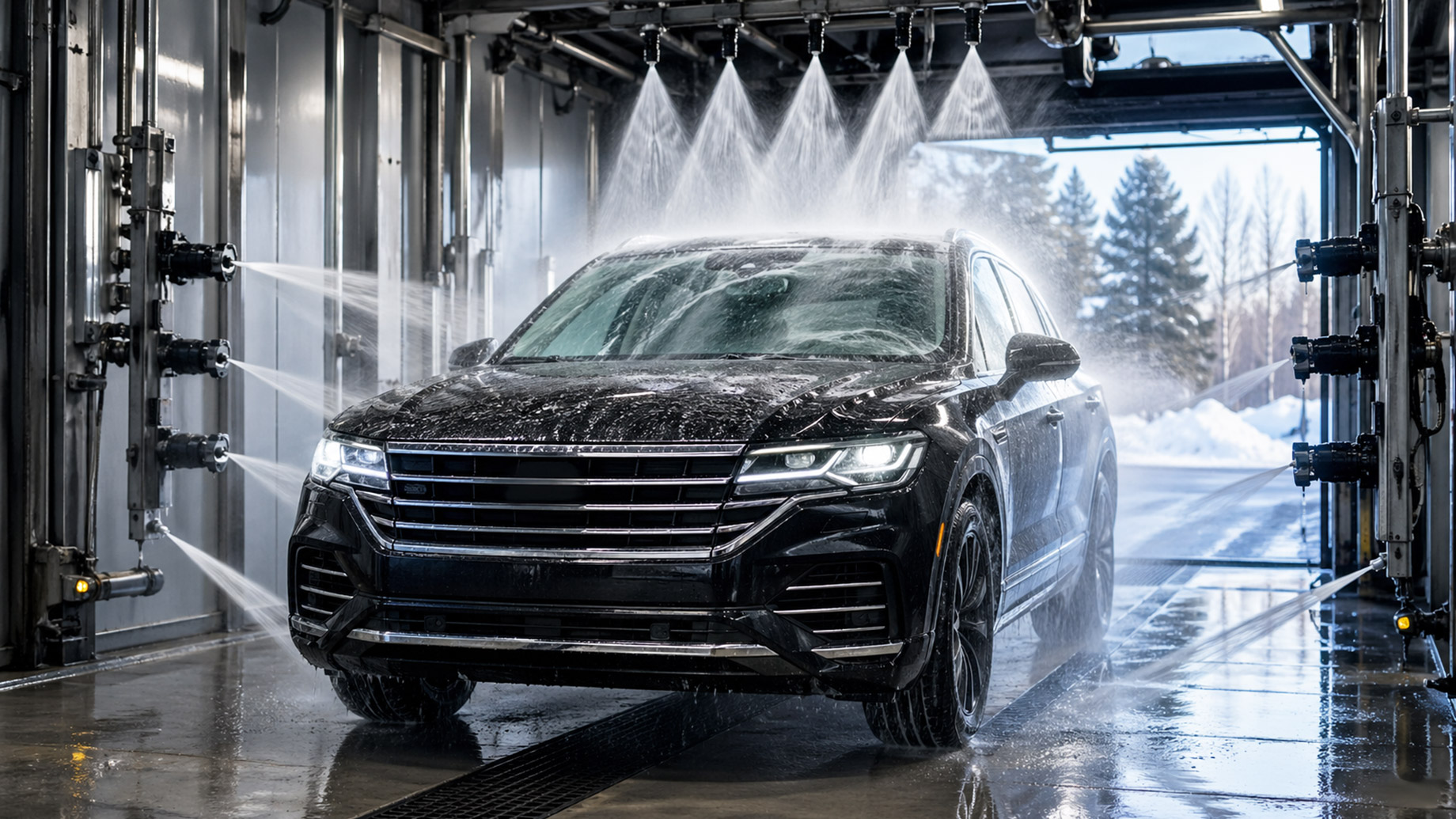
The Canadian driving environment presents one of the harshest vehicle testing grounds in the world. Snow-packed roads, abrasive ice grime, chemical de-icers, airborne industrial residue, intense summer UV exposure, and fluctuating humidity all contribute to accelerated wear and tear on vehicle exteriors. Against this backdrop, car washing has evolved from a basic maintenance habit into an advanced technological process focused on safety, efficiency, and environmental responsibility.
Among the most significant advancements in the industry is the widespread adoption of touchless washing systems—an innovation that reflects the broader trend toward non-abrasive, automated vehicle care. For today’s drivers, especially those who own newer, luxury, or specialty vehicles, touchless washing is no longer a premium option. It has become a practical standard.
As professional car cleaning becomes faster, smarter, and more sustainable, drivers increasingly rely on nearby automated options such as a trusted car wash near you that offers both speed and damage-free performance.
What Makes Touchless Car Washing Different?
Traditional car washing systems rely on rotating brushes, hanging cloth strips, and mechanical friction to remove dirt and grime. While effective, these systems introduce direct physical contact with vehicle surfaces. Over time, this friction can lead to:
- Fine scratches
- Swirl marks in clear coats
- Premature fading
- Damage to protective ceramic coatings
- Wear in soft paint finishes
Touchless car washing eliminates these risks entirely by replacing mechanical contact with a precise application of:
- Heated high-pressure water
- Targeted chemical detergents
- Computer-controlled spray angles
- Timed rinse cycles
At the core of touchless car wash technology is the use of advanced surfactants that chemically break the bond between dirt and the vehicle surface. Once loosened, these particles are flushed away by pressurized water without any abrasives ever touching the paint.
Why Canadian Vehicles Benefit the Most from Touchless Systems
Canada’s seasonal extremes expose vehicles to far more aggressive contaminants than many other regions. In winter alone, vehicles are assaulted by:
- Sodium chloride road salt
- Calcium chloride ice melt compounds
- Sand and gravel abrasives
- Slush trapped in wheel wells
- Dense road spray from surrounding traffic
These substances do not merely soil a vehicle—they chemically attack metal, rubber, and painted surfaces. The underbody, brake lines, suspension joints, and exhaust systems are especially vulnerable.
Touchless washing systems penetrate into areas that mechanical brushes often miss:
- Lower rocker panels
- Underbody frames
- Brake calliper housings
- Wheel wells and mud flaps
Consistent removal of winter accumulation is one of the most effective ways to prevent the formation of rust, preserve braking performance, and extend chassis lifespan.
The Chemical Engineering Behind Touchless Cleaning
There is a common misconception that touchless washing is “just high-pressure water.” In reality, the effectiveness of these systems depends on advanced detergent chemistry.
Key Chemical Components Include:
- Surfactants: These lower the surface tension, allowing water to penetrate and lift oil-based grime.
- Chelating agents: Bind to mineral deposits and neutralize hard-water spots.
- pH balancers: Control acidity to safely dissolve salt without attacking the clear coat.
- Emulsifiers: Break apart grease and hydrocarbon residues from road tar.
These compounds are carefully formulated to clean aggressively without stripping protective waxes or damaging clear coats.
Modern detergent solutions are also increasingly biodegradable and phosphate-free, supporting environmental safety standards across Canadian municipalities.
Paint Protection and Clear Coat Preservation
Most modern vehicles feature multilayer paint systems with a thin clear coat that provides both gloss and UV protection. Once this protective layer is compromised by repeated abrasion, the base paint becomes vulnerable to oxidation, fading, and etching.
Touchless washing is ideal for vehicles with:
- Ceramic coatings
- Paint Protection Film (PPF)
- Matte finishes
- Custom wraps
- Luxury finishes with soft, clear coats
Because contact friction is eliminated, the risk of micro-marring and swirl formation is dramatically reduced. Over time, this preserves:
- Gloss depth
- Colour saturation
- Reflectivity
- Surface smoothness
This preservation directly impacts resale value. Well-maintained paint surfaces consistently command higher resale prices in the Canadian used vehicle market.
Environmental Responsibility in Modern Car Wash Systems
Environmental regulation in Canada continues to intensify, particularly around wastewater management and chemical discharge. Professional automated car washes must now comply with stringent municipal bylaws related to:
- Water reclamation
- Oil separation
- Sediment filtration
- Chemical discharge thresholds
Touchless facilities are ideally suited to these requirements.
Environmental Advantages Include:
- Up to 85–90% water recycling per wash
- Controlled detergent dosing to prevent overuse
- Enclosed drainage systems for contaminant filtration
- Reduced chemical runoff into storm sewers
- Efficient energy use with heated closed-loop water circuits
By comparison, residential driveway washing often allows oil, grease, brake dust, and metal particles to flow directly into surface water systems—an outcome increasingly restricted by environmental regulations.
Convenience as a Core Design Principle
Modern consumers expect vehicle care to fit seamlessly into daily routines. Touchless wash systems have been engineered around three primary expectations:
- Speed: Most full exterior touchless cycles complete in under five minutes.
- Consistency: Computerized wash sequences ensure the same results every visit.
- Accessibility: 24-hour access and high vehicle throughput eliminate long queues.
This level of convenience has reshaped consumer behaviour. Many drivers now wash weekly or bi-weekly rather than seasonally. Higher wash frequency translates directly into lower long-term maintenance costs.
Winter Washing Frequency: A Canadian Essential
During winter months, the average Canadian vehicle accumulates corrosive salt residue within days of snowfall. Failing to remove this buildup rapidly accelerates:
- Underbody corrosion
- Exhaust deterioration
- Suspension joint failure
- Electrical grounding faults
- Brake line weakening
Professionals generally recommend winter washing:
- After every major snowfall
- Following extended highway driving
- When temperatures temporarily rise above freezing
- At least once every 7–10 days in heavy snow periods
Touchless systems allow frequent winter washing without the worry of brush-induced ice damage or freezing mechanical equipment.
Safety Benefits Beyond Appearance
While most drivers associate car washing with appearance, it directly influences driving safety. Dirty vehicles compromise:
- Windshield clarity at night
- Headlight output due to lens clouding
- Rear visibility from obscured cameras
- Sensor accuracy for collision avoidance systems
Salt haze and road film scatter light and reduce contrast, especially during night driving and snowstorms. A clean exterior improves visual acuity and enhances driver response time in critical situations.
Commercial Fleets and Touchless Efficiency
Fleet operators face unique challenges: high vehicle utilization, brand image maintenance, and regulatory cleanliness standards.
Touchless systems are ideal for:
- Ride-hailing vehicles
- Delivery vans
- Service trucks
- Municipal fleets
- Corporate leasing programs
Because there is no physical contact that induces cumulative wear, vehicles can be washed daily if necessary without accelerating paint degradation. This keeps fleet assets visually presentable while controlling long-term depreciation.
The Future of Touchless Car Washing Technology
The next phase of industry innovation is already underway, driven by artificial intelligence and smart automation:
- Camera-based dirt detection systems
- Adaptive pressure control based on vehicle shape
- License plate recognition for membership automation
- AI-driven chemical optimization based on seasonal conditions
- Smart water usage analytics for efficiency reporting
These developments aim to deliver superior cleaning outcomes with even lower water, chemical, and energy consumption.
Final Perspective
Touchless car washing represents one of the most significant advancements in modern vehicle maintenance. It enhances paint longevity, strengthens corrosion protection, improves environmental safety, supports year-round maintenance in extreme climates, and aligns perfectly with fast-paced urban lifestyles.
For Canadian drivers facing unmatched seasonal exposure, adopting regular touchless washing is not simply a convenience—it is a defensive investment in the long-term health of their vehicle.
