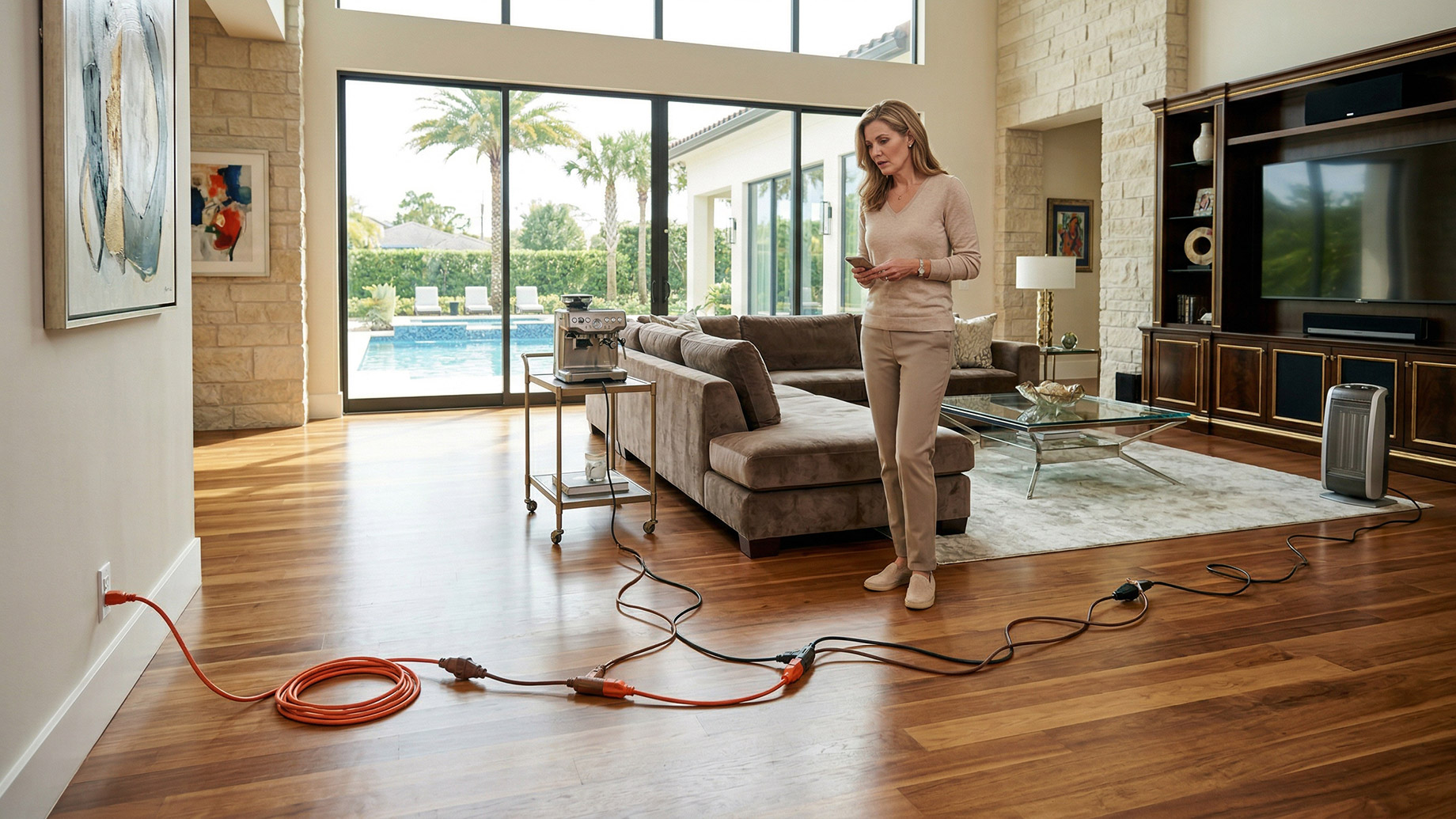
Extension cords are useful when an outlet is not close enough for what you need. But a lot of homeowners end up asking the same thing once one cord is not enough: how many extension cords can be connected?
The safest answer is simple: none. You should not plug one extension cord into another. Safety guidance from OSHA and NFPA warns against connecting extension cords together, because doing so can increase the risk of overheating, overloading, electric shock, and fire.
If you have ever wondered how many extension cords can you connect together or how many extension cords is too many, this guide will break it down in a very simple way.
How Many Extension Cords Can You Connect Together?
If you want the direct answer, here it is:
You should not connect extension cords together at all.
That means the safe number is zero connected in a chain. As soon as one extension cord is plugged into another, you have gone beyond what safety experts recommend. OSHA has even discussed manufacturer warnings that say not to plug one extension cord into another, and NFPA gives the same advice in home fire safety guidance.
So when people ask how many extension cords can be connected, the practical answer is not “two” or “three.” The answer is that extension cords are meant to be used one at a time, in a temporary setup, and with the proper rating for the job.
Why Connecting Extension Cords Is Unsafe
A lot of people connect cords because it seems like an easy fix. The cord reaches farther, the device turns on, and everything appears fine. But that does not mean the setup is safe.
One problem is heat buildup. Extension cords have limits, and chaining them together can make it easier for the setup to overheat, especially if the cord is powering something heavy like a space heater, microwave, power tool, or air conditioner. Overheating is one reason extension cord misuse is linked to fires.
Another issue is overloading. Even if each cord looks normal from the outside, the total amount of electricity running through the setup may be more than it should safely handle. That increases the chance of damaged insulation, melted plugs, or fire.
There is also the fact that extension cords are designed for temporary use, not permanent or everyday wiring. If you find yourself connecting cords often, that is usually a sign that the room does not have enough outlets in the right places.
How Many Extension Cords Is Too Many?
This is where the answer becomes even easier.
If you are asking how many extension cords is too many, the answer is:
More than one in a chain is too many.
In other words, the moment you connect one extension cord to another, you have already crossed the line into an unsafe setup.
That may feel stricter than people expect, but it makes sense. Extension cords are not designed to work like building wiring. They are a short-term solution, not something to stretch across multiple rooms or use as a replacement for proper outlets.
What to Do Instead of Connecting Extension Cords
If one extension cord is not long enough, the safer option is usually to use one properly rated extension cord in the correct length rather than trying to connect several together.
For example, if you need power farther away, it is generally better to buy a single heavy-duty cord designed for that distance and load than to plug two lighter cords together. The cord should match the type of use, whether that is indoor, outdoor, light-duty, or heavy-duty.
You should also make sure the cord is in good condition. A damaged cord with fraying, cracks, a loose plug, or a missing grounding pin should not be used.
If the need for power is constant in the same area, the better long-term answer is usually not another cord. It is fixing the outlet problem itself.
Signs Your Extension Cord Setup Is Unsafe
Sometimes a setup may already be giving warning signs.
Watch for problems like:
- cords feeling warm or hot
- plugs that look discolored
- flickering power
- a burning smell
- breakers tripping
- cords running under rugs or furniture
- damage to the cord jacket or plug ends
These signs can point to overloading, poor airflow around the cord, or electrical stress. If you notice any of them, unplug the setup and stop using it until the problem is corrected. Fire safety agencies warn that damaged or misused extension cords can become dangerous quickly.
Common Mistakes Homeowners Make
A very common mistake is thinking that if a device powers on, the setup must be safe. That is not always true. Electrical problems often build up quietly before there is an obvious failure.
Another mistake is using extension cords for appliances or equipment that draw a lot of power. High-wattage items can push a cord beyond what it is meant to handle.
Some people also treat extension cords like permanent wiring and leave them in place for months. But extension cords are meant for temporary use. If you are depending on them every day in the same room, it is usually time to think about a more permanent solution.
When to Call an Electrician
If you keep running into situations where one outlet is never enough, that usually points to a bigger issue with the layout of your home’s electrical system.
Maybe there are not enough outlets in a room. Maybe the outlets are in awkward places. Or maybe you are using a space in a way that requires more power access than it originally had.
That is when a permanent fix makes more sense than trying to stretch another cord across the room. If your home regularly depends on extension cords in one area, experienced Tulsa electricians can help create a safer setup with properly placed outlets.
This is especially important if you are using extension cords for office equipment, entertainment systems, workshop tools, or anything that stays plugged in most of the time.
A Better Rule to Follow
If you want one simple rule to remember, use this:
One properly rated extension cord for temporary use is okay. Connecting extension cords together is not.
That rule answers all of these search questions at once:
- how many extension cords can be connected
- how many extension cords can you connect together
- how many extension cords can you connect
- how many extension cords is too many
The safest setup is always the one that uses the right cord, the right load, and the shortest temporary solution possible.
Final Thoughts
So, how many extension cords can be connected? The safest answer is none in a chain. Extension cords should not be plugged into each other, even if it seems convenient in the moment.
If you need more reach, use one correctly rated extension cord of the proper length. If you keep needing extra power in the same place, it is usually smarter to solve the outlet issue instead of building a longer and riskier cord setup.
A lot of home electrical safety comes down to avoiding “quick fixes” that slowly become everyday habits. With extension cords, simple is safer.
