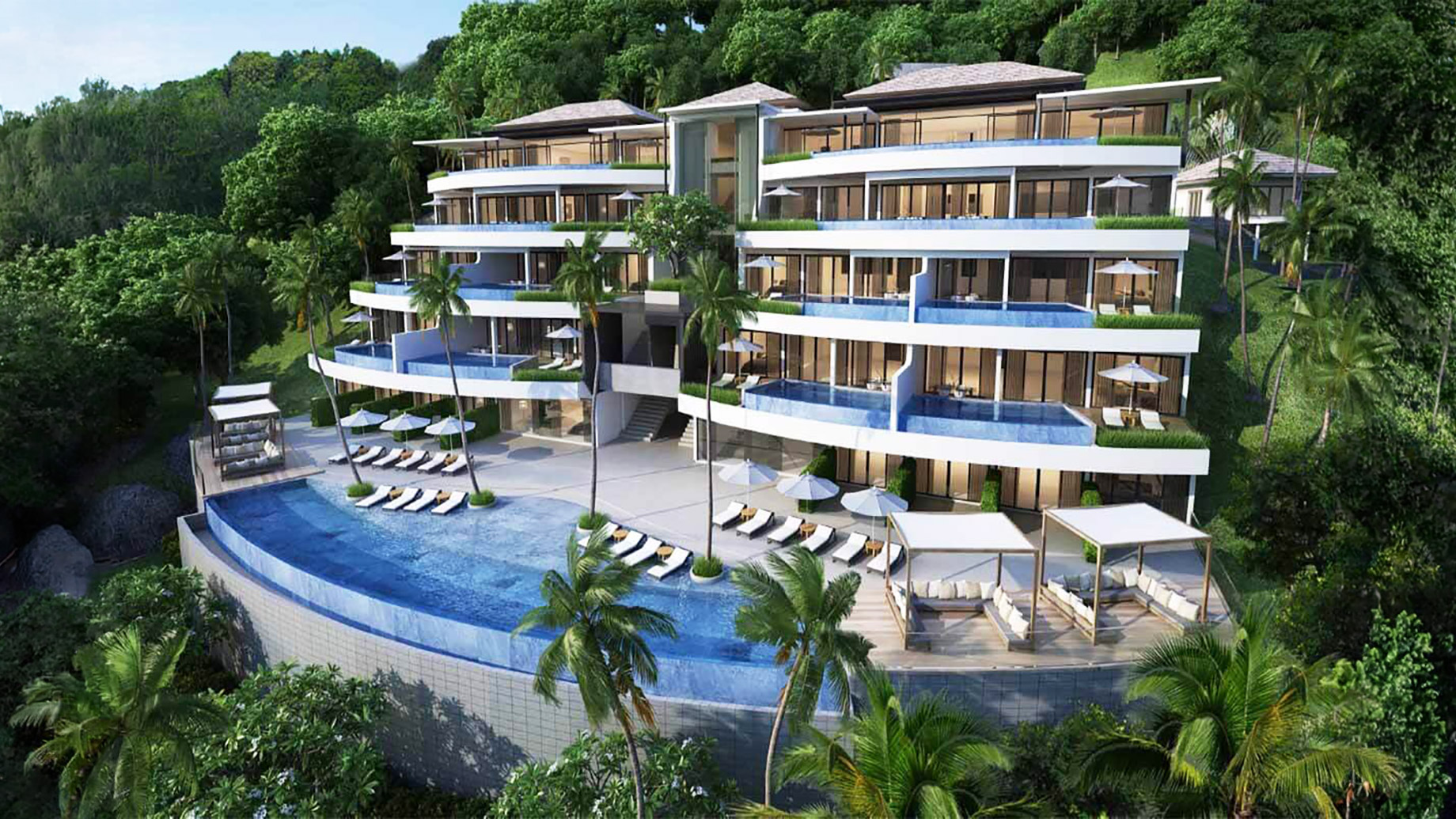
Driven by overseas lifestyle property investors, on the back of strong tourism and superb infrastructure, Phuket in 2026 firmly maintains its position as Thailand’s dominant resort market for overseas property investment. Using our sample of around 30,000 properties listed for sale in Phuket on the leading portals in March 2026, two-thirds of the supply is accounted for by the property group of condominiums and apartments versus one third for villas and houses. Based on market value, Thailand is Asia’s leading destination for branded real estate. Branded properties command a significant premium, and this sector is also particularly strong in Phuket, with a huge number of branded projects – often wellness mixed-use developments and the majority condo or apartment projects – brought to market over the last few years.
Tourism remains the fundamental driver behind Phuket’s property market. The island has evolved from a relatively quiet beach destination into one of Asia’s most recognised resort locations, supported by decades of infrastructure investment. Airports, international hospitals, roads and marinas have all expanded significantly over the past twenty years, allowing tourism to grow and, alongside it, a thriving real estate sector. Neither tourism nor property operates in isolation. The success of one has consistently reinforced the other.
Unlike Thailand’s domestic housing markets, Phuket’s residential property sector is heavily influenced by international buyers. A large share of purchases are made by foreign nationals who are acquiring lifestyle properties rather than purely financial investments. Holiday homes, second residences and long stay family properties make up a substantial portion of demand. Many of these buyers complete purchases with cash rather than relying on local mortgage financing, which reduces exposure to interest rate changes and domestic credit cycles.
This structure gives the market a degree of resilience that is unusual for property markets in the region. Phuket’s buyers are typically motivated by lifestyle considerations such as climate, international schools, healthcare and accessibility. Some maintain businesses in cities such as Singapore, Hong Kong or Bangkok while spending extended periods of time on the island. Others relocate entirely, attracted by the ability to combine remote work with a resort environment.
The supply structure of the market also reflects this diversity of buyers. Condominiums account for the majority of available inventory, particularly in areas close to beaches or tourism hubs. These properties are generally more accessible from a pricing perspective and can be purchased freehold by foreigners within Thailand’s legal framework for condominium ownership. Villas, on the other hand, typically attract higher budget buyers seeking larger plots, privacy and longer-term residential use.
Across the island, demand remains concentrated along Phuket’s west coast. Locations such as Kamala, Surin, Bang Tao and Layan have long been recognised as prime residential zones, offering proximity to beaches, international schools and high end retail and leisure facilities. However, rising land prices in coastal areas have gradually pushed development inland. Areas within Thalang district, including Sri Sunthorn and Phru Champa, have seen increasing activity as developers seek larger sites suitable for villa communities designed around long stay residents and families.
Alongside these structural shifts, the rise of branded residences has become one of the most notable trends shaping Phuket’s real estate market. Branded developments are typically created in partnership with international hotel or lifestyle companies, combining residential ownership with hospitality style services, property management and wellness focused amenities. For buyers, these projects offer a degree of reassurance in terms of design standards, operational management and long term maintenance.
Research from the Thailand Hotel Investment Guide 2026 by C9 Hotelworks indicates that branded real estate commands a significant premium over non-branded developments. According to the report, branded condominiums in Phuket are priced around 28% higher than comparable non-branded units, while branded villas can reach prices up to twice those of non-branded properties.
Global property research also suggests that lifestyle destinations continue to attract long-term capital. According to last year’s Knight Frank Wealth Report, many high-net-worth investors prioritise capital growth over rental returns when acquiring international real estate. This helps explain why established resort markets such as Phuket continue to attract buyers looking for both lifestyle and long-term investment potential.
Beyond individual developments, long-term price trends on the island reflect this sustained demand. Land prices across Phuket have increased dramatically over the past two decades, supported by the steady expansion of tourism and infrastructure. Even during periods of global disruption, including the financial crisis and the pandemic years, property values have shown a capacity to stabilise and recover as international travel returned.
Looking ahead, Phuket’s appeal as a residential destination is likely to remain closely tied to its ability to combine lifestyle factors with practical infrastructure. International schools, healthcare facilities, transport links and digital connectivity all play an important role in supporting the growing number of long stay residents choosing the island as a base.
For buyers exploring property for sale in Phuket, the market continues to offer a wide spectrum of options Condominiums remain the dominant form of supply and provide accessible entry points for foreign buyers, while villas typically represent the higher value segment of the market, often appealing to families and long-term residents seeking space, privacy and lifestyle amenities.
As the island continues to evolve from a tourism driven destination into a broader residential and lifestyle hub, Phuket’s property sector appears firmly positioned within the global network of resort real estate markets. Its combination of international accessibility, established tourism demand and an increasingly diverse property offering continues to attract buyers from across Europe, Asia and beyond.
