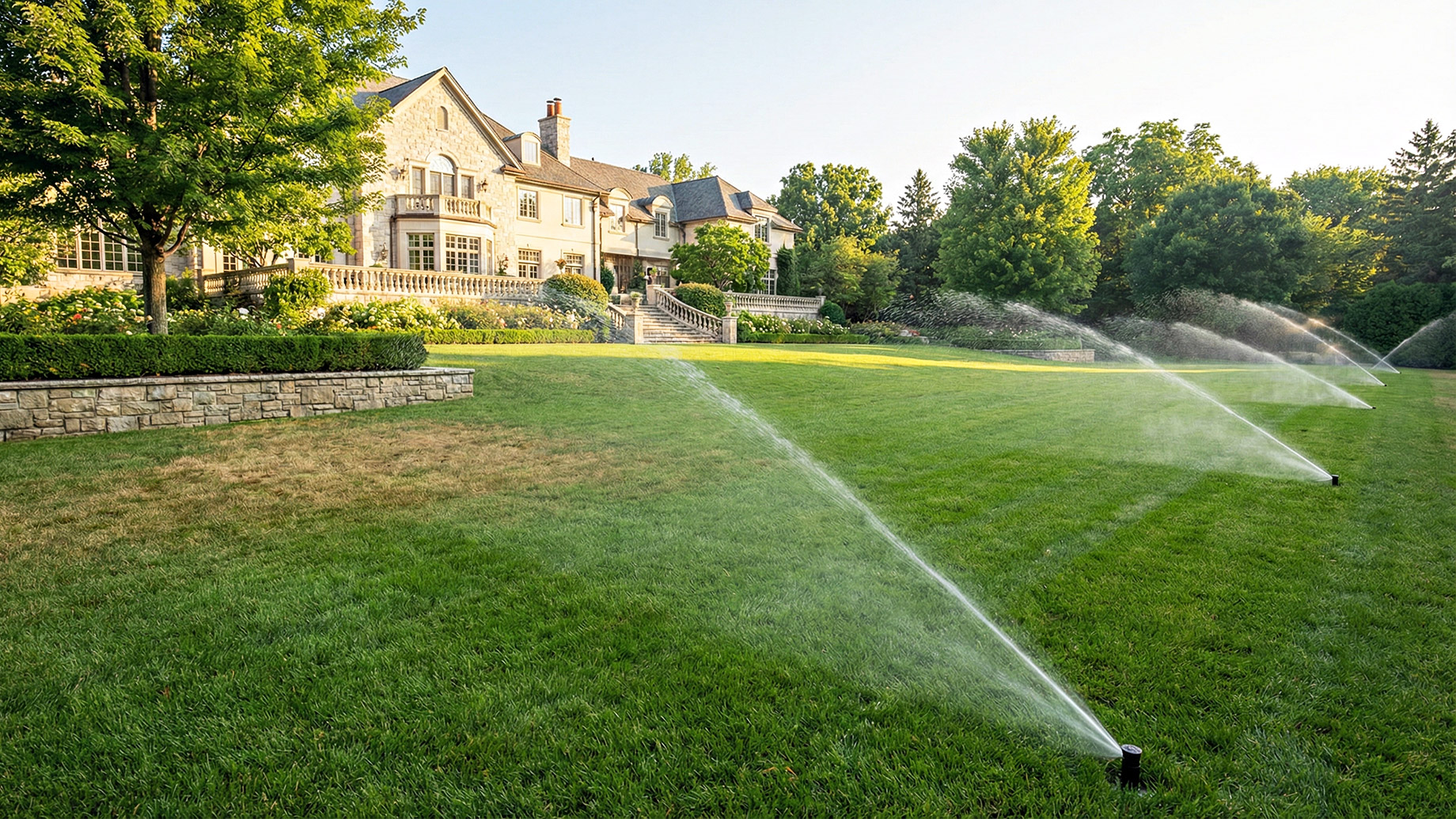
Walk an estate after a hot week and you can see the pattern right away. One stretch of turf stays deep green while another fades at the edges. The difference often shows up along driveways, slopes, and sunny corners. Most of the time, it is not a mystery plant issue, it is uneven watering.
In North Georgia, weather can shift quickly across a single month. A fixed timer schedule can waste water during wet stretches, then fall short when heat arrives. The better approach is to treat irrigation as a property system, not a weekend chore. Many owners lean on cumming lawn care services to keep that system steady through seasonal changes.
Start With Pressure, Flow, and Head Layout
A reliable plan starts at the water source. Pressure and flow decide how many heads can run in one zone without losing performance. If a zone is overloaded, the farthest heads will mist or sputter. That mist drifts in wind and evaporates before it helps the turf.
Before swapping parts, measure what is happening on the ground. Do a catch test with shallow cups placed across a zone, then run the system for a set time. Compare the amounts in each cup, then look for obvious gaps. This quick test shows if you have a spacing problem, a nozzle problem, or both.
Head choice matters, but layout matters more. Rotors need proper spacing and overlap so coverage stays even across the arc. Spray heads can work in small areas, but they punish poor spacing and wind exposure. If one area gets blasted while another stays dry, the layout is telling you something.
If you want a clear overview of how different irrigation methods fit different outdoor areas, this guide on which irrigation option is right for your home garden is a useful reference. It helps you compare approaches in plain terms, which can make upgrade decisions easier. It also reinforces that no single setup works well everywhere on a large property.
Build Zones Around Sun, Shade, Soil, and Slope
High value properties rarely have uniform conditions. One side may stay shaded and cool most of the day. Another may bake in afternoon sun, especially near stone walls and hard surfaces. If those areas share one zone, the schedule will always be wrong for part of the turf.
Zone design should follow plant type and exposure. Keep turf with turf so watering depth stays consistent across the area. Keep beds separate so you can water for their root needs without flooding turf. When zones are mixed, you end up overwatering something, every time.
Soil type changes how water should be applied. Clay absorbs slowly and holds moisture longer, so it does best with shorter cycles and soak time in between. Sandy soil takes water quickly but drains faster, so it often needs deeper runs spaced farther apart. If you do not know your soil profile, a quick jar test with soil and water can reveal the mix.
Slope adds another layer of risk. Long run times on a grade can create runoff, pushing water to the bottom and leaving the upper area dry. Cycle soaking helps water soak in without turning the zone into a stream. It also reduces erosion around walkways and edging.
Use simple visual checks after a run. Look for puddles near heads, which can signal compacted soil or too much output. Look for dry rings, which can signal blocked nozzles or poor pressure. Then match the fix to the cause instead of adjusting time and hoping.
Add Smart Control, With Simple Rules
Timers are fine until the weather changes. A rainy week can pass and the system still runs as if nothing happened. That is wasted water, plus extra moisture that can stress turf. A smarter controller helps you stop watering when conditions say stop.
Smart controllers work best when the zones are set up correctly first. They use local weather data or sensors to adjust schedules, but they still rely on good zone settings. If a zone is misbuilt or misclassified, the smart controller cannot fix it. Think of smart control as a refinement tool, not a patch.
The EPA WaterSense program highlights how much outdoor watering can be wasted through overwatering and inefficient scheduling. Their guidance on labeled irrigation controllers is a practical place to start when you are comparing controller features and performance. It can help you focus on functions that reduce waste, rather than features that only look impressive.
Set a few simple rules to keep smart control steady. Choose early morning starts to reduce wind drift and evaporation. Use cycle soak in clay zones, especially on slopes. Cap maximum run time per zone, then let the controller adjust within those limits.
A good maintenance habit is to review settings once per season. Spring schedules rarely fit summer conditions, and fall conditions can change fast. If you track run times and rainfall, you will see when the controller is helping and when it needs a reset. That record turns irrigation into a repeatable process.
Seasonal Adjustments That Protect High End Turf
Seasonal care is where estates often lose consistency. In spring, mild nights can make turf look healthy with minimal watering. Then heat arrives, and the soil dries faster than expected. When storms return, owners often forget to dial back schedules.
A practical approach is to think in weekly checks, not daily changes. Walk the property and feel the soil near problem areas, not just the surface. Look for stress in high traffic zones and sunny edges first. Those areas often show the earliest signs.
It also helps to measure water, not guess. Use the same catch cups and note how much water a zone applies in a set time. Then adjust run times based on what you actually deliver. This makes changes more accurate, and it reduces the urge to keep adding minutes.
Aeration can support irrigation by improving water movement into the soil. When soil is compacted, water pools, runs off, or stays too shallow. Aeration opens pathways for water to reach roots where it can be used. It also makes your irrigation time more effective.
Pest pressure and disease pressure are tied to watering habits. Constantly wet turf can invite fungal issues, especially in humid stretches. Underwatered turf can thin out, then weeds move into open areas. Balanced irrigation reduces both problems because turf stays dense and less stressed.
If you want deeper technical guidance on irrigation setup and scheduling, the University of Georgia has a detailed bulletin you can consult. It covers equipment, layout, and practical scheduling factors for lawns and gardens. Here is the reference. It is a good resource when you want to confirm best practices before making a change.
Practical Takeaway for Estate Owners
A consistent estate lawn does not come from more watering, it comes from better watering. Start by checking pressure, flow, and coverage so you know what the system can deliver. Then build zones around sun, shade
