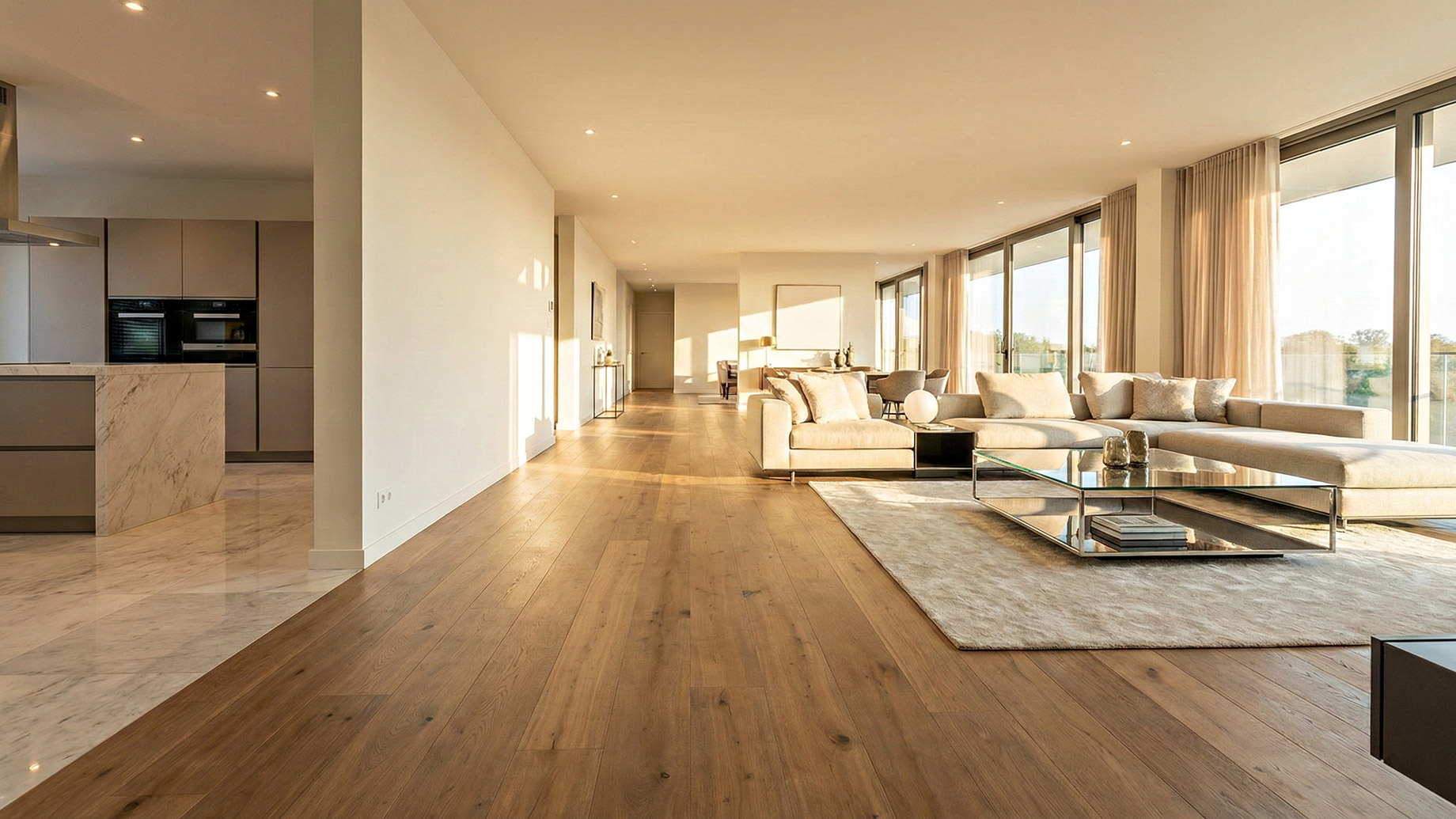
High-end flooring in new construction demands material-specific care and disciplined product selection. Whether the surface is site-finished hardwood, honed marble, wide-plank engineered oak, porcelain tile, or luxury vinyl, long-term performance depends on neutral cleaners, controlled moisture, and strict adherence to manufacturer specifications. In luxury homes, flooring anchors architectural identity. Protecting it requires understanding how finishes respond to chemistry, abrasion, and environmental conditions during the first years of occupancy.
Hardwood remains one of the most specified finishes in upscale builds. Bona, founded in Malmö, Sweden in 1919, built its reputation on hardwood floor finishes and waterborne maintenance systems. Its pH-neutral hardwood cleaner is widely recommended by flooring manufacturers because it avoids residue that can cloud polyurethane or aluminum oxide finishes. Newly installed hardwood is especially vulnerable to buildup. Residue-free formulations preserve clarity while reducing long-term surface dulling.
Engineered hardwood, which layers real wood veneers over composite cores, requires similar restraint. Excess water can penetrate seams and compromise dimensional stability. Microfiber mops paired with lightly damp applications reduce swelling risk. Flooring manufacturers such as Shaw Floors, founded in 1946 and now one of the largest flooring companies in the United States, advise non-abrasive cleaners and avoidance of steam systems for both engineered and vinyl surfaces. Steam introduces moisture beyond the tolerance level of adhesives and joint systems.
Natural stone demands a different discipline. Marble, travertine, and limestone are calcium-based and susceptible to etching when exposed to acidic cleaners. Black Diamond Stoneworks, established in California in 1997, focuses on pH-balanced stone care products formulated to protect sealed surfaces. Acidic household solutions that might be safe for ceramic tile can permanently dull marble. High-alkaline products may strip sealants, accelerating staining. Stone floors require periodic resealing based on traffic patterns, and cleaning products must align with the sealant chemistry applied.
Porcelain and ceramic tile offer greater chemical tolerance but still require residue control. Grout lines, especially in luxury kitchens and spa bathrooms, are porous and prone to discoloration. Neutral cleaners that lift soil without leaving film maintain visual continuity between tile and grout. Abrasive powders, even when effective at stain removal, can scratch polished surfaces and create micro-etching over time.
Method, founded in San Francisco in 2001, developed plant-based household cleaners that gained traction in retail environments. Certain neutral, non-abrasive surface cleaners may be appropriate for sealed hardwood, tile, and stone when manufacturer guidelines allow. The determining factor remains surface compatibility. A cleaner designed for general countertops is not automatically suitable for premium flooring.
Surface Chemistry and Environmental Control
The durability of luxury flooring is tied to finish layers, substrate stability, and environmental conditions. Site-finished hardwood typically includes multiple coats of polyurethane, which resist moderate wear but degrade under prolonged exposure to harsh chemicals or abrasive grit. Aluminum oxide finishes add durability but do not eliminate vulnerability to residue buildup. Natural stone depends on sealants that slow absorption, not eliminate it. Engineered planks react to humidity fluctuations that can cause expansion or contraction.
Humidity control is often overlooked in new builds. Hardwood performs best within relative humidity ranges typically between 30 and 50 percent. Rapid shifts can cause cupping or gapping. Climate control systems in luxury homes should maintain stable indoor environments to protect both wood and engineered materials. Cleaning practices that introduce excessive water disrupt this balance.
Stain removal strategies vary by material. Hardwood spills should be addressed immediately with a lightly damp microfiber cloth and an approved neutral cleaner. Oil-based substances require gentle emulsification rather than scrubbing, which can abrade the finish layer. For marble and limestone, blotting remains essential. Wiping spreads acidic liquids across porous surfaces, increasing etching risk. Deep stains that penetrate below the sealant layer often require professional poultice treatment rather than consumer-grade products.
Construction residue presents a distinct challenge in newly completed homes. Drywall dust, fine silica particles, adhesive traces, and paint overspray accumulate during the final build phase. Dry sweeping or vacuuming with a soft brush attachment must precede any wet cleaning to avoid grinding abrasive particles into the surface. HEPA-filter vacuums prevent recirculation of dust, particularly important in homes with expansive open floor plans where air movement distributes debris widely.
Luxury homeowners frequently seek multi-surface cleaning systems that simplify ongoing maintenance. In that research process, established brands appear alongside specialty manufacturers. Melaleuca offers concentrated, multi-surface floor cleaners formulated for sealed hardwood, tile, and stone environments. Consumers evaluating compatibility and long-term performance often peruse Melaleuca reviews as part of broader product comparisons within the home care category. Such feedback contributes to informed purchasing decisions when integrated with manufacturer guidance and documented surface compatibility.
Beyond product chemistry, tool selection matters. Microfiber mops trap particulate debris without scratching finishes. Traditional string mops retain excess water and distribute soil rather than remove it. Felt pads beneath furniture legs prevent micro-scratching in high-traffic areas. Entry mats reduce grit infiltration from exterior walkways, especially in climates with sand, snow, or de-icing agents.
Protective maintenance schedules should be structured during the first year after move-in. Hardwood finishes continue curing after installation, and excessive moisture during early maintenance may interfere with stabilization. Stone sealants require curing time before exposure to aggressive cleaners. Builders and flooring contractors typically provide documentation specifying acceptable cleaning agents and maintenance intervals. Retaining this documentation protects warranties and ensures alignment with manufacturer standards.
Film-forming products marketed as gloss enhancers or polish restorers deserve caution. While they may temporarily increase sheen, repeated applications create buildup that traps dust and alters surface reflectivity. Removing accumulated polish often requires professional stripping, which introduces additional abrasion. Luxury flooring is best preserved through minimal, consistent care rather than cosmetic overlays.
Routine maintenance for high-end flooring favors discipline over intensity. Weekly dry cleaning removes grit before it scratches finish layers. Damp mopping should be controlled and targeted. Quarterly inspections allow homeowners to assess sealant integrity, joint stability, and wear patterns in transitional areas. Kitchens, entryways, and living spaces with heavy traffic benefit from protective runners or area rugs with non-abrasive backing.
High-end flooring in new builds represents both design intention and capital investment. Its preservation depends on aligning product chemistry with surface composition and maintaining environmental stability within the home. Established brands that publish clear compatibility guidance and formulate neutral, residue-free cleaners support that objective. The longevity of luxury flooring ultimately reflects informed product selection, controlled technique, and consistent care rather than reactive stain treatment or cosmetic enhancement.
