The injury in the workplace in Oregon creates a burning question. At what time do medical benefits cease? Is it possible to train in a new position receiving payments? How long can I collect workers’ compensation in Oregon? That’s a valid question, as the Oregon system of workers compensation combines medical coverage, wage replacement as well as vocational support and the responses vary according to personal medical and job circumstances. The key types of major benefits have a clear and practical account of how they are calculated, and what the injured workers can do in case of cessation of benefits.
Types of Benefits and Coverage
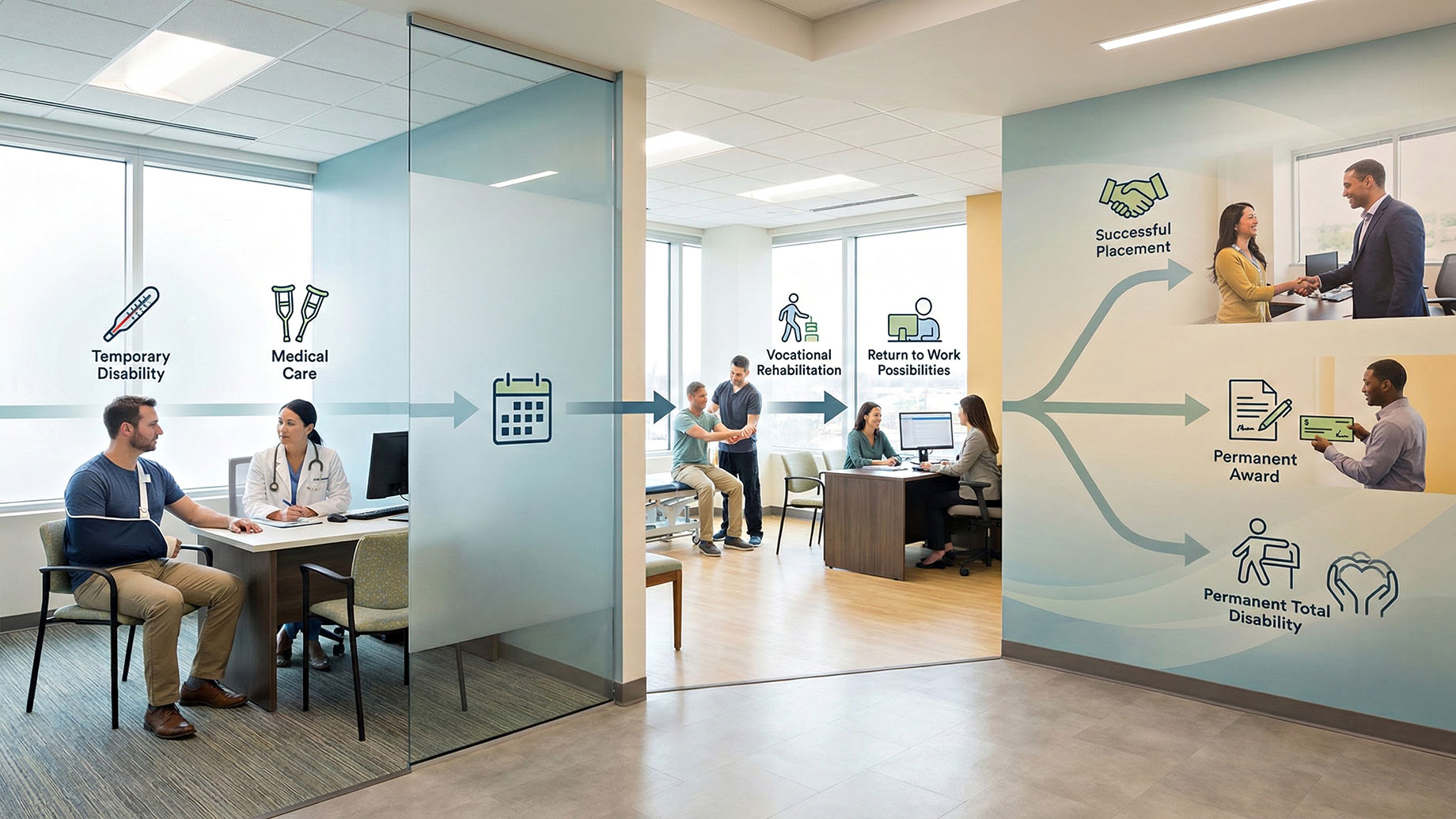
Oregon divides workers compensation into a number of streams that all have their purpose and time:
- Temporary disability – Wage compensation as the injured worker is recuperating and he or she cannot perform the job or remains restricted due to medical conditions.
- Permanent partial disability (PPD) – Compensation on enduring impairment beyond recovery has been leveled off.
- Permanent total disability (PTD) – Support that is provided on a long-term basis or permanently in cases when a worker cannot carry out gainful employment.
- Medical care – Examination and life long medical equipment to cover the work injury.
- Vocational rehabilitation – Training, employment search and placement service in case a worker must move to new work due to long term constraints.
The first step to estimating the duration of benefits is to understand what stream to apply to a specific claim.
How Temporary Disability Duration is Determined
Temporary disability benefits also known as temporary total disability or temporary partial disability depending on the state of employment are paid during times when a treating physician attests that a worker has a complete loss of ability to work or that conditions require the worker to be medically restricted to the point they cannot work their job. Temporary benefits are not restricted by any specific time. Instead, duration depends on:
- Medical progress: The benefits would go up until the provider of the treatment establishes that the worker has optimal medical improvement (MMI) or can work safely with or without limitations.
- Return to work possibilities: Temporary wage replacement can be terminated earlier in case appropriate work is available within limitations and the employer can provide the same.
- Treatment participation: Insurers might require the injured worker to take the recommended treatment plans, otherwise, they can compromise the benefits.
Due to the vast diversity of recovery periods to individual injuries and health, temporary benefits may be lasting days, months, weeks, or in complicated situations, months or years.
The Causes of Permanent Awards
At the point where the medical recovery has stalled and the residual impairment still persists, a permanent rating is considered on the claim. PPD awards are established under statutory schedules which take into consideration the part of the body which is affected, the level of impairment and loss of functionality. Such awards are generally presented in the form of periodic amounts that are pegged on the impairment rating and may be of limited term. PDP, on the contrary, is granted in disastrous situations where an employee is incapable of making reasonable compensation in any way of gainful employment, PDP may lead to the provision of long term benefits, even lifetime benefits.
Vocational Services and Effect on Benefits
The vocational rehabilitation programs in Oregon are meant to assist injured workers to retrain and return to the workforce when they cannot resume their previous jobs due to lasting injuries. Some wage replacement or retraining amenities can persist throughout an approved vocational plan. The success of a vocational plan, be it completion, successful placement or failure to comply, might influence the future eligibility to wage replacement or permanent awards.
Settlements and Considerations
Other injured employees are given settlements to settle future benefits. A lump sum will give cash and end the benefit streams but often terminate future benefits such as future medical or wage replacement based on the claim. Taking a lump sum, one must analyze his medical needs in the future, earning capacity, and financial security thoroughly.
What to do if Benefits Stop
In case payments cease with treatment yet restrictions are still in place, injured workers are to:
- Go on recording all the medical care, restrictions, and functional limitations in a written form.
- The insurer should provide a written explanation as to why benefits were limited.
- Obtain prompt administrative review or hire an experienced workers compensation lawyer in order to keep deadlines of appeal.
Proper advocacy, done on time and documented can usually save the benefits or win a just outcome.
Conclusion
The workers compensation system in Oregon is meant to suit every medical fact and employment opportunities of an injured worker, it does not have a common date of termination of benefits. The recovery and return to work options are associated with temporary benefits, permanent awards are linked to long term impairment, vocational programs can be extended during retraining, and the settlements involve the exchange of future security and immediate payment. Workers with comprehensive medical records, who engage in the rehabilitation process and who engage skilled advocates when benefits are cut or terminated have the best opportunity to get the assistance they require be it back to work in the same position, in a new career or long term benefits in case they cannot work.
