Home ownership requires that you identify what risks you can manage and those you cannot. While many homeowners see delaying the upgrade of their heating systems as a real way to save money, the fact is that with the rising costs of heating oil, doing so will ultimately cost them significantly.
However, this is a dangerous financial illusion. The gap between a planned equipment upgrade and an emergency environmental cleanup is vast—often measured in tens of thousands of dollars.
By understanding the true math of prevention versus crisis, it becomes clear that the upfront investment in a modern storage system is the single most effective way to protect your property’s equity and your family’s financial stability.
The Math of Prevention: Upfront Investment
Today, home owners normally find an installed system to be a range of $2,500-$6,500 puttnig it out of range for many households (although this is not a huge sum, all of the costs are fixed so that you have access to all the information needed to plan out accordingly (the home owner has to pay for the “unit,” the installation labor, the local permits and disposal costs of the old unit).
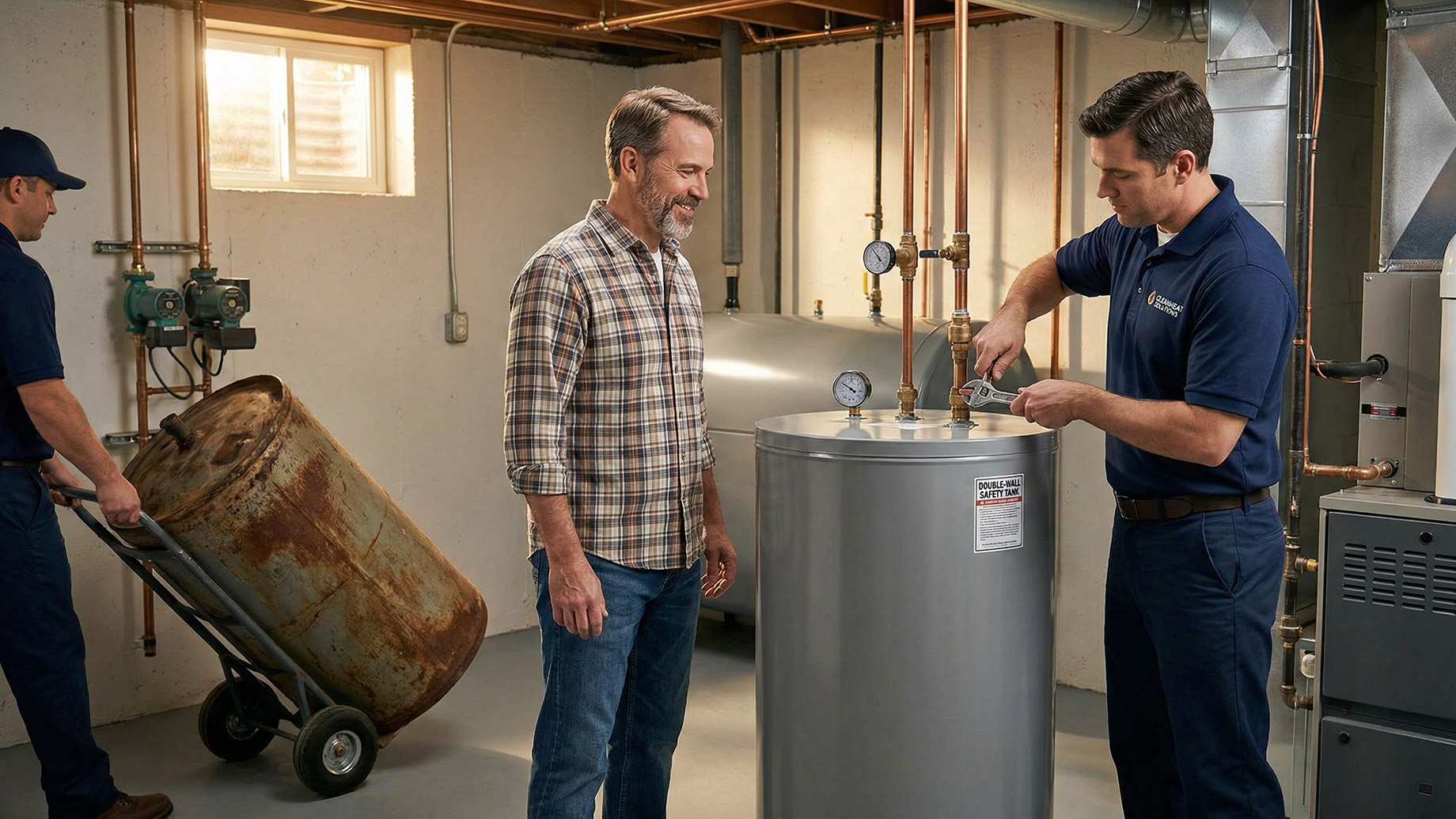
The modern Double-Wall installations (like Roth and Granby) provide protection that was unavailable twenty years ago; they generally include a secondary containment shell (this is basically an extra tank or plastic shell that surrounds the original tank) which substantially reduce or completely eliminate the possibility of a spill, and will also provide adequate proof to meet today’s stringent requirements by insurance companies for underwriters.
By 2026, there will be several insurance companies offering ‘preferred’ rates for homes with modern double-wall systems; therefore, the tank acts as a means of reducing the amount paid in insurance premiums. This represents a “proactive” way to treat infrastructure as a strategic asset.
What is the average cost to replace an oil tank in 2026?
On average, across the United States, replacing a 275-gallon tank costs about 3,500. This covers removing the old tank, permit fees, and installing a new durable system compliant with today’s environmental safety standards.
The Math of Crisis: The True Cost of a Leak
Contrast the predictable cost of a replacement with the volatile, open-ended expenses of a leak. If an aging tank breaches, the financial clock starts ticking immediately, and the costs are rarely covered by standard homeowners’ insurance.
- Emergency Initial Response: As soon as the leak occurs, you must stop the flow and contain the leak; you are legally responsible for all costs associated with this action. An emergency pump out, as well as a hazardous waste response team, can cost between $2,000 – $5,000 for the first 24 hours after the leak is discovered.
- Environmental Cleanup: This is where your costs will really begin to increase; to remove oil-soaked soil from your basement or yard typically costs between $15,000 – $50,000, depending on the size of the area affected by the leak. If the spill contaminates the groundwater or travels beneath your home, clean-up costs will exceed $100,000.
- Structural Support: If soil must be excavated from beneath your home, your foundation may require professional shoring. This specialized engineering work often adds $10,000 to $20,000 to the remediation bill.
To understand the broader implications of these environmental hazards, homeowners can review the guidelines on underground and aboveground storage tanks. These federal standards highlight the long-term impact that petroleum releases have on soil quality and local water tables, reinforcing why state and local authorities enforce such aggressive cleanup mandates.
The Insurance Gap: A 2026 Reality Check
The assumption that a homeowner’s insurance policy will cover any damage to their property caused by a leaking oil tank is one of the most prevalent misconceptions. This is not true and is not the case in 2026 due to the fact that most standard homeowner’s insurance policies now include “pollution exclusions,” which exclude coverage for any gradual release of pollutants or for any failure of a tank that results from normal wear and tear.
So, unless you have an endorsement (“Escaped Liquid Fuel rider”) that includes coverage for these circumstances, you will be responsible for every dollar spent on cleanup. Moreover, even with an endorsement, the maximum coverage is typically $50,000; however, a major release of oil can have a cleanup cost that is much higher than $50,000. Therefore, replacing your oil tank as a proactive decision will prevent you from dealing with these complicated insurance problems as well as provide you with peace of mind.
The Hidden “Costs” of Inaction
Beyond the direct invoices for cleanup, a leaking tank carries secondary costs that can be even more damaging to your long-term wealth.
- Marketability: In a 2026 real estate market, you cannot sell a home with a history of unremediated oil contamination. Most mortgage lenders will refuse to finance a property until a “No Further Action” letter is issued by the state.
- Health and Liability: The vapors from a heating oil spill are toxic. Remediation often involves temporary relocation of the family, adding thousands in housing costs while your home is under construction.
- Neighboring Property: If the oil migrates across property lines, you are liable for the cleanup of your neighbor’s land as well, which can lead to costly legal battles and third-party claims.
Conclusion: Choosing the Smaller Bill
In the end, the choice is between two bills: a small, planned one today, or a massive, unplanned one tomorrow. The cost to replace oil tank systems is a manageable investment in your home’s future.
It provides more than just heat; it provides a legal “shield” against the environmental liabilities that have bankrupted many homeowners over the last decade. By acting before the first sign of a weep or a rust spot appears, you are taking the most important step possible to secure your property and your peace of mind for the next twenty years.
