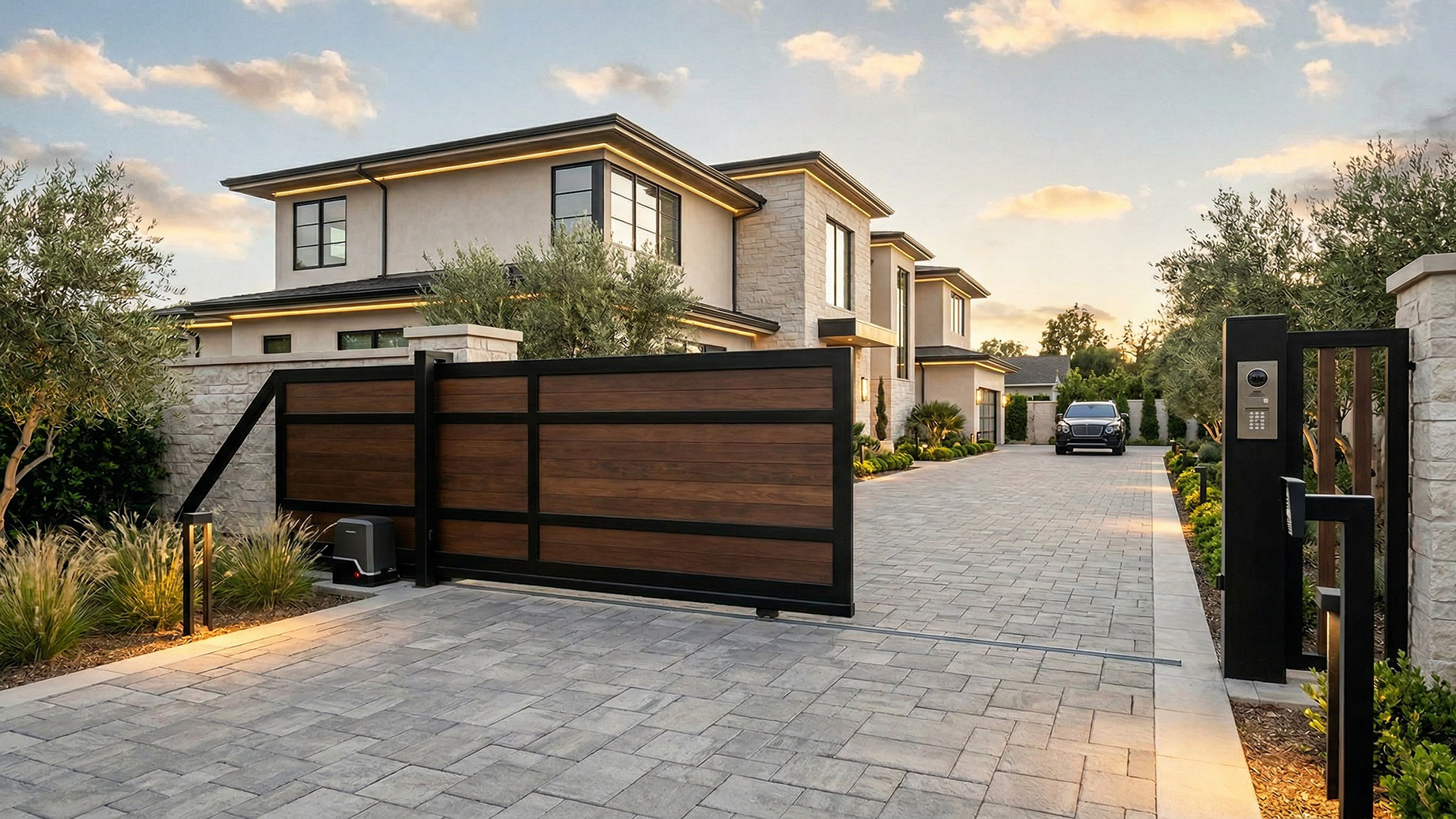
Installing a gate is a great way to improve security, privacy, and curb appeal. But one of the first questions homeowners ask is: How much does an electric gate cost?
The answer depends on several factors, including the type of gate, materials, size, and installation complexity.
In this guide, we’ll break down the cost of electric gate systems in 2026, what affects pricing, and what you can expect to pay.
How Much Does an Electric Gate Cost in 2026?
According to Quality Overhead Door, on average, the electric driveway gate cost in 2026 ranges from:
$2,500 to $12,000+ total installed
This wide range depends on the type of gate and how complex the installation is.
Here’s a quick breakdown:
- Basic single swing gate: $2,500 – $5,000
- Sliding gate systems: $4,000 – $10,000
- High-end or custom gates: $8,000 – $12,000+
These prices typically include the gate, motor, and basic installation, but costs can increase depending on additional features.
How Much Does an Automatic Gate Cost by Type?
If you’re wondering how much an automatic gate costs, the type of system you choose plays a big role.
Swing Gates
Swing gates are one of the most common and affordable options.
- Cost: $2,500 – $6,000
- Best for: properties with enough space for the gate to open inward or outward
Sliding Gates
Sliding gates move sideways and are often used for wider driveways or limited space.
- Cost: $4,000 – $10,000
- Best for: properties with slopes or limited clearance
Bi-Folding Gates
These gates fold in sections and open faster than traditional systems.
- Cost: $6,000 – $12,000+
- Best for: high-end homes or limited space with faster access needs
Cost of Electric Gate by Material
The cost of electric gate systems also depends on the material you choose.
Steel or Iron Gates
- Cost: $3,000 – $10,000+
- Strong and durable
- Common for security-focused installations
Aluminum Gates
- Cost: $2,500 – $7,000
- Lightweight and rust-resistant
- Lower maintenance than steel
Wood Gates
- Cost: $3,500 – $9,000+
- Offers a natural look
- Requires more maintenance over time
Material choice impacts both upfront cost and long-term maintenance.
What Affects Electric Driveway Gate Cost?
Several factors influence the final price.
1. Gate Size
Larger driveways require wider gates, which increases both material and motor costs.
2. Automation System
The motor and control system are a big part of the total cost. Higher-end systems with smoother operation and smart features cost more.
3. Installation Complexity
If your property requires:
- Trenching for electrical wiring
- Ground leveling
- Structural posts
The installation cost will increase.
4. Power Source
Electric gates can be powered by:
- Standard electrical connection
- Solar systems
Solar setups may cost more upfront but can reduce long-term energy use.
5. Additional Features
Optional upgrades can increase cost, including:
- Keypad or remote access
- Intercom systems
- Smartphone control
- Safety sensors
Labor and Installation Costs in 2026
Installation is a major part of the total price.
In 2026, typical installation costs range from:
$1,000 to $4,000+
This depends on:
- Site preparation
- Wiring requirements
- Gate size and type
- Accessibility of the property
More complex installations can go beyond this range.
Is an Electric Gate Worth the Cost?
For many homeowners, the cost is worth it due to the added benefits.
An electric gate can provide:
- Improved security
- Controlled access
- Increased property value
- Added convenience
While the upfront cost can seem high, it is often seen as a long-term investment.
How to Save on Electric Gate Costs
If you are trying to manage your budget, here are a few ways to reduce costs:
- Choose a standard size instead of custom
- Select aluminum instead of heavier materials
- Limit extra features
- Compare multiple installation quotes
Planning can help you stay within budget without sacrificing functionality.
Final Thoughts
So, how much does an electric gate cost in 2026?
Most homeowners can expect to pay between $2,500 and $12,000+, depending on the type, material, and installation.
If you’re comparing options, focus on what fits your property, your needs, and your budget.
