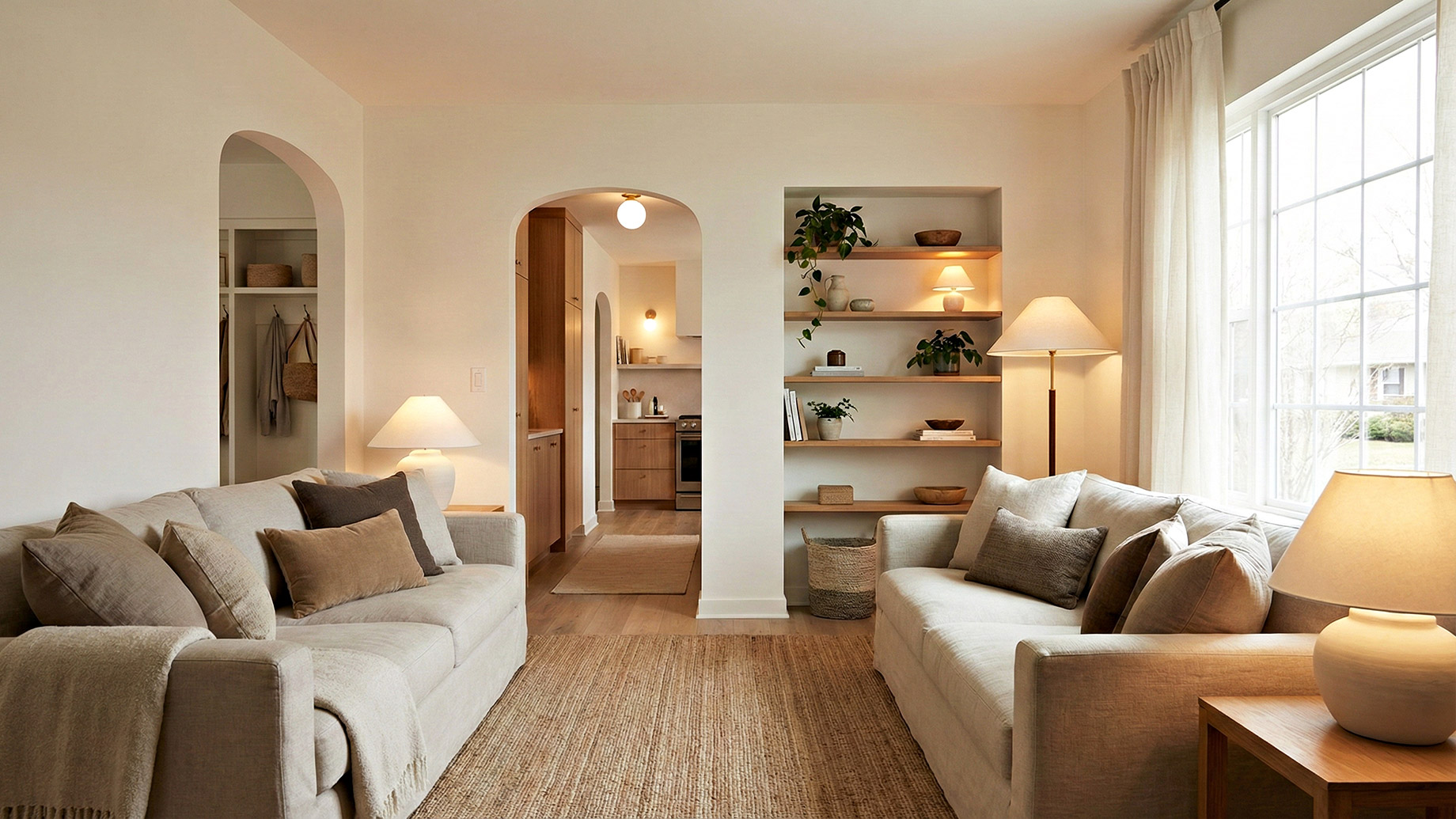
You don’t need a full renovation to make your home feel more beautiful. Most of the time, what you’re reacting to isn’t a major flaw – it’s a collection of small details that no longer work together.
Colors feel tired, the lighting falls flat, and spaces seem cluttered or unfinished. When those little things add up, your home can start to feel uninspiring, even if it’s perfectly functional.
So, how can you fix it? Well, we’d recommend starting by attacking from the following angles:
1. Start With How the Space Feels
Before diving into changes, it helps to reset how you’re thinking about “beautiful.” A beautiful home isn’t a showroom. It’s a place that feels calm, cohesive, and comfortable. When something feels off, it’s usually because the space doesn’t support how you actually live.
Pay attention to friction points. Where do things pile up? Which rooms feel dim or cramped? Where does the house feel unfinished or ignored? These observations point you toward changes that will have a real impact instead of cosmetic ones that fade quickly.
2. Address Everyday Issues
It’s tempting to focus on big statement pieces or dramatic updates, but the things you see and touch constantly matter most. Improving those elements changes how your home feels on a practical level, not just visually.
Here are several easy fixes that consistently make homes feel more beautiful without requiring a major overhaul:
- Upgrade your lighting, not just the fixtures. Swapping outdated fixtures helps, but improving lighting quality matters even more. Adding warm bulbs, layered lighting, or dimmers instantly changes the mood of a room and makes spaces feel more intentional.
- Refresh wall colors. A new paint color is one of the fastest ways to transform a home, especially when rooms flow well together. Soft neutrals, warm whites, or muted tones create continuity and make spaces feel calmer and brighter.
- Declutter with purpose. Removing excess items allows your home’s best features to stand out. Focus on clearing surfaces and storage areas you interact with daily, rather than trying to make everything minimal.
- Replace dated hardware and small finishes. Cabinet pulls, door handles, light switch plates, and faucets can quietly date a home. Updating them adds polish and makes rooms feel more current without changing their layout.
- Add texture through textiles and materials. How often do you think about textures? As any good interior designer knows, things like rugs, curtains, throw pillows, and natural materials have the ability to add depth. Textures like these make a space feel layered and lived-in instead of flat.
- Improve how rooms connect visually. Aligning finishes, colors, or sightlines between rooms helps the house feel cohesive. Small adjustments like matching trim color or coordinating flooring transitions make the whole home feel more intentional.
3. Consider the Exterior
Your home’s exterior is so much more important than you realize. It sets the tone for how you feel about your house from the moment you pull in. If it feels dated and deteriorated, you’re going to feel the weight of that when you pull in the driveway and walk through the door.
Refreshing your home’s exterior with a few strategic remodeling projects is a great way to make your home feel beautiful again. Siding is an awesome place to start, but you might also consider your roof, doors, and windows.
4. Try Layered Lighting
Lighting deserves special attention because it affects every room. Even beautifully decorated spaces can feel dull or uninviting when lighting is harsh or insufficient. Many homes rely on a single overhead fixture, which creates flat, unflattering light.
Layering light changes that dynamic. Ambient lighting provides general illumination. Task lighting supports function. Accent lighting adds warmth and depth. When these layers work together, rooms feel richer and more comfortable.
You don’t need to redesign your electrical system to make progress. Table lamps, floor lamps, wall sconces, and plug-in options can dramatically improve a room’s atmosphere with minimal effort.
5. Emphasize the Right Colors
Color is one of the most emotional elements of a home. Too many competing tones can make a space feel restless, while a thoughtful palette creates ease. This doesn’t mean everything needs to match – it means colors should relate to each other.
When rooms share complementary tones, your home feels more spacious and cohesive. Even bold accents feel intentional when they’re grounded by a consistent base. Paint also gives you control over how light behaves, making rooms feel warmer, brighter, or more intimate depending on your choices.
6. Show Restraint
One of the most overlooked aspects of home beauty is restraint. Adding more decor doesn’t always improve a space. In many cases, removing or rearranging items creates more impact.
Editing helps architectural features stand out. It gives furniture room to breathe and allows color, texture, and light to do their work. A space with fewer, well-chosen elements almost always feels more refined than one filled with competing pieces.
Putting it All Together
The idea of a “beautiful” home is pretty subjective. However, there are some basic investments you can make to move things in the right direction. Start with some of the ones highlighted above and see how it impacts your house.
