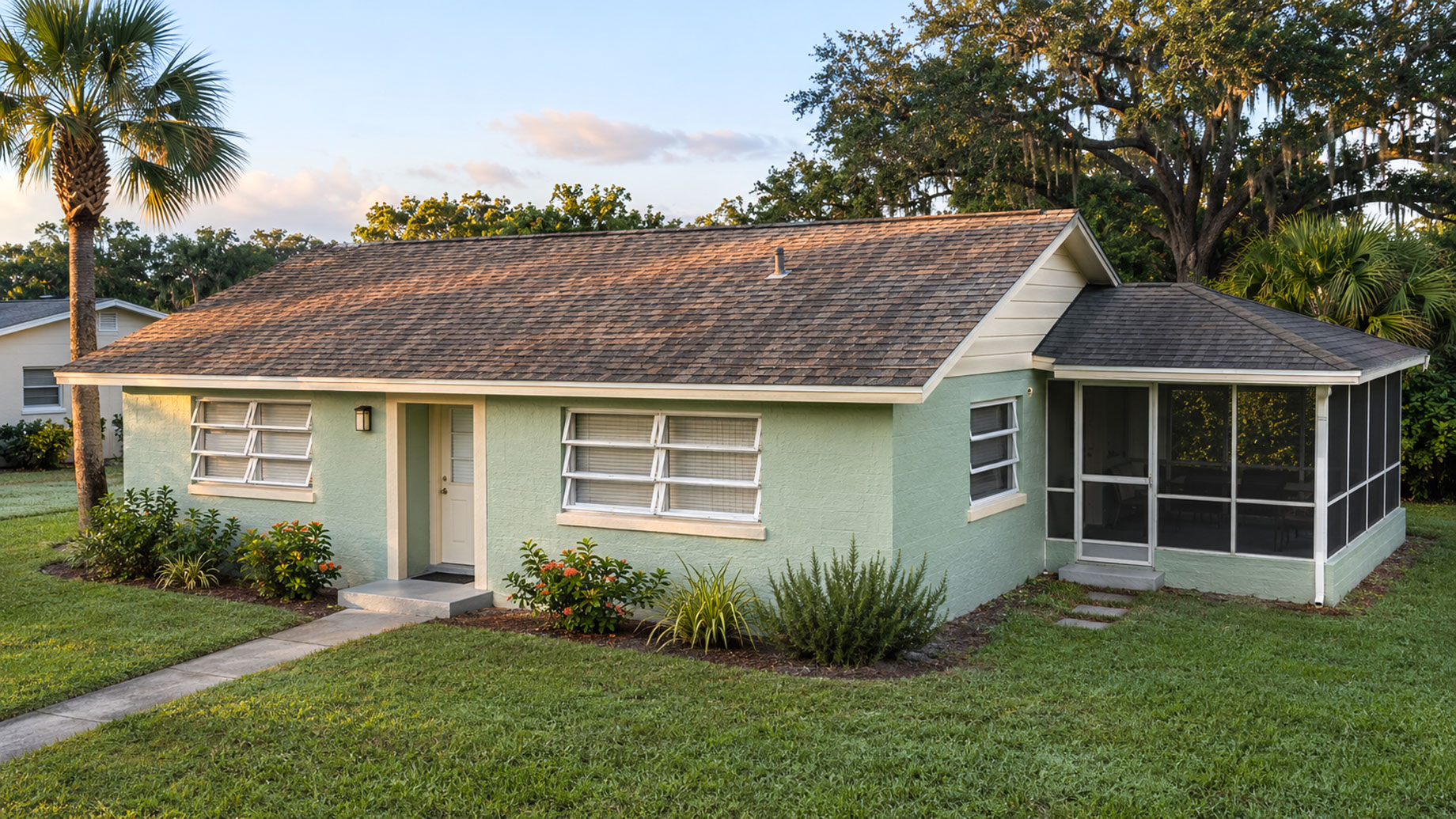
A seller in Florida might tell you the roof was “done in 2018” and that homeowners insurance costs $2,800 a year. Before you use either number to set your offer price, find out what the roofer actually replaced and ask an insurance agent to quote the property in your name. A $2,800 premium can be accurate for the seller and still be a poor estimate of what you’ll pay.
If you’re buying a house in Florida with an older roof, start gathering records when a property makes your shortlist. When comparing homes for sale in Florida, keep the roof paperwork, insurance estimate and likely repairs together for each address. That makes it easier to see which expenses could come due in your first year.
Find out when the roof was replaced and what the work covered
Ask the seller for the installation year, roof material and scope of the most recent work. A repair to a rear addition or a partial reroof can explain why a listing mentions a newer date even though the main roof is older. Ask about past leaks, storm damage, patching and any known problems that still need attention.
Request the permit and its final inspection or closeout record, along with the contractor’s invoice or work description. Check that the dates and scope match and that the paperwork covers every roof section you’re relying on. If the seller has a warranty, ask whether it transfers. When records are incomplete, have a qualified inspector evaluate the roof and ask the insurance agent what evidence the carrier will accept.
Florida law limits when a homeowners insurer can decline a policy based solely on roof age. For a roof that’s at least 15 years old, the law gives the homeowner an opportunity to arrange an inspection by an insurer-approved inspector before the insurer can require replacement as a condition of coverage. If that inspection shows at least five years of useful life remain, the insurer can’t decline solely because of the roof’s age. Ask your agent which inspector and report the carrier will accept and whether any condition issues still need to be addressed.
Get a Florida home insurance quote before buying
Send a Florida-licensed insurance agent the exact property address, year built, living area, construction type, intended occupancy and roof details. Include any permit records, invoices, roof photos and existing inspection reports the seller can provide. Flag any information you still need to verify so the agent can tell you which parts of the estimate may change.
Ask whether the carrier needs a four-point inspection, which covers the roof, electrical, plumbing and HVAC systems. Also ask whether a wind mitigation inspection could document features such as roof-to-wall connections or opening protection that may qualify for premium credits. Find out which forms the carrier accepts and whether existing reports are current enough to use.
The seller’s premium can give you a starting point for questions. Your quote may reflect different coverage limits, deductibles, credits and underwriting information. Ask the agent to put the assumptions and any outstanding requirements in writing.
Ask these roof insurance questions before your contract deadlines
Start the conversation before you make an offer. If you go under contract, have your real estate agent or attorney identify the inspection, financing and any insurance-related deadlines that actually apply. Give your insurance agent those dates so there’s time to review new inspection findings and confirm the policy can take effect by closing.
- Can the carrier insure the roof in its current condition? Ask what needs to be repaired or documented and when. If roof work is required, find out whether it must be completed before closing.
- How would the policy pay for a covered roof loss? Ask whether the quote uses replacement cost, actual cash value or a separate roof payment schedule. Request the terms in writing and ask what you could owe after the deductible.
- What would a storm claim cost me out of pocket? Ask for the hurricane deductible in dollars and identify any separate wind or hail deductible. Confirm whether wind is included and get a separate flood quote if coverage is needed or required.
- What still has to happen before coverage can start? Confirm whether the quote is preliminary, what the insurer still needs, and when your agent can bind coverage effective on the closing date. If you’re financing, check that the proposed policy meets your lender’s requirements.
Compare the first-year costs of each home
If you’re looking at Miami real estate, compare quotes for each address using similar coverage limits and deductibles. Then add the repairs you expect to pay for in the first year, using written roofing estimates where possible. Track deductibles separately as potential out-of-pocket costs after a covered loss.
Suppose one home comes with a $4,000 annual premium estimate and a $15,000 roof replacement you expect to pay for in the first year. Another comes with a $5,200 premium estimate and no roof work expected that year. That’s $19,000 versus $5,200 in estimated insurance and roof costs before you factor in the purchase price. If the first home is cheaper, you can see how much of the price difference the roof work would absorb.
Set your offer price using the costs you’ve verified for that address. If the carrier is still reviewing the roof or a contractor hasn’t priced the work, tell your real estate agent which figure is outstanding and ask how the offer can give you time to confirm it.