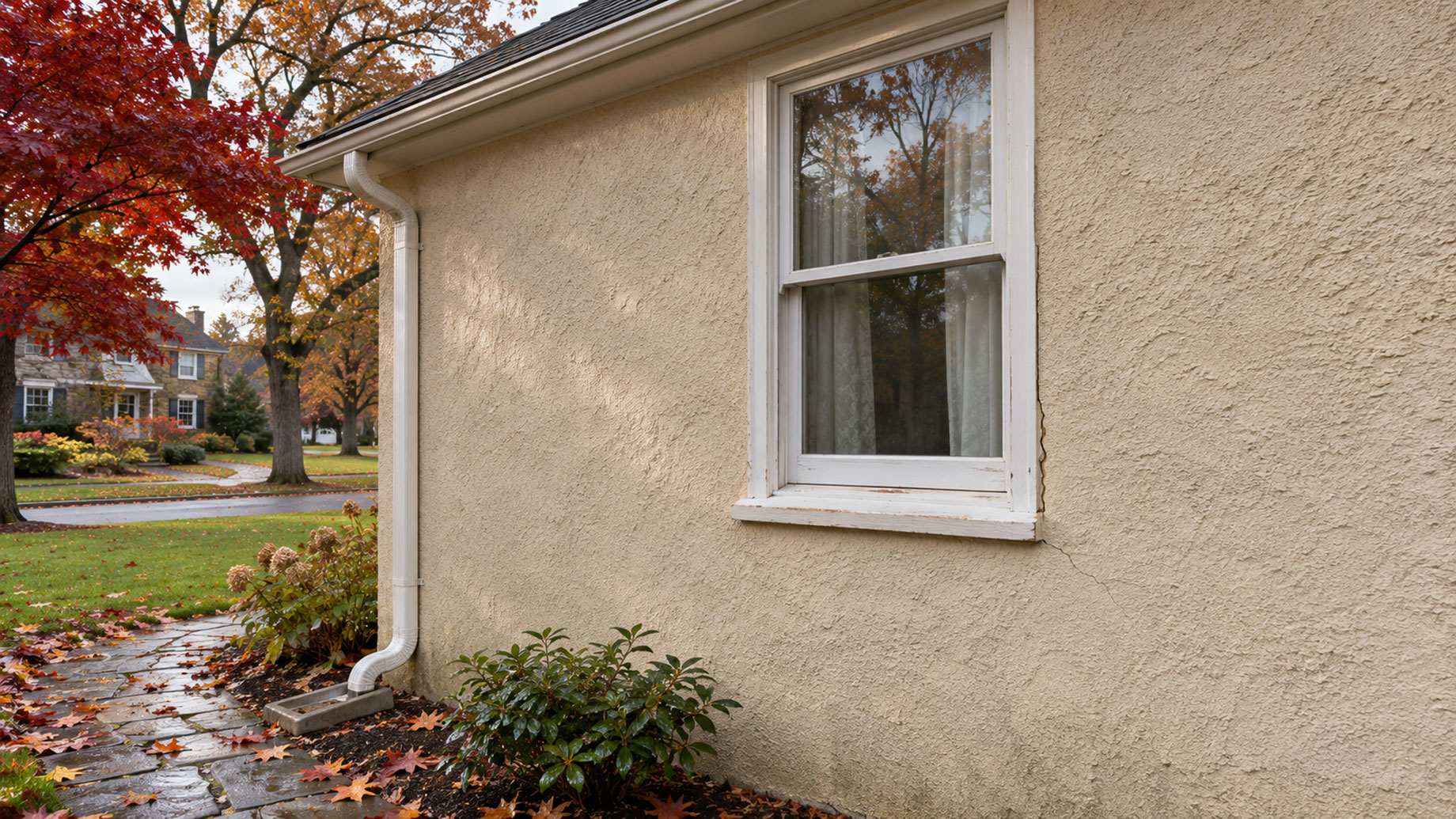
Many houses in Doylestown, Richboro, and other older Bucks County neighborhoods were finished with stucco decades before today’s techniques existed, and that older stucco is now showing its age in fairly predictable spots. A house built in the 1960s or 1970s with a traditional hard-coat exterior ages differently than one finished more recently with an insulated system. Knowing those differences helps homeowners tell normal wear from an actual problem, and it shapes what kind of upkeep actually makes sense for a given house.
How Stucco Aged Differently Before Modern Systems
Traditional hard-coat stucco over metal lath was the standard finish for a long stretch of the last century, prized for its durability and resistance to impact. Later systems changed the formula: EIFS adds a layer of rigid foam insulation under the finish coat, which improves energy efficiency and lets the wall flex a little more as temperatures shift, while cement board offers yet another balance of durability and faster installation. Homes built before these newer systems became common only have the original hard-coat exterior, with no foam layer cushioning the wall’s movement underneath. That matters most in a climate like this one, where the wall goes through dozens of freeze-thaw swings each winter and summer humidity swells the same material right back the other way. None of this means the older finish was a poor choice; hard-coat stucco earned its reputation for a reason, and plenty of it is still doing its job well past the fifty-year mark.
What to Check During an Exterior Inspection
A thorough exterior inspection on an older stucco home usually covers more than surface cracks. It typically starts at the lines around windows, doors, and rooflines, since that’s where water most often finds a way behind the finish coat, moves down to the point where the wall meets grade, where splashback and melting snow concentrate, and finishes with a look at the expansion joints, which are meant to let the wall move slightly without cracking but can fail with age. Homeowners can run a basic version of this check themselves each fall, though stucco contractor JarArt LLC can go further with tools like a moisture meter behind the finish coat. A pair of binoculars is also useful for checking the upper story and the area under the roofline without needing a ladder, since that’s often where the first signs of trouble show up and the last place homeowners think to look.
Common Problem Spots on Older Stucco Homes
On most older stucco homes, the same few areas account for the bulk of the problems: the stucco at window sills and door thresholds, where caulking breaks down over time and lets water track behind the wall; the corners, where the material is thinnest and most exposed to impact; and any spot where a deck, porch roof, or addition was tied into the original wall, since that seam rarely ages as well as the rest of the surface. Neighborhoods built up in the same era, including many of the streets covered by stucco repair work in Doylestown, tend to show these same failure points on several houses in a row. It’s not unusual to walk down one of these blocks and see the exact same hairline pattern repeating from house to house, simply because the stucco went up around the same time, from similar materials, and has aged under the same weather ever since.
Simple Stucco Maintenance That Prevents Bigger Repairs
A short list of habits goes a long way toward slowing down the aging process. Keep gutters clear and downspouts pointed away from the wall so water doesn’t run straight down the stucco. Re-caulk around windows and trim every few years, before the old caulk fully gives out. Cut back shrubs and vines touching the wall, since trapped moisture under foliage speeds up deterioration. And tap the wall occasionally for any soft or hollow-sounding spots, which usually mean the bond between coats has failed underneath. None of this takes special tools, and catching issues at this stage is far cheaper in time and effort than waiting until a section has to be cut out and rebuilt. A once-a-season walk around the house with a notepad, checking the same spots each time, is usually enough to notice when something has changed since the last look.
When a Small Issue Turns Into a Big One
The real risk with an older stucco home isn’t the stucco cracking; that’s expected eventually. It’s water finding a path behind the wall and staying there through a few seasons before anyone notices. Wood framing and sheathing behind stucco can hold moisture for a long time without showing anything on the surface, and by the time staining or a soft spot becomes visible outside, there can already be damage on the inside of the wall. Homes around Richboro and similar parts of upper Bucks County, many still wearing their original stucco, are at the stage where a yearly check is worth the half hour it takes, and a closer look from a stucco contractor familiar with these neighborhoods can tell whether a given cracked or stained patch is cosmetic or something that needs opening up. Waiting through another season rarely makes that answer any better, and it often just gives the moisture more time to spread before anyone deals with it.
