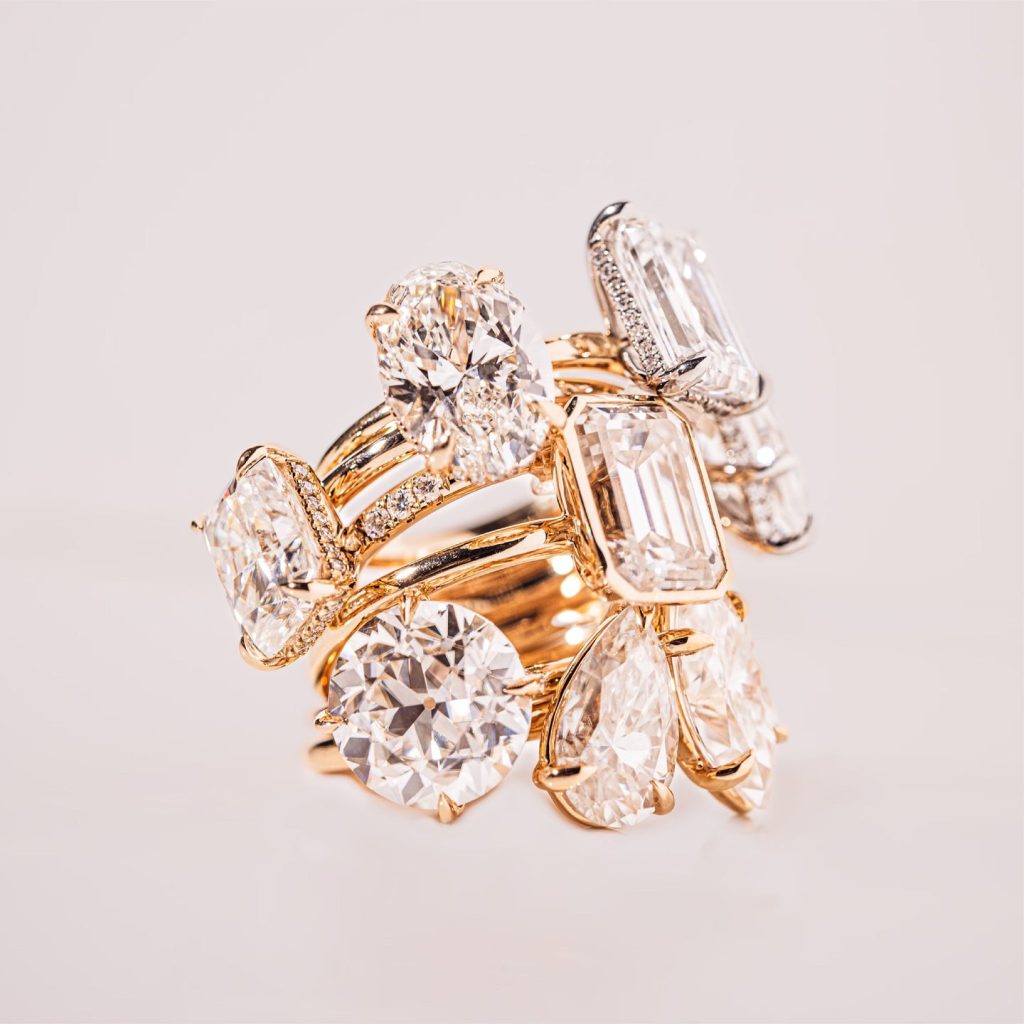
Engagement rings get most of the attention in lab diamond conversations, and for good reason. They are the purchase that usually brings people to the category. But the same qualities that make lab diamonds appealing for a ring, genuine diamond brilliance, ethical origin and a more reasonable price, apply across a whole wardrobe of fine jewelry.
That broader view is changing how people think about buying.
The Same Stone, a Wider Use
A lab diamond is a real diamond. It has the same hardness, the same brilliance and the same grading as a mined one. That makes it suitable for the things people wear most: wedding bands, anniversary pieces, studs, pendants, and everyday jewelry that is meant to be worn rather than kept in a drawer.
The lower price changes how people use it. A diamond that might have been reserved for one significant piece can now be part of several, and because the stone is sound, the pieces can be worn daily with confidence.
A Studio Built Around Custom Work
ZM Fine Jewelry started in 2017 as Zen Moissanite and grew into a full fine jewelry studio centred on lab-grown diamonds, with a curated moissanite collection for clients who prefer it. The Ontario studio is female-founded and family-owned, serves customers across North America, and has built a base of more than 10,000 customers and over 1,000 five-star reviews.
What stands out is how much of the work is custom. Rather than choosing from a fixed stock of finished pieces, clients work with the team on design, review a computer-aided rendering before production begins, and receive a piece made to order. That approach works especially well for pieces that need to relate to one another, like a wedding band that has to sit flush against an engagement ring.
Wedding Bands That Fit the Ring
A band that does not match the ring is one of the most common frustrations in jewelry shopping. Stone height, metal tone and the curve of the setting all affect whether two pieces sit together properly. Designing them alongside each other, or having the second piece made to fit the first, avoids gaps and awkward spacing.
For couples who plan to wear both pieces every day, that attention to fit matters more than almost any other detail.
Everyday Pieces, Chosen With Care
For jewelry worn daily, a few practical points are worth keeping in mind:
- Settings. Secure prongs and a well-built setting protect the stone from knocks and snags.
- Metal. Solid gold and platinum hold up to everyday wear better than plated alternatives.
- Proportion. Delicate pendants and studs work best when stone size suits the wearer’s style and lifestyle.
- Care. Occasional professional inspection of prongs keeps pieces secure.
A lifetime warranty on the stone’s optical properties and the quality of the setting, which ZM Fine Jewelry provides, means pieces can be checked and maintained over decades.
Lab Diamond as an Alternative
Not every buyer wants a diamond. Lab Diamond is a different gemstone with more pronounced fire, and it can offer a larger stone for the budget. ZM Fine Jewelry’s lab diamond collection uses high-grade stones for clients who prefer that look, so couples can compare both options in one conversation instead of visiting two different retailers.
What the Process Looks Like
For anyone commissioning a custom piece, the sequence is straightforward:
- A consultation, by phone, video or at the studio by appointment
- Choosing the stone, metal and design direction
- A CAD rendering to review and approve
- Production, usually six to eight weeks for made-to-order work
- Delivery, with a 180-day free resize window and lifetime warranty
Nothing is produced until the design is approved, which keeps surprises to a minimum.
Buying With Occasions in Mind
A lot of fine jewelry is bought for a date: an anniversary, a birthday, a milestone. Planning backward from that date is the key. Allow for the production window, leave a buffer for adjustments, and use the consultation to talk through timing openly. A studio that is upfront about timelines is one you can plan around.
Why It Works
When a jeweler can talk you through stone quality, setting construction, timelines and care without pushing a price point, the whole experience feels less like a transaction and more like a collaboration. That is the quiet strength of the studio model, and it is why more people are choosing lab diamonds for the pieces they will wear most.