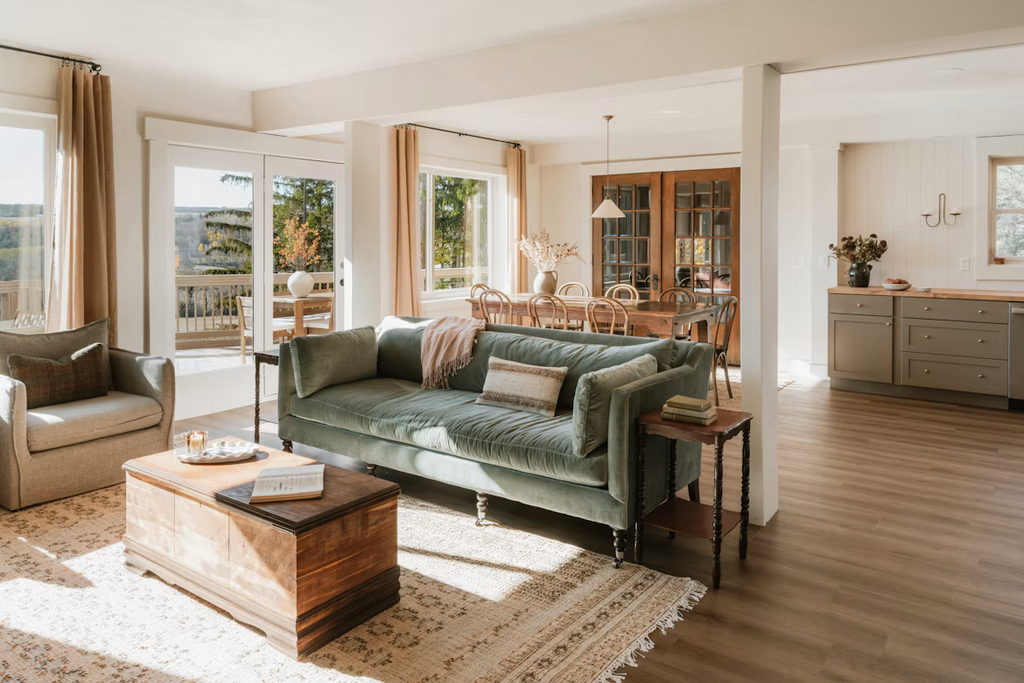
The sofa may be comfortable and the lighting carefully chosen, yet one seat in the living room remains unpopular. It catches the afternoon sun, sits beside a noisy appliance, or feels warm while the rest of the room is pleasant.
Furniture is only part of the experience. A shared living room also has changing light, moving air, sound, and the activity of several people. Looking at those conditions can explain why a room works in photographs but needs adjustment in daily life.
Read the room from its seats
Sit in each regularly used position for a few minutes. Notice glare on screens, direct sunlight, drafts, and the route people take across your view.
Repeat the check at the time the room is most often occupied. A space that feels even in the morning may develop a hot patch beside west-facing glass later in the day.
Ask other household members what they notice. One person may value a breeze while another dislikes direct airflow. A single setting or arrangement may not suit everyone equally.
Record specific observations before moving furniture. “The reading chair gets glare at four” suggests a shading or position change; “the room is uncomfortable” does not indicate where to start.
Also note sound from nearby rooms and equipment. The television, conversation, cooking, and appliances can combine in ways that were not apparent when the space was empty.
Manage sunlight without blocking the room
Use suitable blinds, curtains, or other shading to manage incoming sun. Check that treatments can be operated conveniently and do not cover ventilation grilles or interfere with equipment.
Move a chair slightly before considering a larger rearrangement. A small change in angle may reduce glare while preserving the conversation layout.
Keep routes to windows and doors accessible. A room where every adjustment requires shifting a side table is unlikely to be managed consistently.
Consider the difference between light and heat. A treatment that softens the appearance of sunlight may not provide the thermal control you expect. Evaluate the actual conditions and seek appropriate advice for glazing or building changes.
During severe heat, use adequate cooling and relevant public guidance. Styling adjustments and portable fans have limits.
Give filtration a realistic place
Living rooms can include cooking-related particles from an adjoining kitchen, dust from household activity, and material carried in from outdoors. Start by addressing sources and using appropriate ventilation.
When comparing air purifiers for the home, evaluate the space the unit will actually serve. A large open-plan room may need a different capacity from an enclosed lounge, and ceiling height can affect the assessment.
Read clean air delivery rate and room-coverage information alongside the operating settings. Do not assume a unit treats the whole floor simply because the rooms are connected.
Place it where intake and exhaust remain unobstructed, following the particular model’s clearances. Leave access for cleaning and filter replacement. A decorative cabinet is not a suitable enclosure unless explicitly permitted.
Think about sound from the seating area. The useful comparison is how the appliance performs at a speed you will actually use, rather than its quietest setting in isolation.
Direct the breeze toward occupied areas
A room fan can support personal comfort by moving air across people. Levoit tower fans offer one format to assess for a shared seating area, depending on the model’s airflow and controls.
Try positions that reach the seats people use without forcing everyone into the same direct stream. Oscillation may help distribute the breeze, but check whether it is comfortable from each chair.
Keep curtains, loose objects, and furniture from interfering with the appliance. Place it on a stable surface and route the cord without crossing the main walkway.
A fan circulates air; it does not remove particles, introduce outdoor air independently, or cool an empty room like air conditioning. Turning it off when the room is unoccupied may be sensible when its role is personal comfort.
Do not point it at an accumulation of dust or assume aiming it at the purifier improves filtration. Keep the room clean and give both devices unobstructed working space.
Leave the room easy to maintain
The best equipment position still needs a cleaning route. Check whether you can reach the floor around bases, beneath the coffee table, and beside curtains.
Choose a home for blankets, toys, and frequently used objects so they do not migrate onto vents or appliances. Storage should be convenient enough that people use it without a reminder.
Plan filter access and routine care before settling the layout. A machine that is difficult to open behind a heavy chair may receive less attention than it needs.
If a smell or damp patch persists, investigate its source. Neither a fragrance nor an appliance setting explains a recurring building or housekeeping problem.
Test a normal evening
Use the room with the usual number of people, lights, and screens. Check the changes together, then adjust one thing at a time.
You might discover that shading resolves the unpopular seat, a lower fan direction suits everyone, or moving an appliance away from furniture reduces vibration. Keep what helps without adding unnecessary objects.
A comfortable living room supports several ordinary activities at once. Clear walking routes, manageable sunlight, appropriate air care, and tolerable sound give good furniture the conditions it needs to be enjoyed.