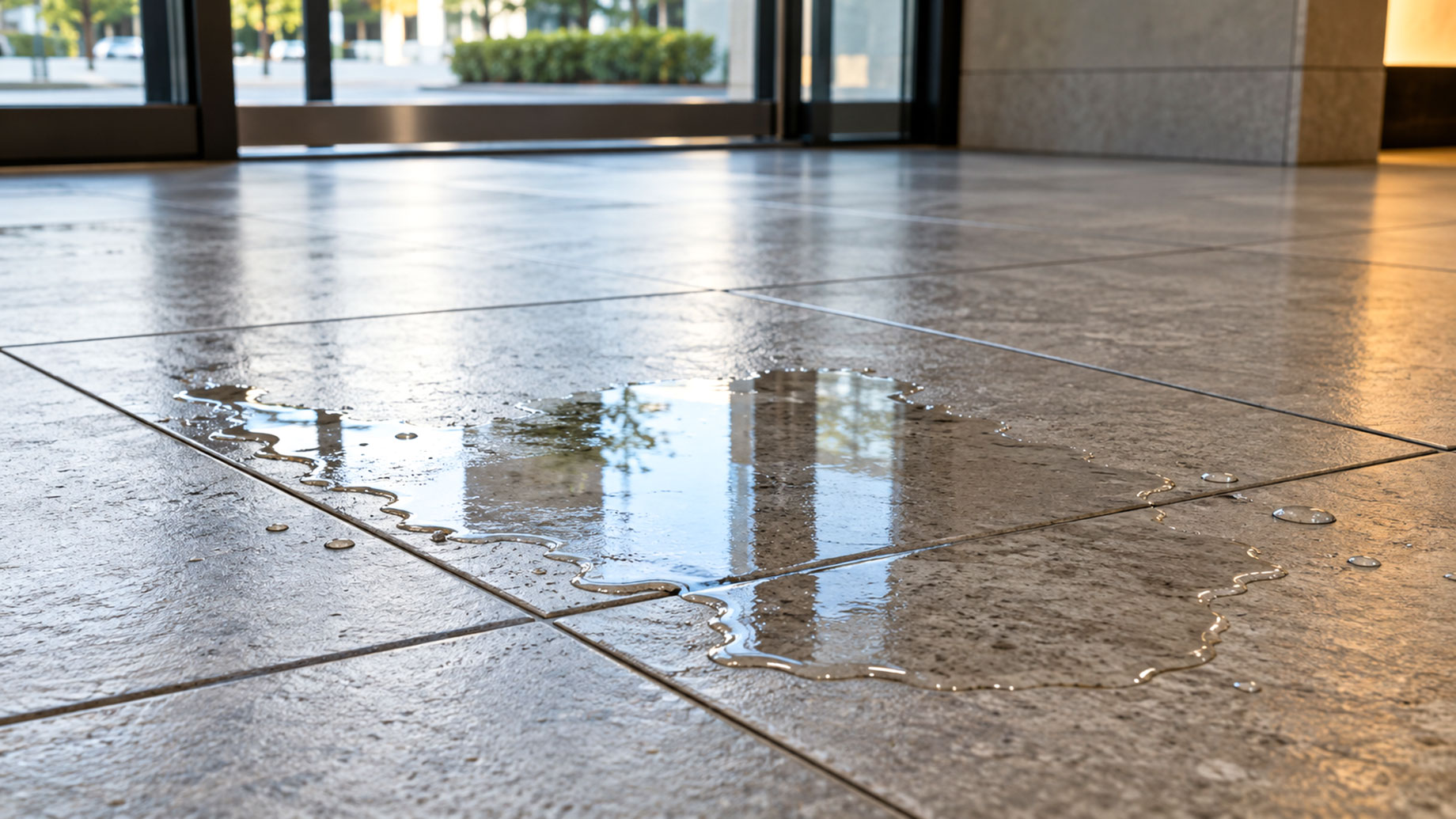
To prove that a property owner knew about a dangerous floor, an injured person generally needs evidence showing that the owner or responsible party had actual or constructive notice of the hazard and failed to address it within a reasonable time.
Evidence may include inspection records, surveillance footage, employee statements, previous complaints, and photographs showing how long the danger existed. The specific requirements depend on the circumstances and applicable law.
Slip and fall accidents can happen in grocery stores, apartment buildings, restaurants, office spaces, and other properties. A wet entrance, leaking refrigerator, damaged tile, or spilled liquid can create a hazard that is difficult to notice before someone gets hurt. If you were injured in a slip and fall, documenting the scene and gathering evidence quickly can help establish whether the property owner had a reasonable opportunity to discover and correct the danger.
This article explains the evidence that can help prove a property owner knew about a dangerous floor, how California law addresses property owner responsibilities, and what steps to take after a slip and fall accident.
Establishing Actual or Constructive Notice
Actual notice means the owner or an employee knew about the dangerous condition. For example, a customer may have reported a spill to a store employee, or a worker may have seen a leaking pipe before the accident.
Constructive notice means the hazard existed long enough, or under circumstances clear enough, that a reasonably careful property operator should have discovered it. The length of time a hazard remained on the floor can be important, although the analysis depends on the available evidence and circumstances.
A property owner is not automatically liable whenever someone falls. The injured person generally must show that the responsible party failed to use reasonable care and that this failure contributed to the injury.
Evidence That Can Help Prove Knowledge of the Hazard
Evidence gathered soon after a fall can help establish what the property owner knew and when they knew it.
- Surveillance footage: Video may show when a spill occurred, whether employees passed the area, and whether anyone attempted to clean it.
- Incident reports: Reports can document the condition of the floor and statements made after the accident.
- Witness accounts: Customers, employees, or other visitors may have noticed the hazard before the fall.
- Maintenance records: Inspection logs and cleaning schedules may reveal gaps in routine checks.
- Previous complaints: Earlier reports about a recurring leak or damaged flooring may show that the problem was known.
- Photographs: Images can preserve the appearance of the hazard, nearby warning signs, lighting, and surrounding conditions.
Surveillance recordings may be erased or overwritten, so it can be important to request that relevant footage be preserved promptly.
California Law and Property Owner Responsibilities
In California, property owners and occupiers must use reasonable care to keep their premises reasonably safe. Their specific duties depend on the circumstances and the relationship between the parties.
California Civil Code § 1714 establishes a general duty to exercise ordinary care to prevent harm. In premises liability cases, injured people must establish negligence, causation, and damages.
Inspection records may help show whether an owner acted reasonably. However, having an inspection policy does not automatically prove that the owner fulfilled their duty.
What to Do After a Slip and Fall
Seek medical attention if you experience pain, swelling, dizziness, or other symptoms. Report the incident to the property manager or business and ask for a copy of any incident report when available.
Photograph the area if it is safe to do so, record the names of witnesses, and keep medical bills and other related expenses. Write down what you remember about the fall while the details are fresh. Avoid making assumptions about how long the hazard existed if you did not personally observe it.
Final Takeaways
- Actual notice means the owner knew about the hazard; constructive notice means they reasonably should have discovered it.
- Surveillance footage, complaints, witness accounts, and maintenance records may help establish notice.
- California Civil Code § 1714 may be relevant to negligence-based premises liability claims.
- Property owners are not automatically liable for every fall.
- Prompt medical care and evidence preservation can strengthen an accurate account of the incident.
