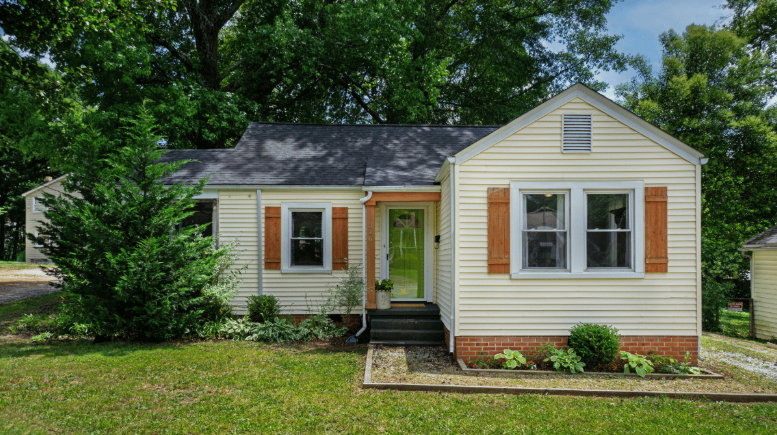
Mature trees can be one of the most valuable features on a residential property.
They add shade, privacy, scale, and character that younger landscaping cannot replace quickly. On established properties, large trees may also be a major part of the home’s curb appeal and overall setting.
But mature trees also require more attention.
As trees age, problems with structure, roots, decay, disease, and storm damage can become more serious. That creates an important question for homeowners:
When is a mature tree an asset, and when does it become a liability?
For owners of larger homes and high-value properties, the answer matters because tree problems can affect roofs, driveways, pools, outdoor living areas, landscaping, and other expensive improvements.
Mature trees can add real value to a property
Healthy mature trees often improve the appearance and usability of a property.
They can:
- provide natural shade
- create privacy from neighboring homes
- frame architecture and landscaping
- reduce the visual impact of roads or nearby properties
- make outdoor spaces more comfortable
- give established neighborhoods a distinctive look
This is especially noticeable in older communities where large trees have had decades to develop.
In areas such as Wilmington, Greenville, Hockessin, Chester County, Delaware County, and the Main Line, mature trees are common around established homes and larger residential properties.
That makes preserving healthy trees worthwhile when it can be done safely.
Size alone does not make a tree dangerous
A large tree near a house can look intimidating, but size alone does not mean the tree should be removed.
Healthy mature trees can remain stable for many years with proper care.
The more important questions involve:
- structure
- root condition
- decay
- branch attachment
- tree health
- soil conditions
- recent storm damage
- proximity to structures
A tree can be large and healthy.
A smaller tree can have serious structural problems.
That is why decisions about pruning or removal should be based on the condition of the tree rather than appearance alone.
When a mature tree becomes a property risk
The level of concern increases when a tree has visible defects or is positioned where failure could cause significant damage.
Common warning signs include:
- a new or increasing lean
- large dead branches
- cracks in the trunk
- split branch unions
- cavities or decay
- exposed or damaged roots
- mushrooms or fungal growth near the base
- declining canopy
- major storm damage
- construction damage around the root system
Location also matters.
A tree with structural problems in an open field creates a very different risk than the same tree growing over a house, pool, garage, driveway, patio, or frequently used outdoor area.
For high-value properties, that difference can be significant.
Trees near roofs and outdoor living spaces need closer attention
Many established homes were built around mature trees rather than after them.
Over time, branches may extend over:
- roofs
- chimneys
- skylights
- patios
- pools
- outdoor kitchens
- decks
- driveways
That does not automatically mean the tree should be removed.
Regular pruning may help manage dead, damaged, or poorly positioned branches while preserving the tree.
The goal should be to reduce unnecessary risk without removing a valuable mature tree simply because it is close to the house.
Root problems can be harder to see
Some of the most important parts of a tree are underground.
Roots help anchor the tree and provide water and nutrients. Damage to them can affect both health and stability.
Root problems may develop after:
- driveway installation
- home additions
- pool construction
- utility work
- grading
- trenching
- excavation
- repeated heavy-equipment traffic
This is particularly important during renovations.
A mature tree may appear unchanged immediately after construction, but root loss or soil compaction can cause decline over time.
Homeowners planning major landscape or construction work should consider tree protection before equipment arrives.
Construction can change the future of a mature tree
Luxury and high-value properties are frequently updated.
Pools are added. Driveways are expanded. Outdoor living areas are redesigned. Homes are renovated or enlarged.
All of those projects can affect nearby trees.
Protecting mature trees during construction may involve establishing root-protection zones, limiting heavy equipment near the trunk, avoiding unnecessary excavation, and planning utility or drainage work around important roots.
An arborist can also help identify which trees are worth preserving before a project begins.
That can be much easier than trying to save a severely damaged tree after construction is complete.
Storm exposure matters
A mature tree that has performed well for decades can still change after severe weather.
Strong winds, saturated soil, ice, snow, and heavy rain can expose weaknesses that were already developing.
After a significant storm, homeowners should look for:
- newly broken limbs
- hanging branches
- new cracks
- changes in lean
- exposed roots
- soil movement around the base
- sudden canopy changes
Properties with large trees near structures may benefit from an inspection after unusually severe weather even when the damage is not obvious from the ground.
Not every problem requires removal
One of the biggest mistakes homeowners can make is assuming that a questionable mature tree must come down.
Depending on the problem, other options may include:
- selective pruning
- removal of dead limbs
- structural pruning
- plant health care
- soil improvement
- cabling or bracing
- monitoring
- additional evaluation
Removal is generally more appropriate when structural defects, decay, root failure, or location create a level of risk that cannot reasonably be managed.
Preserving a healthy mature tree can often be the better outcome for both the property and the landscape.
Large-tree removal requires more planning
When removal is necessary, mature trees near high-value homes can present logistical challenges.
The tree may be surrounded by:
- landscaping
- stonework
- pools
- fences
- neighboring homes
- driveways
- utility areas
- outdoor structures
In those situations, the work may need to be completed in controlled sections rather than simply dropping the tree.
Specialized equipment can also help reduce the amount of material that needs to be dragged across lawns, gardens, or hardscaping.
Strobert Tree Services, which serves Delaware and southeastern Pennsylvania, uses ISA-Certified Arborists and specialized equipment for complex tree work, including large-tree removals near homes and other structures.
The company also works with homeowners on pruning, plant health care, storm damage, and tree-risk concerns throughout the Delaware Valley.
Tree care should be part of property maintenance
High-value homes receive regular attention.
Roofs are inspected. HVAC systems are serviced. Pools are maintained. Exterior surfaces are repaired.
Mature trees deserve the same kind of long-term planning.
A tree may stand for decades, but its condition is not permanent.
Health, structure, surrounding soil, weather exposure, and nearby construction can all change.
Periodic evaluation can help homeowners identify problems while there are still options to manage them.
When should a homeowner call an arborist?
An arborist evaluation may be useful when:
- a tree develops a new lean
- large branches die
- cracks appear in the trunk
- roots have been disturbed
- construction is planned nearby
- a tree changes after a storm
- decay becomes visible
- the canopy begins thinning
- a mature tree grows over an important structure
- the homeowner is unsure whether pruning or removal is appropriate
The goal is not to remove every tree with an imperfection.
It is to understand which trees are healthy, which need maintenance, and which may present a meaningful risk.
Protecting both the home and the landscape
Mature trees can be an important part of what makes a property valuable.
They can also become expensive problems when warning signs are ignored.
The best approach is usually not to choose between preserving every tree and removing every questionable one.
It is to evaluate each tree based on its health, structure, location, and the potential consequences if something fails.
For homeowners with established landscapes, that balance can help protect both the property and the trees that make it distinctive.