Most bathroom renovations are planned around what you can see. Tiles, tapware, vanity, screen.
The decisions that actually determine cost and outcome are made before any of that, and several of them cannot be reversed once the walls close.
This covers what gets locked in, when, and what the paperwork should look like at the end.
Key Takeaways
- Moving fixtures to a new wall costs substantially more than keeping them on the existing wet wall.
- Tapware position, niche location, and waste placement are fixed at rough-in and cannot be adjusted after tiling.
- Plumbing work valued at $750 or more requires a compliance certificate from a licensed plumber.
- Waterproofing is a separate certification from plumbing, and one certificate does not cover both.
- Only a licensed plumber can issue a compliance certificate, and a registered plumber cannot.
Layout Is the Biggest Cost Lever
Every bathroom has a wet wall, meaning the wall carrying the existing water supply and drainage. Keeping fixtures on or near it is the single biggest saving available.
Moving a toilet is the expensive one. Toilets need a specific drainage fall to work reliably, so relocating one often means cutting concrete, rerouting the waste pipe, and rebuilding the floor structure.
Basins and showers are more forgiving because their waste requirements are smaller. Even so, every metre a fixture moves adds pipework and, in a slab, adds excavation.
Decide this before you fall in love with a layout. A designer working without input from a plumber can produce a plan that doubles the plumbing cost for a change nobody actually needed.
Slab construction raises the stakes further. In a home on a concrete slab, relocating drainage means cutting and reinstating concrete, whereas the same change on a timber floor with subfloor access is comparatively straightforward.
What Gets Locked In at Rough-In
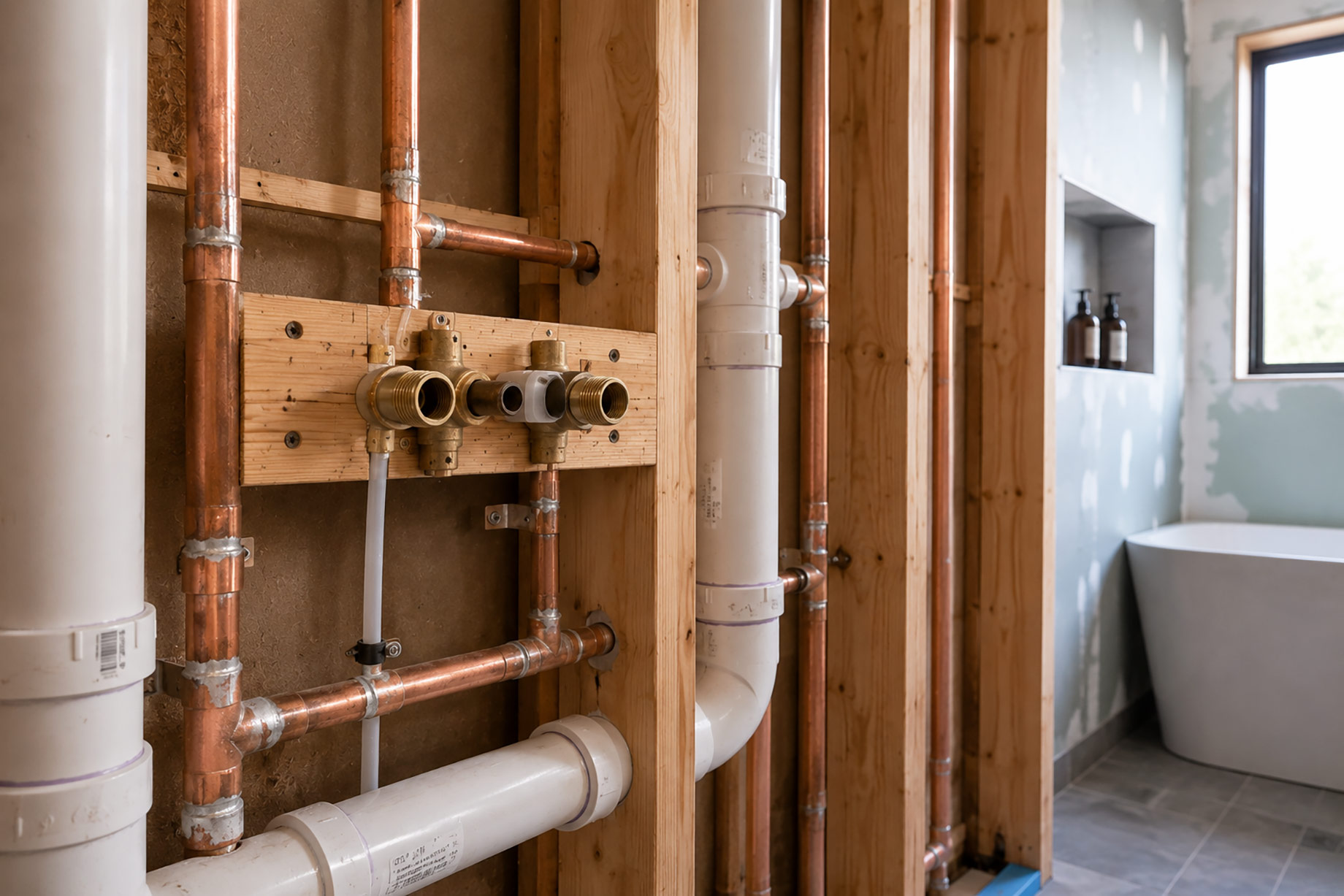
Rough-in is the stage where pipework goes into the walls and floor before sheeting and tiling. Everything set at that point becomes permanent in practical terms.
Tapware type is the clearest example. Wall-mounted mixers and deck-mounted mixers require different rough-in positions, so switching after rough-in means opening the wall again.
Shower niche position and size need framing before the membrane goes on. Adding one later means cutting through waterproofing that has already been certified.
Floor waste location, shower screen position, and the height of every outlet all fall into the same category.
Confirm the exact fixtures you are buying before rough-in rather than choosing them while tiling is underway.
Waterproofing Is a Separate Job
This surprises homeowners consistently, and it causes real disputes. Your plumber does the plumbing, and waterproofing is separate work with its own standard and its own certification.
Wet areas must comply with AS 3740, the Australian Standard for waterproofing domestic wet areas, alongside the National Construction Code.
That covers how far the membrane extends up walls, how it is returned at junctions, and how the floor falls toward the waste.
The membrane must be flood tested before tiling begins. Once tiles are on, a defect is invisible until it appears as damage in the room next door.
Ask directly who is applying the membrane and who issues the certification for it. The answer should be a named person with the right registration rather than an assurance that it is all covered.
Compliance Certificates and Who Issues Them
In Victoria, plumbing work valued at $750 or more, counting labour and materials together, requires a Compliance Certificate of Plumbing Work. It must be issued by a licensed plumber within five days of completion.
Gas work is stricter. Installing or altering a gas appliance requires a certificate regardless of the value of the work.
The certificate itself should identify the practitioner’s licence number, describe the work, name the property, state the completion date, and declare compliance with the Plumbing Regulations 2018. Keep it, because it matters for insurance and at resale.
A typical bathroom renovation generates more than one certificate. The plumber certifies the plumbing, waterproofing is certified separately, and electrical work carries its own certificate again.
Licensed Is Not the Same as Registered
This distinction trips up almost everyone, and it has a practical consequence. A registered plumber can carry out the physical work but must do so under the supervision of a licensed plumber.
Only a licensed plumber can issue a compliance certificate. Someone can be perfectly competent, entirely legitimate, and still unable to sign off your job.
Ask which applies before you engage anyone, and confirm the registration covers the category of work involved.
Sanitary plumbing, drainage, gasfitting and roof plumbing are separate categories and holding one does not imply the others.
What the Walls Might Be Hiding
Older Melbourne homes produce surprises, and the honest ones get flagged in a quote as a provisional allowance rather than ignored.
Ageing pipework is the common find. Galvanised steel supply lines corrode internally and restrict flow, and discovering them mid-renovation is the sensible time to replace them rather than tiling over the problem.
Asbestos is the other. Homes built or renovated before the late 1980s can contain asbestos sheeting in wet areas, and it must be removed by a licensed removalist rather than by whoever is on site.
Ask how unknowns are handled before work starts. A contract with a clear variation process is easier than an argument in week two.
Budget a contingency specifically for it. Ten to fifteen per cent held back for what the walls reveal is far more comfortable than finding the money mid-project.
Capacity Is Easy to Overlook
Adding a second bathroom changes demands on systems that were sized for the original house. Water pressure and flow can suffer once another shower is drawing at the same time.
Hot water is the more common failure. A storage unit that comfortably served one bathroom may not recover fast enough for two, so the capacity question belongs in the planning stage rather than the first cold morning after completion.
Drainage capacity matters too on larger additions. Existing sewer connections were sized for the original fixture count.
New fixtures carry their own requirement. Tapware, showers and toilets sold in Australia are rated under the national water efficiency labelling scheme, and minimum star ratings apply.
Sequencing Is Where Schedules Slip
A bathroom involves several trades in a fixed order, and none of them can start early. Demolition, then rough-in, then sheeting, then waterproofing, then tiling, then fit-off.
The waterproofing step is the bottleneck because it needs curing time and a flood test before tiling. Compressing it is the most common shortcut and the one most likely to produce a leak two years later.
Fit-off happens last, which is why fixtures need to be on site well before you need them. A back-ordered mixer holds up the final stage while the room sits unusable.
Allow a realistic window overall. Three to five weeks from demolition to fit-off is a common range for a straightforward Melbourne bathroom with materials on site and nothing unexpected behind the walls.
Getting the Right Trade In Early
Involve a plumber at the design stage rather than after the layout is fixed. That single change prevents most of the expensive rework in a bathroom project.
A Plumber Melbourne homeowners engage early can tell you what your existing wet wall allows, what relocating a fixture will actually cost, and whether your hot water system will cope.
O’Shea Plumbing, for instance, handles renovation work alongside general plumbing, hot water and gas, which keeps those questions with one contractor.
Ask three things before you commit. Whether they are licensed rather than registered, who issues the waterproofing certificate on your job, and how variations are handled if something unexpected appears behind the wall.
If you are in an apartment, add a fourth. Owners corporation approval is generally required before work affecting shared plumbing or waterproofing, and it takes time.
Conclusion
Bathroom renovations go wrong on sequence more than on selection. Layout drives cost, rough-in fixes decisions permanently, and waterproofing determines whether the room lasts.
Get a plumber involved before the layout is locked, confirm your fixtures before rough-in, and collect every compliance certificate at the end. The tiles are the easy part.
Renovation Plumbing FAQs
Do I need a licensed plumber for a bathroom renovation?
Yes, for anything touching the water supply, drainage, or gas. Only cosmetic work that does not disconnect a fixture falls outside that.
When is a plumbing compliance certificate required?
For plumbing work valued at $750 or more, including labour and materials, issued within five days of completion. Gas appliance work requires one regardless of value.
What is the difference between a licensed and a registered plumber?
A registered plumber works under supervision and cannot issue a compliance certificate. Only a licensed plumber can sign off the work.
Why is moving a toilet so expensive?
Toilets need a specific drainage fall, so relocating one usually means rerouting the waste pipe and often cutting concrete or altering the floor structure.
What is rough-in?
The stage where pipework is installed in walls and floors before sheeting and tiling. Tapware positions, niche locations, and waste placement are all fixed at this point.
Does my plumber do the waterproofing?
Not necessarily. Waterproofing is separate work governed by AS 3740 with its own certification, so confirm who is applying the membrane and who certifies it.
Can I change tapware after rough-in?
Not easily. Wall-mounted and deck-mounted mixers need different rough-in positions, so switching means opening the wall again.
Will a second bathroom affect my hot water?
It can. A storage unit sized for one bathroom may not recover quickly enough for two, so raise capacity during planning.
Do apartments have extra requirements?
Usually. Owners corporation approval is generally required before work that affects shared plumbing or waterproofing, and obtaining it takes time.
