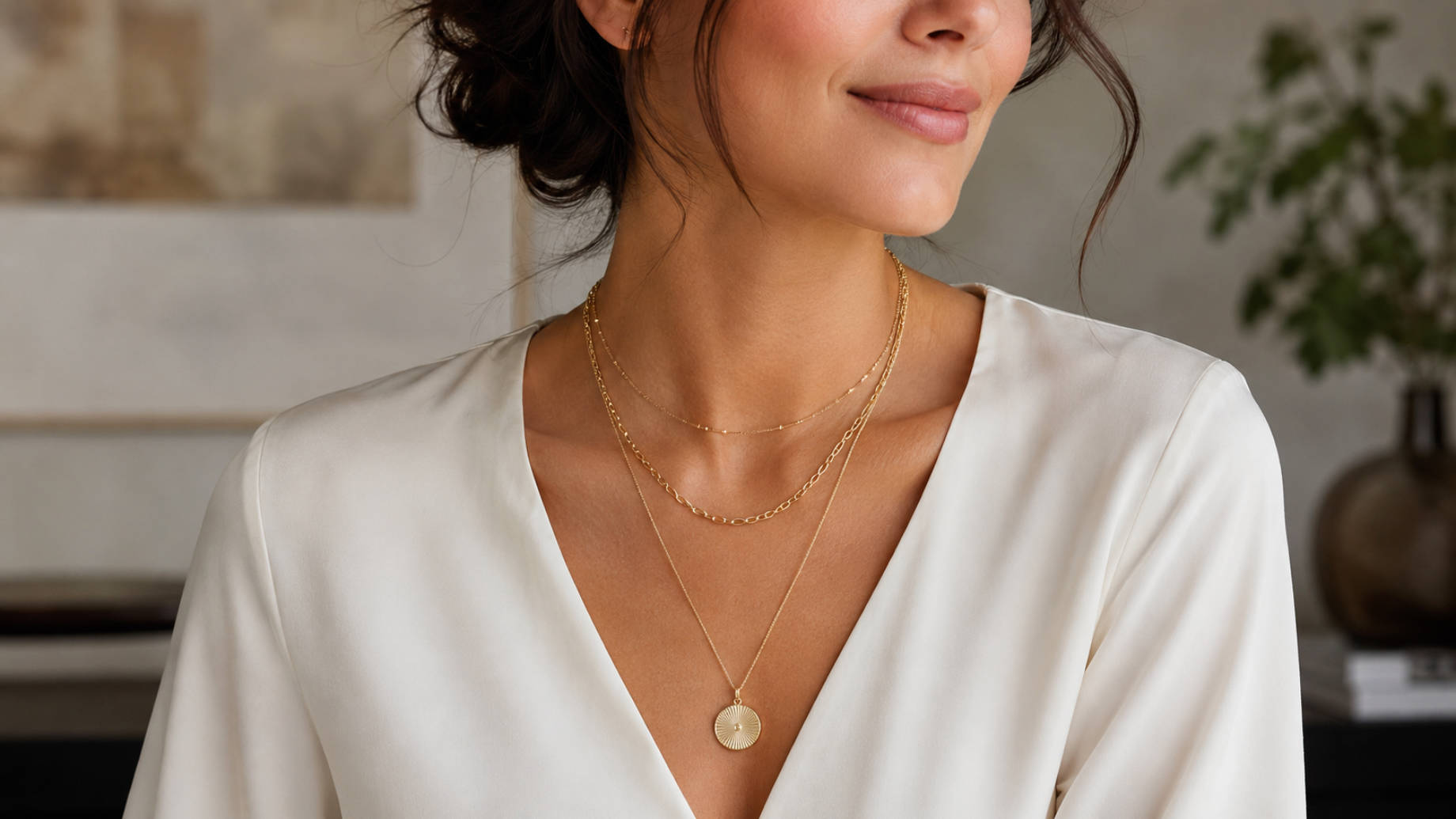
A few well-chosen necklaces, layered with intention, can lift the simplest outfit. The trick is not owning more pieces, but combining the right lengths, weights and textures.
This guide breaks the look down into a few simple rules, so your everyday stack reads as effortless rather than cluttered.
Start With Length
Length is the foundation of every good stack. Give each necklace its own space, with roughly two inches between pieces, so they sit in separate lanes instead of bunching together.
A simple formula works well: a short base, a standard everyday chain, and one longer pendant beneath.
| Length | Sits at | Role in the stack |
|---|---|---|
| 14 to 16 inches | High on the neck, near the collarbone | Choker or base layer |
| 16 to 18 inches | Just below the collarbone | Everyday anchor piece |
| 20 to 24 inches | Lower on the chest | Pendant or charm layer |
Mix Weights, Textures and Metals
Pair a slightly heavier chain with finer ones so the bolder piece anchors the look and the delicate strands move freely above or below it.
Mixing chain styles also helps. A flat herringbone sits differently from a round cable link, which adds contrast and reduces tangling.
Combining gold tones, or even gold and silver, is a deliberate modern choice rather than a mistake.
Luxury retailer Liberty London’s styling guide suggests choosing one statement piece as the centerpiece, then letting your neckline frame the rest of the stack.
| Chain style | Texture | Layers best as |
|---|---|---|
| Herringbone | Flat and smooth | A close base layer |
| Cable | Classic round links | A versatile mid layer |
| Rope or braided | Structured and textured | A mid or long layer |
| Box or fine chain | Sleek and delicate | A dainty base for a charm |
Anchor the Stack With Meaning
The most personal stacks are built around a focal point. A charm, an initial or a pendant gives the eye somewhere to land and makes the look feel collected.
Build slowly. The best layered looks grow over time, one meaningful piece at a time, rather than being assembled in a single afternoon.
Keep It Tangle-Free
Most tangles come from chains that are too similar in length or weight. Vary your lengths by at least two inches and mix textures to keep each piece in its lane.
For stacks you wear often, a layering connector joins several chains at a single clasp. Store pieces flat or hanging, and take them off as a group rather than one by one.
Choose Pieces Worth Keeping
Layering rewards quality. A handful of well-made pieces will outlast a drawer of fast-fashion chains and keep their shine for years.
For charms, pendants and fine chains designed to be layered, explore the handcrafted fine jewelry litofinejewelry.com offers, made in Athens in 14k and 18k gold.
For more on building a lasting collection, see The Pinnacle List’s guide to fine jewelry and designer everyday pieces.
FAQs
How many necklaces should I layer?
Two or three is a good starting point. Odd numbers often look the most balanced, and you can add more once you find your rhythm.
What necklace lengths layer best?
Aim for pieces around 14, 16 to 18, and 20 to 24 inches, with about two inches between each, so every layer has room to sit on its own.
Can I mix gold and silver?
Yes. Mixing metals is a popular, intentional look. If you prefer a softer blend, keep the finishes similar in tone.
How do I stop layered necklaces from tangling?
Vary lengths and textures, use a layering connector for everyday stacks, and store each piece flat or hanging rather than piled together.
The Bottom Line
Great necklace layering comes down to spacing, contrast and a meaningful anchor piece. Start with two or three quality chains, give them room to breathe, and build from there.
For where the category is heading, explore the latest modern jewelry trends and luxury lifestyle features before you shop.
