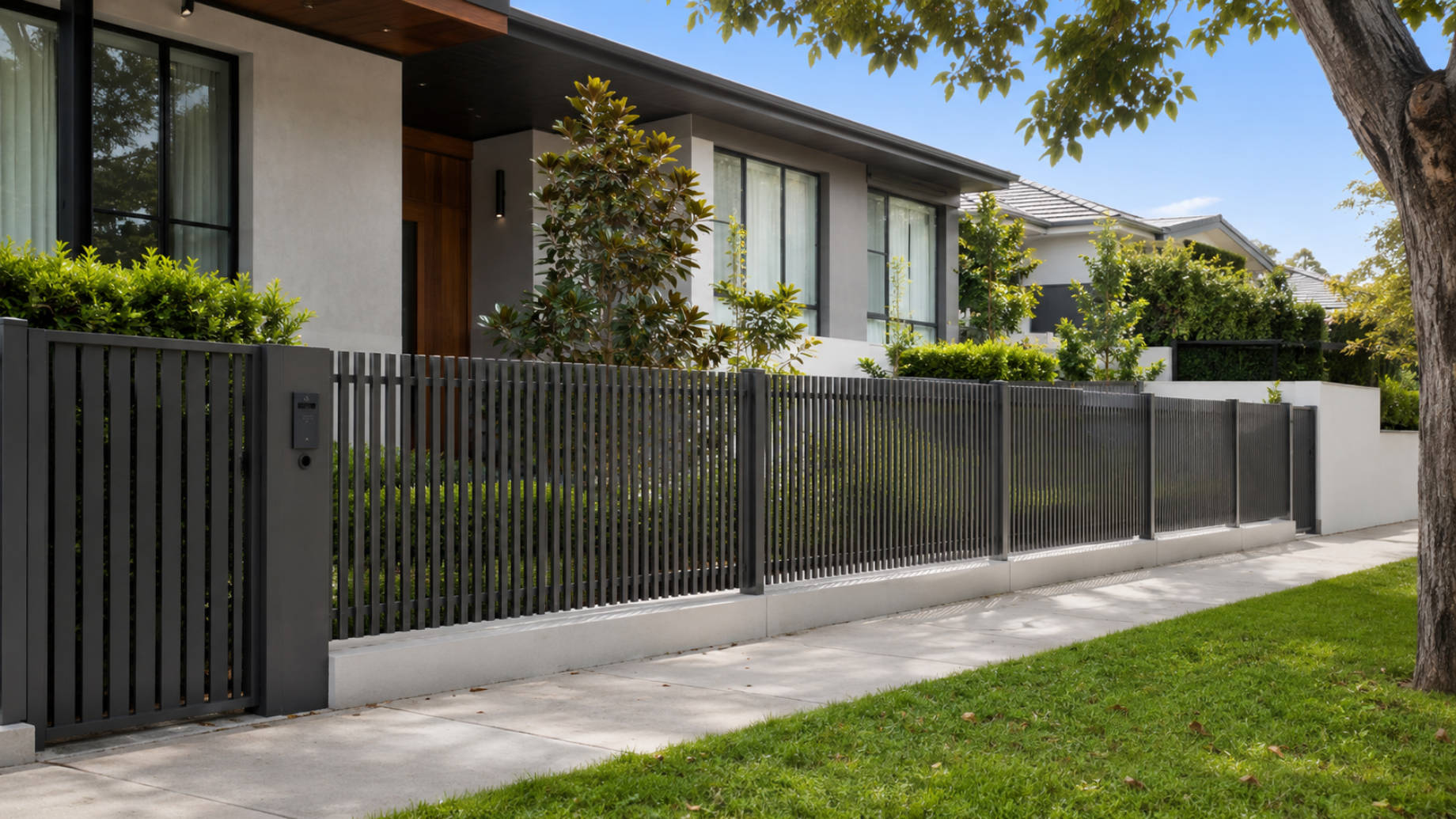
A rusted iron gate? A timber fence decaying from the bottom up? You have probably wondered, “Is there any type of fence that lasts without needing constant upkeep?
It’s a valid question. One that many homeowners ask when considering metal fencing options in the first place.
NO! Aluminium doesn’t rust. But the full answer is a little more interesting.
Why aluminium does not rust like other metals
Rust is a chemical reaction. It can take place over time when steel or iron is exposed to these key elements:
- Oxygen
- Moisture.
It manifests as a reddish-brown appearance that damages the metal, resulting in:
- Weak structural strength
- Unsightly look of a fence.
Aluminium has no iron. Therefore, it can’t rust that way. This is why aluminium fencing is such a popular option all over Australia.
So what happens when the fence is exposed to the weather?
The material does not rust. But it does oxidize.
What happens when the surface is exposed to air? A thin layer of aluminium oxide forms. This is actually a good thing.
The layer protects the metal’s surface. This prevents any form of corrosion. The process happens rapidly and undetectably. This is why it is one of the most reliable metals for outdoor use.
Powder coating provides extra protection
Many contemporary aluminium fencing products are finished with a powder finish at the factory. It is applied electrostatically to the metal surface. Then it is cured under heat to create a hard, durable shell.
Powder coating is not only an appearance enhancement. It also provides a second barrier against:
- UV rays
- Moisture
- Salt air
- General wear.
This is particularly helpful for coastal homes. They are more likely to experience corrosion.
Does it fade or discolor over time?
This is a common question many homeowners ask. The secret is using a quality powder coat finish. It will ensure that your fence is resistant. It should also be applied correctly.
You ought to avoid cheap products with poorer finishes. They may chalk or change color after a few years under extreme conditions.
When making a fencing decision, evaluate:
- The standard of manufacturing
- The quality of the powder coat finish.
This is just as important as the material itself.
How it performs in different Australian climates
Fences in Australia undergo some of the harshest conditions:
- Intense UV radiation
- Coastal salt air
- Humid tropical climates
- Dry inland heat, etc.
Alimunium fences handle all of these conditions significantly better than:
- Timber, which warps, cracks and rots
- Steel, which requires ongoing treatment to prevent surface rust.
When it comes to structural materials like fences and roof tiles, investing in a quality product pays off significantly for the long term. This manifests in terms of maintenance and replacement costs.
Summing up
Aluminium fencing does NOT rust. In addition, you can use a quality powder-coated finish for more protection. It prevents fading and other types of deterioration that make other fencing materials so demanding. It is one of the most durable options for homeowners in Australia seeking a long-lasting, low-maintenance fence.
