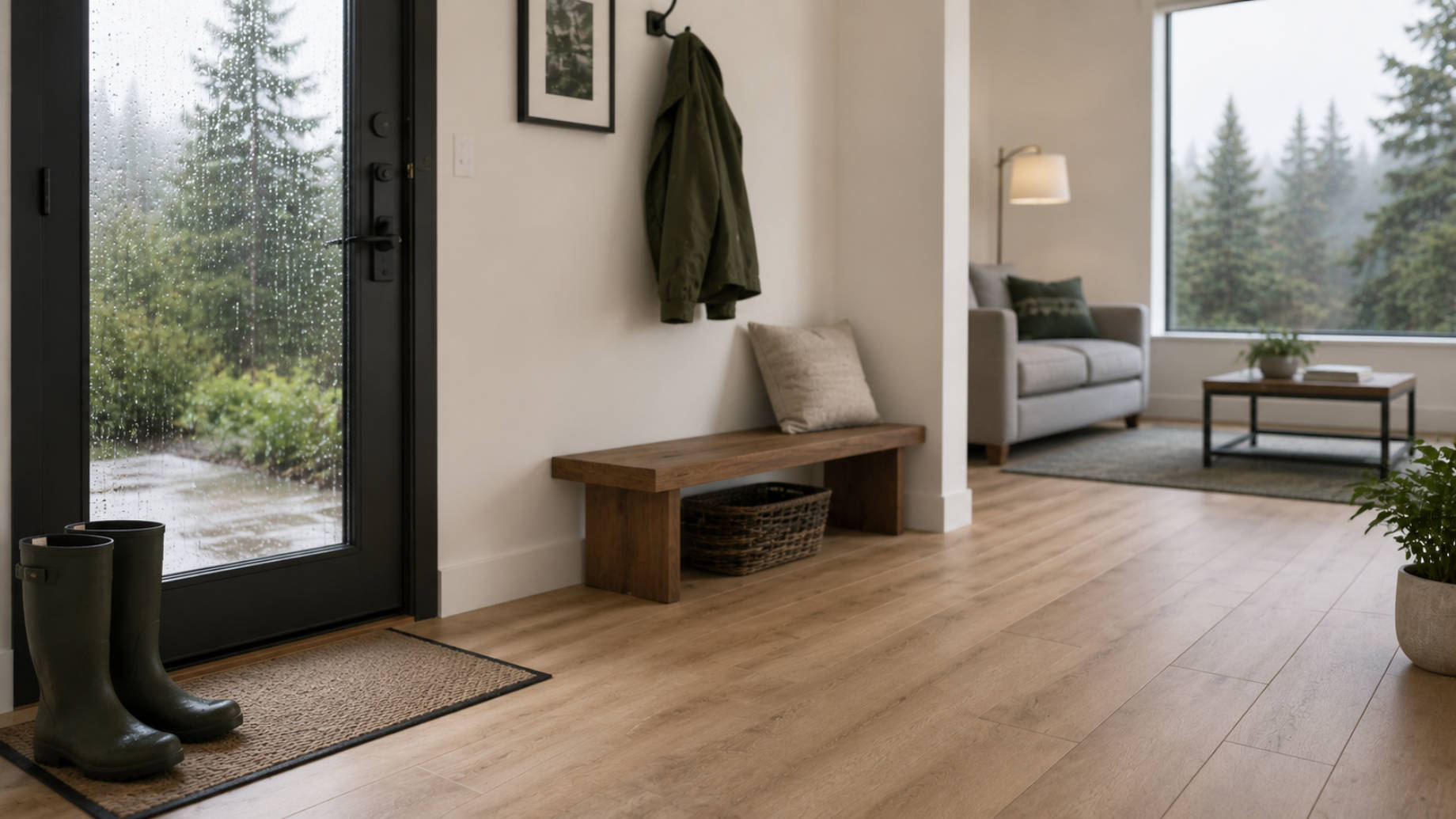
The Pacific Northwest offers beautiful scenery, lush landscapes, and a unique climate. However, homeowners in this region also face challenges when selecting flooring. Frequent rainfall, seasonal moisture, muddy shoes, pets, and active households can all impact the long-term performance of a floor.
Whether renovating a single room or updating an entire home, choosing the right flooring material can improve durability, reduce maintenance, and help protect your investment. Understanding how different flooring products perform in Pacific Northwest conditions can help homeowners make informed decisions.
Understanding the Impact of Moisture
Moisture is one of the most important factors to consider when selecting flooring in the Pacific Northwest. Rainy weather, wet shoes, and seasonal humidity changes can all affect flooring materials over time.
Some flooring products are more susceptible to moisture-related issues than others. Traditional hardwood flooring, for example, may expand and contract as moisture levels fluctuate. While hardwood remains a popular and attractive option, homeowners should understand the maintenance requirements before installation.
Luxury vinyl plank (LVP) flooring has become increasingly popular because it offers excellent moisture resistance while maintaining the appearance of natural wood. Waterproof flooring options can help reduce concerns about spills, wet entryways, and everyday household moisture.
For areas such as kitchens, laundry rooms, mudrooms, and basements, selecting a flooring product designed to handle moisture exposure can help improve long-term performance.
Matching Flooring to Each Room
Different rooms place different demands on flooring materials. A flooring product that works well in a bedroom may not be the best choice for a bathroom or entryway.
Living rooms often benefit from flooring that combines durability with visual appeal. Luxury vinyl plank, engineered hardwood, and carpet are common choices.
Bedrooms typically prioritize comfort and warmth. Carpet remains popular in bedrooms, while LVP continues to gain popularity due to its durability and ease of maintenance.
Kitchens require flooring that can withstand spills, foot traffic, and frequent cleaning. Waterproof flooring products are often preferred in these areas.
Home offices have become increasingly important in recent years. Carpet tile can be a practical solution because individual tiles can be replaced if damaged without requiring a full floor replacement.
Basements frequently present moisture concerns and may require flooring products specifically designed for below-grade installations.
Choosing flooring based on how a room is used can help homeowners maximize both functionality and longevity.
Durability Matters
Many homeowners focus primarily on appearance when selecting flooring. While aesthetics are important, durability should also be a major consideration.
Households with pets, children, or high foot traffic often benefit from flooring materials that resist scratches, dents, and wear.
Modern LVP products typically include protective wear layers designed to withstand daily use. Many flooring manufacturers offer products with varying wear layer thicknesses, allowing homeowners to select a product that aligns with their lifestyle.
Carpet tile is another durable option in certain applications. Commercial offices, retail spaces, and busy households often benefit from the ability to replace individual sections rather than an entire floor.
Selecting flooring based on anticipated traffic levels can help prevent premature wear and extend the life of the installation.
The Importance of Maintenance
Maintenance requirements vary significantly between flooring products.
Some homeowners prefer flooring that requires minimal upkeep. Luxury vinyl plank generally requires routine sweeping and occasional mopping. This makes it attractive for busy households seeking a low-maintenance solution.
Hardwood flooring may require additional care, including refinishing over time. While hardwood can provide a timeless appearance, homeowners should consider the ongoing maintenance requirements before making a decision.
Carpet requires regular vacuuming and periodic deep cleaning. However, many homeowners appreciate the comfort and warmth carpet provides.
When evaluating flooring options, homeowners should consider not only the initial installation cost but also the long-term maintenance commitment.
Why Subfloor Preparation Is Critical
One of the most overlooked aspects of a flooring project is subfloor preparation.
Even the highest-quality flooring products can experience problems if installed over an uneven or improperly prepared surface. Issues such as squeaks, movement, gaps, and premature wear are often related to subfloor conditions rather than the flooring material itself.
Before installation, flooring professionals typically inspect the existing substrate to identify potential concerns. Moisture testing, leveling, patching, and surface preparation are often necessary steps to ensure a successful installation.
Self-leveling compounds are frequently used to correct low areas and improve floor flatness. Proper preparation helps create a stable foundation that supports the finished flooring system.
Investing in quality preparation can improve both appearance and performance for years to come.
Working With Experienced Flooring Professionals
Professional installation can play a major role in the success of a flooring project.
Experienced flooring contractors understand product requirements, manufacturer guidelines, moisture considerations, and installation techniques. They can also identify potential issues before installation begins.
Homeowners considering new flooring projects often work with experienced local professionals such as LVP AND CARPET TILE to evaluate flooring options, prepare subfloors, and complete installations that are suited to Pacific Northwest conditions.
Choosing a qualified contractor can help reduce the likelihood of installation-related problems while improving the overall quality of the finished project.
Planning for Long-Term Value
Flooring is one of the most visible and frequently used surfaces in a home. Selecting materials that balance appearance, durability, maintenance, and performance can provide long-term value.
Rather than focusing solely on trends, homeowners should consider how flooring will perform over many years of daily use. Climate conditions, household activity levels, maintenance preferences, and room function should all play a role in the decision-making process.
Whether choosing luxury vinyl plank, carpet tile, hardwood, or another flooring solution, understanding local environmental conditions and installation requirements can help ensure a successful outcome.
With proper planning, quality materials, and professional installation, homeowners can enjoy attractive and durable flooring that performs well throughout the Pacific Northwest.
