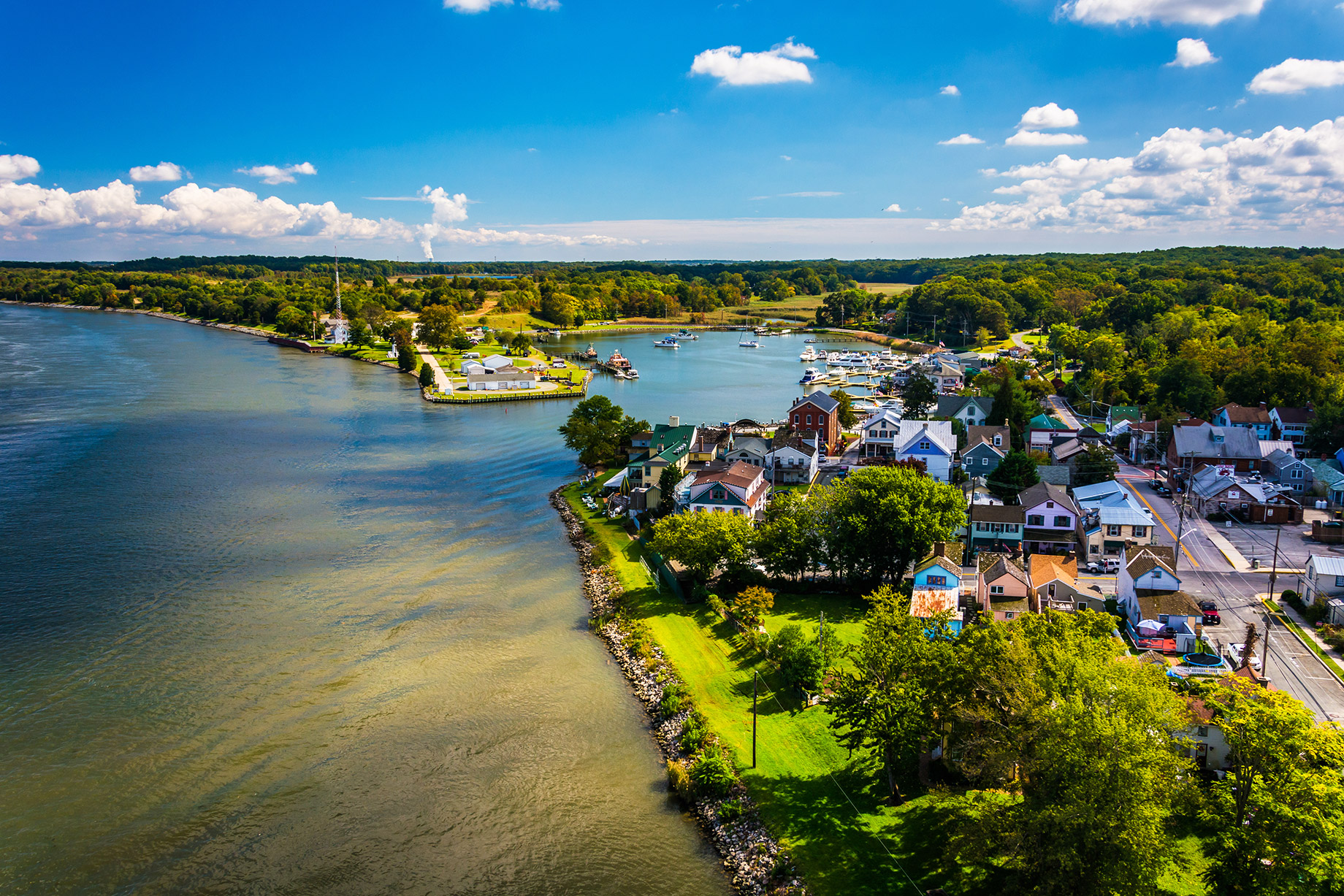
The Chesapeake Bay shapes life along Maryland’s Eastern Shore in ways that feel both timeless and quietly remarkable. Its coves, marshes, and waterman towns offer a softer rhythm than the better-known beach resorts further south. For travelers who want scenery, history, and seafood without the crowds, this stretch of coastline rewards the curious.
The Geography That Defines the Region
The Chesapeake is the largest estuary in the United States, fed by more than 150 rivers and streams. The Eastern Shore sits along its eastern flank, a low-lying patchwork of farmland, pine forest, and tidal water. Towns here grew up around fishing, boatbuilding, and small-craft trade.
Distances feel deceptive on a map. A drive of twenty miles can wind past three creeks, two ferry crossings, and a heron rookery. Plan extra time for unscheduled stops.
The shoreline itself runs roughly 600 miles in Maryland alone, once you account for every cove and tributary. That fractal coastline is the reason no two waterfront towns here feel quite the same.
Towns Worth Slowing Down For
St. Michaels remains the postcard favorite, with brick sidewalks, a working harbor, and the Chesapeake Bay Maritime Museum. Oxford, just across the Tred Avon River, is reached by one of the oldest continuously operating ferries in the country.
Further north, Chestertown holds a Colonial street grid and a long association with the Sassafras and Chester rivers. Tilghman Island, at the end of Route 33, still hosts a small fleet of skipjacks, the traditional oyster dredging sailboats. For longer stays, many travelers look at Chesapeake Bay vacation retreats tucked along the quieter creeks and inlets.
Food, Water, and What to Pack
Blue crab defines summer here. Steamed, seasoned, and eaten at a paper-covered table with a wooden mallet, it is a regional ritual rather than a meal. Oyster season runs roughly October through March, and many small restaurants source directly from local watermen.
Bring layers even in July. Mornings on the water are cool, afternoons can shift quickly, and evenings often turn breezy. Insect repellent matters more than sunscreen on still summer nights.
Farm stands open along the back roads from June onward. Sweet corn, melons, tomatoes, and peaches travel only a few miles from field to table, and many stands operate on the honor system. A small cooler in the trunk is a useful traveler’s habit.
Getting on the Water
You do not need to own a boat to experience the bay properly. Kayak rentals are common in St. Michaels, Cambridge, and Rock Hall, with sheltered launch points for beginners. Charter captains run half-day fishing trips for rockfish (striped bass) and white perch.
Sunset sailing cruises on a restored skipjack or bugeye are among the more memorable experiences in the region. Most run from late spring through early autumn, with weather-dependent schedules.
Birders should pack binoculars year-round. Ospreys nest on channel markers, bald eagles patrol the larger rivers, and great blue herons stalk every shallow flat. A tranquil bayside escape rental positioned near the water tends to deliver a quiet morning soundtrack of egrets and red-winged blackbirds.
When to Visit
Late April through mid-June is widely considered the sweet spot: warm days, low humidity, and the start of soft-shell crab season. September and October bring quiet harbors, golden marsh light, and the return of oysters to local menus.
Winter on the Eastern Shore is its own quieter pleasure. Tens of thousands of tundra swans, snow geese, and Canada geese pass through the Blackwater National Wildlife Refuge, and rates at small inns drop noticeably. Travelers planning ahead often book a Maryland coastal getaway home well before the spring season fills.
Final Thoughts
The Eastern Shore is not engineered for spectacle. It rewards travelers who slow down, eat what is in season, and let the tide set the pace of the day. For anyone curious about a side of Maryland that still moves at the speed of the water, the bay’s quieter towns are an easy and worthwhile detour.
