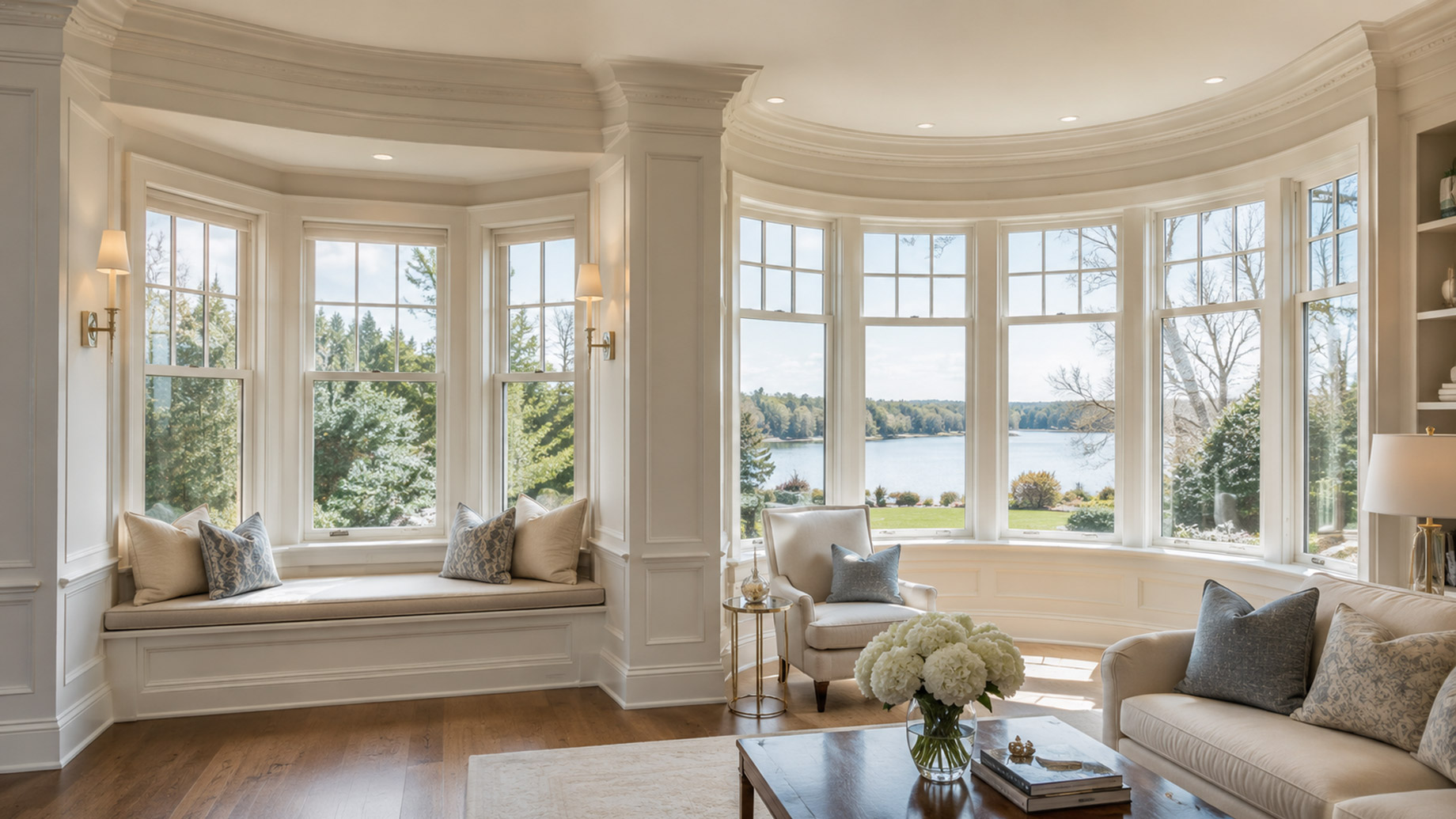
You have decided you want a window that does more than just sit there looking flat. Smart move. Bay and bow windows are the heavy hitters of the residential window world, the ones that add architectural drama, extra light, and that “wow, this room feels completely different” effect that standard windows simply cannot deliver.
But here is where homeowners consistently get tripped up: bay and bow windows are not the same thing, and the differences between them matter a lot depending on your home, your budget, and what you are actually trying to achieve.
So let’s rank the key factors and figure out which one comes out on top for each.
Round 1: The Look
Bay Window: Sharp, angular, defined. A traditional bay window typically projects outward from the wall at angles of 30, 45, or 90 degrees, creating a geometric form that reads as intentional and structured from both inside and outside the home. It is bold in the best way. Think classic Victorian homes, craftsman bungalows, colonial architecture. Bay windows have a heritage look that signals character.
Bow Window: Curved, elegant, sweeping. A bow window uses four or more window panels of equal size arranged in a gentle arc, giving the exterior of a home a softer, more romantic silhouette. It feels grand without being angular. It leans European, think countryside manor, French provincial, upscale traditional.
Winner: Depends entirely on your home’s architecture. Angular home with strong lines? Bay wins. Softer, more curved architectural style? Bow takes it. Neither loses points here, they just serve different aesthetics at a genuinely high level.
Round 2: Interior Space and Usability
Bay Window: Because of the angled side panels, a bay window creates a defined interior nook that is genuinely usable. That alcove is a natural seat, a reading corner, a breakfast nook, a place for a window bench with storage underneath. It is the window that actually creates a room feature rather than just opening up a wall.
Bow Window: The panoramic curve of a bow window gives you a wider view and more light, but the interior ledge is shallower and less pronounced. It is harder to turn into a proper seat or nook because the curve distributes the projection across a larger span without the same defined pocket.
Winner: Bay window, and it is not particularly close. If you want usable, intentional interior space from your window investment, the bay delivers it more decisively.
Round 3: Natural Light and Views
Bay Window: Three panels, typically with a larger fixed centre pane flanked by two smaller operable panels on the sides. You get good light and a solid view, but the angled side panels limit the true panoramic sweep.
Bow Window: Four, five, or sometimes six panels arranged in a continuous arc. More glass, more coverage, more uninterrupted sightlines. If you are sitting in a room with a bow window and looking out at a garden, a lake, or a skyline, you are getting a significantly wider field of vision.
Winner: Bow window. More panels, more glass, more view. If natural light and panoramic sightlines are your top priority, bow is the clear answer.
Round 4: Installation and Cost
This is where reality enters the chat.
Bay Window: Simpler geometry, fewer panels, and a well-understood structural profile make bay windows more straightforward to design, manufacture, and install. They typically cost less than bow windows of comparable quality and size, and the installation is generally less complex.
Bow Window: The curved arrangement requires more panels, more precise manufacturing, and more careful installation to ensure the arc holds correctly and seals properly over time. That complexity shows up in the price.
Winner: Bay window for budget-conscious homeowners. Bow windows are absolutely worth the investment if you have the budget and the right home for them, but if you are working within tighter constraints, bay gives you exceptional value.
Round 5: Energy Efficiency
Both window styles have more surface area than standard flat windows, which means more potential for heat loss in winter and heat gain in summer. But how they perform depends heavily on the quality of the glazing, the framing material, and the installation.
Bay Window: Fewer panels means fewer seams, fewer potential weak points, and generally a tighter overall installation. With quality double or triple-glazed panels and solid weatherstripping, a well-installed bay window performs well.
Bow Window: More panels means more seams and more potential for air infiltration if installation is not done correctly. The quality of the manufacturer and the installer matters enormously here.
Winner: Bay window on average, though the gap narrows significantly when bow windows are installed by experienced professionals using premium materials. When you are seriously exploring choosing between bay and bow windows, working with a specialist who understands the specific thermal performance of each option for your climate and home is genuinely worth the conversation.
Round 6: Versatility Across Home Styles
Bay Window: Works beautifully across a wide range of architectural styles, from traditional to transitional to modern farmhouse. The angular profile adapts more easily to varied home styles without looking out of place.
Bow Window: At its absolute best in traditional, heritage, and classical architectural styles. It can look slightly out of place on very contemporary or minimalist homes where the curved form conflicts with clean-line design sensibilities.
Winner: Bay window on raw versatility. It plays well with more home styles across the board.
Round 7: Curb Appeal Impact
Bay Window: Adds defined architectural interest and visual structure. It reads well from the street and gives a home a classic, grounded look that holds up over time.
Bow Window: When it works with the home’s architecture, a bow window is genuinely showstopping from the exterior. The sweeping curve has a grandeur that a bay window simply does not match. The risk is higher if the fit is wrong, but when it is right, it is spectacular.
Winner: Bow window for maximum curb appeal impact, provided the home style supports it. High risk, high reward.
The Final Tally
| Category | Winner |
|---|---|
| The Look | Tie |
| Interior Space | Bay |
| Natural Light and Views | Bow |
| Installation and Cost | Bay |
| Energy Efficiency | Bay |
| Versatility | Bay |
| Curb Appeal | Bow |
Overall winner: Bay window, with four category wins to bow’s two and one tie. But the honest takeaway is that “winner” is entirely context-dependent. Bow windows are not the losing choice. They are the right choice for specific homes, specific budgets, and specific priorities, and when the fit is right they are genuinely exceptional.
The real move is knowing your home, knowing what you want the window to do for you, and choosing accordingly. Both options represent a serious upgrade over standard flat windows. Either way, you are making your home measurably better.
