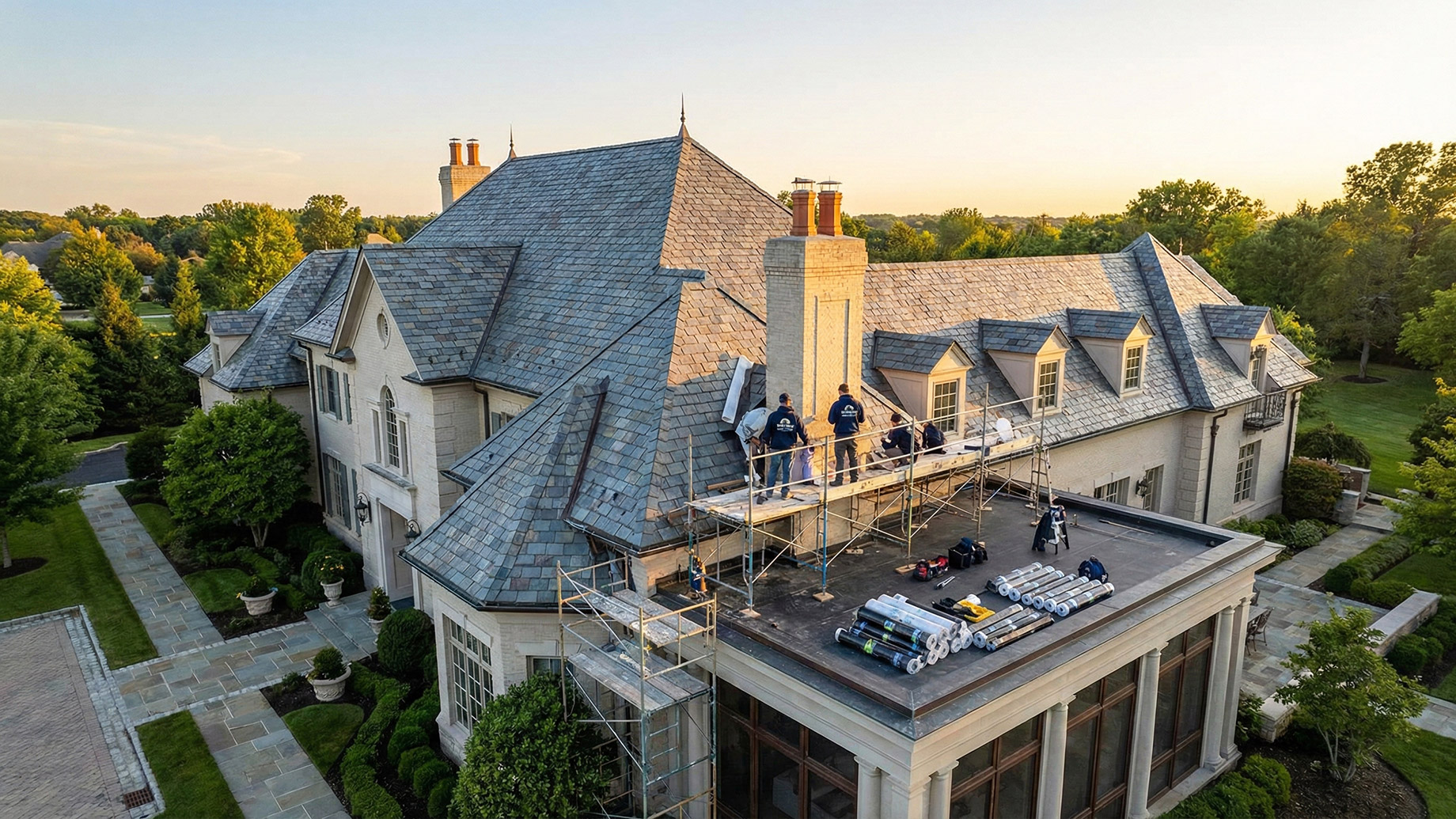
A roof problem rarely starts with a dramatic crash or an obvious mess. It often begins as a faint stain or a subtle ripple. On a high value home, that quiet signal deserves fast attention.
Professional work matters most when the problem is early and the home is complex. A well planned residential roof repair can stop moisture spread and keep insulation performing. It also keeps finishes looking clean, which protects both comfort and long term value.
Stop Small Problems From Getting Bigger
Water rarely travels straight down through one neat opening. It can move along decking seams and fasteners, then collect near valleys. By the time you notice a ceiling mark, the wet area may be wider.
A careful roof check looks beyond the missing shingle or lifted tab. Contractors examine flashing joints, pipe boots, and vent stacks where seals fail first. They also check drip edges, valleys, and skylight frames where water likes to linger.
They also test for softer spots that hint at wet decking under the surface. A soft area can mean trapped moisture that will keep feeding rot. Catching that early can prevent framing work and interior drywall repairs later.
Good diagnosis prevents the frustrating patch and repeat cycle that drains time. If the root cause is failing flashing or poor drainage, one shingle fix will not hold. Clear problem solving protects the roof system and the interior finishes you already paid for.
Improve Comfort And Reduce Heat Indoors
Roofs shape indoor comfort more than most owners expect at first. Small gaps can push hot air into the attic and living space. Damp insulation also loses performance, even when the leak seems minor.
Heat control also depends on ventilation and surface choice, not only insulation depth. The EPA explains how cool roofs reflect sunlight and release heat better than standard materials. That guidance can help owners discuss options with a contractor.
This is where professional judgment earns its keep during repair planning. A contractor can match materials to the existing roof and avoid uneven wear. They can also confirm intake and exhaust vents are balanced, which keeps airflow steady.
Comfort gains can be subtle, but they add up across a full season. Rooms under the roofline feel less stuffy, and HVAC cycles feel less aggressive. That can also reduce condensation risk, which helps protect wood trim and stored items.
Protect Curb Appeal And Exterior Details
Luxury homes often have rooflines with hips, dormers, and deep overhangs. Those details look sharp, but they add joints where water can enter. Repairs should respect those transitions and keep edges crisp.
Clean courses and straight lines also matter for curb appeal at close range. Buyers and guests notice roof condition, even if they cannot name the issue. A roof that looks tired can make the whole exterior feel less cared for.
That exterior read is not only about shingles and flashing, either. Roof repairs often sit beside other touch ups like exterior cleaning and minor paint work. It is one reason curb appeal improvements tend to work best in clusters.
A simple upkeep routine also makes it easier to spot changes after storms. Seasonal checks help you notice lifted shingles, clogged gutters, and worn sealant. A short set of roof maintenance reminders can support that habit.
Safer Work And Cleaner Repair Standards
Roof work has real safety risks, especially on steep slopes and taller homes. Professionals use fall protection, staging, and secure fastening methods. That reduces injury risk and lowers the chance of accidental damage.
They also understand where leaks tend to start on complex roofs. Flashing around chimneys and wall intersections is a common weak point. FEMA notes that damaged roof flashing can lead to leaks and supports evaluation or replacement.
Scope clarity matters just as much as craftsmanship on repair day. Detailed notes, photos, and a clear plan help you compare bids fairly. That also reduces the chance of surprise add ons after the first layer comes off.
Transparent pricing also supports smarter long term planning for owners. When you can see labor, materials, and disposal costs, you can budget ahead. That helps you decide whether to repair now, then refresh later in stages.
What A Professional Repair Usually Includes
Owners sometimes assume a repair means a quick patch and a handshake. In practice, professional work tends to include a few consistent steps. Knowing them helps you spot quality without learning trade jargon.
Common professional repair steps often include:
- Surface checks for lifted shingles, nail pops, and granule loss across stressed areas.
- Moisture tracing in attic spaces, including insulation condition near vents and valleys.
- Flashing repair or replacement at chimneys, skylights, and wall joints with correct overlap.
- Sealant and fastener updates using materials that match the roof type and age.
- Photo documentation, plus a written scope that notes what was repaired and why.
These steps sound simple, but execution matters more than the list. Correct overlap direction, fastener placement, and underlayment tie ins affect how water sheds. On a luxury home, those details protect plaster, stone, custom millwork, and flooring.
It also helps to think about repairs as part of asset care, not emergency response. When repairs happen early, the work is usually smaller and more predictable. That keeps your home easier to manage, even during busy seasons.
A Simple Roof Repair Plan For Homeowners
If a roof issue seems small, it is often the best time to address it. Professional repairs focus on diagnosis, compatible materials, and clean detailing that lasts. Treat stains, lifted shingles, and worn flashing as maintenance signals, not background noise.
A practical next step is to set a simple check in routine and keep a record. Note the date you first spotted the issue, take a few photos from the same angle, and write down what changed after heavy rain or high winds. That small file helps you explain the problem clearly, compare repair scopes, and track whether the fix holds over time, especially on larger homes where the roof has many transition points.
